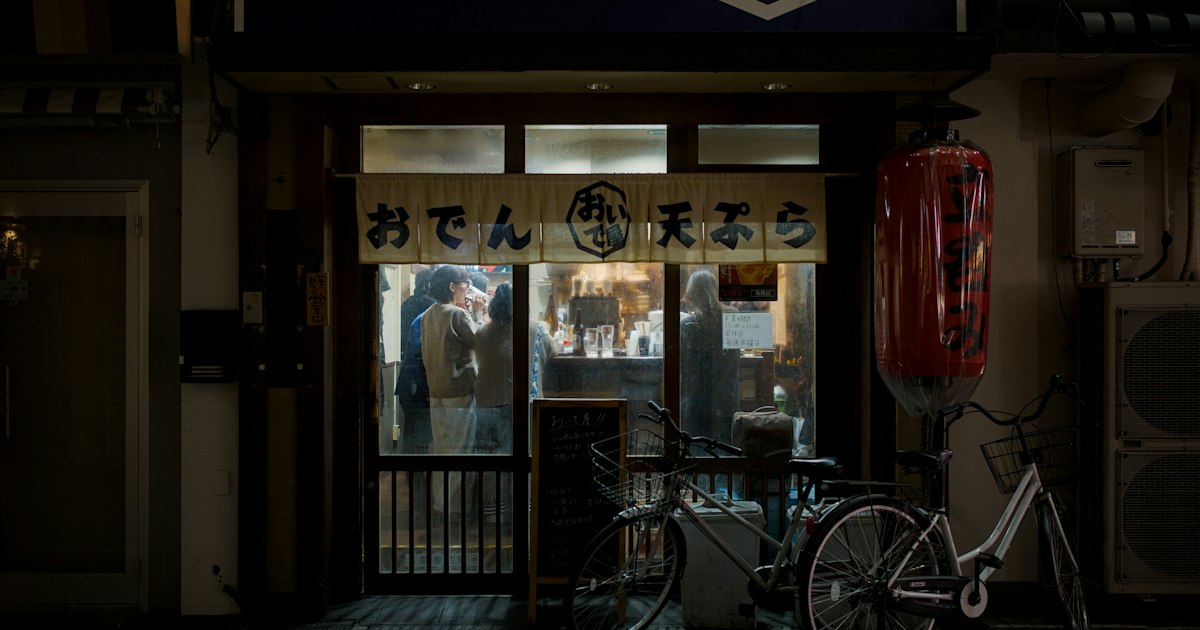
Walk into a Japanese convenience store on a cold evening between November and March and you’ll smell it before you see it: a steaming metal pot near the register, divided into compartments, each one holding something simmering in dark, savory broth. That’s oden, and it’s one of the best cheap, quick meals you can get in Japan without ever sitting down at a restaurant. Here’s how to order it, what to pick, and what it should cost you.
What Is Oden, Exactly?
Oden is a one-pot dish of various ingredients—daikon radish, boiled eggs, fish cakes, tofu, konjac—slow-simmered together in a light dashi broth seasoned with soy sauce and mirin. Everything sits in the same broth for hours, so the flavors blend: the daikon turns nearly translucent and soaks up the broth, the eggs turn a pale amber, and the fish cakes become soft and savory. It’s less a dish you cook than one you tend, which is exactly why convenience stores are so good at it—the pot simmers all day, and staff top it up as items sell.
Regional variations exist (Kansai broth tends to be lighter and saltier, Nagoya has a miso-based version called miso oden), but the convenience store version you’ll encounter nationwide is the standard Kanto-style soy-dashi broth, and it’s remarkably consistent whether you’re in Sapporo or Fukuoka.
Why Convenience Stores Are the Best Way to Try It
You could seek out a dedicated oden restaurant (oden-ya), and it’s worth doing once for the atmosphere—but a sit-down oden dinner with drinks easily runs ¥3,000–6,000 per person. The convenience store version costs a fraction of that, requires no reservation or Japanese ability, and is available at nearly every 7-Eleven, Lawson, and FamilyMart in the country. For a traveler trying to eat well on a tight schedule between sightseeing stops, it’s hard to beat: you can grab a cup of oden, eat it standing at the store’s window counter if there is one, and be back on your way in five minutes.
It also pairs naturally with other convenience store staples worth trying on the same trip—karaage (Japan’s fried chicken) is sold at the same hot case and makes a good non-broth companion if you want something to go alongside your oden cup.
How to Order Oden at a Konbini, Step by Step
The pot sits near the checkout counter, usually with a laminated sign showing photos and prices of each item. The process varies slightly by store policy (some are self-service with tongs, others have staff serve you for hygiene reasons), so watch what other customers are doing or simply ask the staff—pointing works fine.
- Grab a cup: You’ll get a paper or plastic container, sometimes with a lid.
- Choose your items: Point at what you want, or tell the staff the names if you know them. Staff will transfer each piece into your cup with tongs.
- Get your broth: The cup is topped up with hot dashi broth before the lid goes on.
- Ask for mustard: Karashi (hot Japanese mustard) usually comes in a small free packet—ask for “karashi” if it isn’t automatically included, and dab a little onto your eggs or daikon for a sharp kick that cuts the broth’s sweetness.
- Pay at the register: Oden is priced and rung up per item, not as a set meal, so the cashier will total it up based on what’s in your cup.
What to Pick: A Beginner’s Guide to the Pot
If you’ve never seen an oden pot before, the compartments can be confusing. Here are the staples you’ll find at almost every store:
- Daikon (radish): The most popular item by far—soft, broth-soaked, and mild. A safe first pick.
- Tamago (boiled egg): Simmered for hours until the yolk firms up and takes on the broth’s color and flavor.
- Konnyaku: A firm, chewy jelly made from konjac yam—low in flavor on its own but great at absorbing broth.
- Chikuwa: A tube-shaped fish cake with a mild, slightly sweet taste.
- Hanpen: A soft, spongy fish cake, almost like a savory marshmallow in texture.
- Atsuage: Thick fried tofu, meaty and filling.
- Chikuwabu: A wheat-gluten tube found mainly in Kanto-style oden—chewy, mild, and divisive among first-timers.
- Gyusuji (beef tendon) skewers: A pricier, richer option for those who want more substance.
A good first cup for someone trying oden for the first time: daikon, a boiled egg, and one fish cake (chikuwa or hanpen). That gives you the core textures and flavors without overcommitting.
Price Guide: Budget, Mid-Range, and Splurge
Budget (convenience store): Most individual items run roughly ¥90–150, with a few pricier items like beef tendon skewers reaching ¥200–250. A satisfying cup of four to six pieces typically costs ¥500–800 total—genuinely one of the cheapest hot meals available in Japan.
Mid-range (supermarket depachika counters): Department store basement food halls often sell pre-packaged oden sets to take home, priced by weight or as a family-size tray, generally landing in the ¥1,000–2,500 range for enough to share.
Splurge (dedicated oden-ya): A proper sit-down oden restaurant, often with counter seating and sake pairings, will run ¥3,000–6,000 per person for a full meal, and is a nice way to spend a cold evening if you have time for it, particularly in Tokyo neighborhoods with old-school izakaya culture.
When to Go: Oden Season and Timing
Oden is a cold-weather food, and convenience store pots generally appear around October and disappear by late March or April, with peak availability from December through February. Some stores quietly suspend their hot food pots during the hottest summer months or occasionally for hygiene/staffing reasons, so don’t count on finding it in July. If oden is a priority for your trip, plan your visit for winter—it also pairs well with other cold-season activities, so if you’re heading somewhere snowy like the Tateyama Kurobe Alpine Route, a konbini oden stop on the way is a natural fit.
Common Mistakes to Avoid
- Assuming it’s self-serve everywhere: Policies vary by store and even by time of day. Always glance at what other customers do, or just ask—don’t assume you can use the tongs yourself.
- Double-dipping your own chopsticks into shared sauces or mustard packets: Japan takes shared-condiment hygiene seriously—the same etiquette you’ll find with Osaka’s kushikatsu skewers and their no-double-dipping rule applies broadly here.
- Not asking for extra broth: If your cup looks dry, you can usually ask for a bit more dashi before the lid goes on—it’s typically free.
- Ordering too much at once: Items are priced individually and add up fast. Start with three or four pieces rather than filling the cup.
- Eating it ice-cold: Oden is meant to be eaten hot, soon after purchase. If you’re taking it back to a hotel, ask for it to be reheated or eat it within a few minutes of leaving the store.
Oden won’t win any beauty contests in photos, but it’s one of the most genuinely local, unpretentious foods you can eat in Japan—standing at a convenience store counter on a freezing night, cup in hand, is a small travel memory that sticks. If you’re building out a broader list of Japanese comfort foods to try, pairing an oden stop with something like Sanuki Udon in Kagawa or a bowl of Zaru Soba rounds out a solid culinary itinerary beyond the big-city restaurant scene.