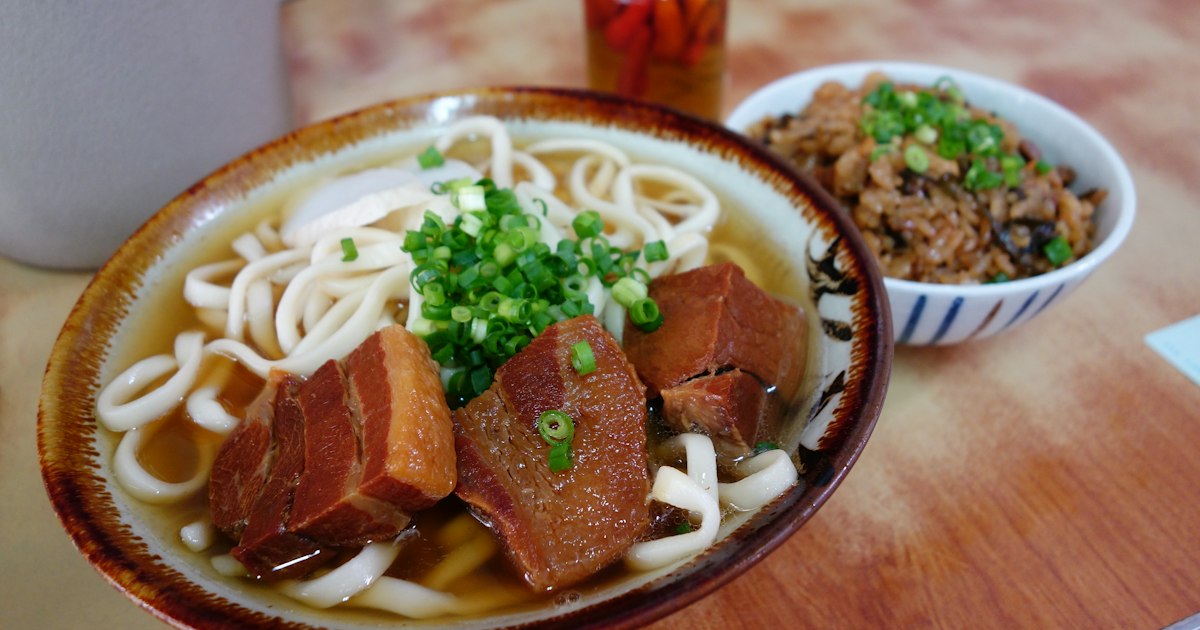
If you’ve only ever seen pig’s feet pickled behind glass at a Western deli counter, Okinawan tebichi will change your mind about what this cut can do. Simmered for hours until the skin turns glossy and the meat falls off the bone, it’s one of the island’s defining comfort foods — and one that rarely makes it onto mainland Japan menus. Here’s what it actually is, what it costs, and where to eat it in Naha without wasting a meal on a bad version.
What Tebichi Actually Is
Tebichi (ティビチ) is the Okinawan word for pig’s feet — specifically the lower trotter, skin and all — slow-braised in a broth built from soy sauce, kokuto (Okinawan brown sugar), pork or bonito dashi, and often a splash of awamori, the island’s distilled rice liquor. It’s distinct from mainland tonsoku dishes in both name and style: tebichi leans sweeter and the stewing time is longer, which is what gives the skin its signature jelly-like texture rather than a chewy one.
You’ll meet it two main ways on a menu: as a standalone braised dish (whole or halved trotter sitting in dark broth, usually with a mustard or ginger garnish), or as a topping on Okinawa soba, where it’s called ashitebichi soba or just tebichi soba. The soba version is the easier entry point if you’re nervous about the bone and cartilage — the meat is already pulled into bite-sized pieces.
Why It Takes Hours to Cook
A proper pot of tebichi is simmered for anywhere from three to five hours, sometimes longer in home kitchens, to break down the collagen in the skin and connective tissue without drying out the meat. This is also why restaurant versions vary so much in quality — a rushed batch ends up rubbery, while a well-made one has skin you can press apart with chopsticks. Traditionally, Okinawans eat it as a stamina food in the hot, humid months, leaning on its collagen and protein content the way other regions lean on eel or beef.
Where to Try It in Naha
The single easiest stop is Daiichi Makishi Public Market in central Naha, a short walk from Makishi Station on the Yui Rail monorail. The ground floor sells raw meat, fish, and produce; the upper floors house small eateries and food stalls, several of which sell pre-cooked tebichi by the piece or as part of a set plate. Expect to pay roughly ¥500–900 for a tebichi dish here, less if you’re buying it as a side alongside soba or rice.
For a sit-down version, Yunangi (ゆうなんぎい), a long-running Okinawan izakaya just off Kokusai-dori, is one of the most consistently recommended spots for traditional uchina ryori — Okinawan home cooking — and keeps tebichi on its regular menu alongside other local staples like rafute (stewed pork belly) and mimiga (pig’s ear salad). It’s an izakaya, so go hungry and order a few small plates to share rather than treating tebichi as a solo main.
Beyond Naha, look for tebichi on the menu at any restaurant advertising “okinawa ryori” or “uchina-jima ryori” — it’s common enough that smaller, local-feeling restaurants in Okinawa City, Nago, or even near beach resorts in the north will usually have a version, often cheaper than in the capital.
Ordering Tebichi Soba Instead
If the idea of a whole braised trotter is intimidating, order tebichi soba. Okinawa soba itself is a wheat noodle (not buckwheat, despite the name) in a pork-and-bonito broth, and the tebichi topping replaces the more common soki (spare rib) or sanmainiku (pork belly) slices. A bowl runs roughly ¥800–1,200 depending on the shop, and the meat arrives already off the bone, making it a far less messy introduction to the dish than the standalone version.
Best Time to Go and Timing Tips
Tebichi is served year-round, but it’s eaten most enthusiastically in summer, when the heat and humidity make a rich, protein-dense dish feel more like recovery food than a heavy meal. If you’re visiting Makishi Market, go for an earlier lunch — stalls can sell out of popular pre-cooked items by mid-afternoon, and some close earlier on weekdays than on weekends. Izakayas like Yunangi are dinner-focused, so this isn’t a lunch option; plan for an early evening visit if you want to avoid a wait, since seating is limited and it’s popular with both locals and guidebook readers.
Common Mistakes First-Timers Make
- Expecting it to taste like tonkotsu ramen pork. Tebichi’s flavor is sweeter and more soy-forward thanks to the kokuto sugar — it’s closer to a sweet-savory braise than a savory broth.
- Not asking about bones. The standalone dish keeps the bone and cartilage in, which some diners find off-putting to navigate with chopsticks. If that’s a dealbreaker, order the soba version instead.
- Skipping the mustard or ginger garnish. The fat content is noticeably higher than most Japanese dishes tourists are used to; the sharp garnish that often comes alongside is there to cut it, not just decorate the plate.
- Assuming every “Okinawan” restaurant near the airport or hotel district serves an authentic version. Quality varies a lot — a market stall or a long-running local izakaya is generally a safer bet than a tourist-strip restaurant with a laminated English menu and photos out front.
Buying Tebichi to Bring Home
If you want to take the flavor home without the cooking time, vacuum-sealed or retort-pouch tebichi is sold at Naha Airport’s souvenir shops and at Okinawan supermarket chains like San-A, usually pre-cooked and shelf-stable or frozen. It reheats in boiling water or a microwave and is a far more practical souvenir than it sounds — just check customs rules for your home country on bringing in cooked pork products, since many countries restrict it regardless of packaging. If you’re already juggling a full suitcase of island souvenirs, it’s worth checking your bag’s condition before you add jars and vacuum packs to it; a packed Okinawa haul is exactly the kind of load that finds a weak zipper, and it’s useful to know where to get a suitcase repaired the same day if something gives out mid-trip.
Tebichi pairs naturally with a cold drink, and if your Japan itinerary includes stops outside Okinawa, the same love of simple, hearty food-and-drink pairings shows up at suburban beer gardens on the mainland — worth keeping in mind if you’re building out a food-focused trip across regions rather than just one island stop.