Photo by Daniel Beauchamp on Unsplash
If you’ve spent any time near a Japanese construction site or watched a mikoshi (portable shrine) being hauled through packed streets at a summer festival, you’ve probably noticed the footwear: tight, flexible, rubber-soled boots with a separated big toe, like a sock that fights back. These are jika-tabi, and they’re one of the more genuinely useful — and surprisingly affordable — souvenirs you can bring home from Japan. This guide covers what they are, who actually wears them, where to buy a pair as a visitor, and the sizing mistakes that trip up almost every first-time buyer.
What Exactly Are Jika-Tabi?
Jika-tabi (地下足袋) literally means “ground tabi” — tabi being the traditional split-toe sock worn with kimono and geta sandals. Unlike cloth tabi socks, jika-tabi have a reinforced rubber sole and are built to be worn directly on the ground as actual footwear, not slipped into a sandal. They were developed in the early 20th century (the Bridgestone-affiliated brand Asahi, via its jika-tabi line “Sokaido,” and the Fukuoka-based maker Tokusei are among the oldest names still producing them) as a cheaper, more flexible alternative to Western work boots.
The split toe isn’t a fashion quirk — it genuinely improves balance and grip, especially on scaffolding, ladders, and rooftops, because the big toe can move somewhat independently to hook onto edges and ropes. That’s why you’ll see them on:
- Construction and scaffolding crews (the baggy, pleated work trousers tucked into jika-tabi are a classic Japanese job-site look)
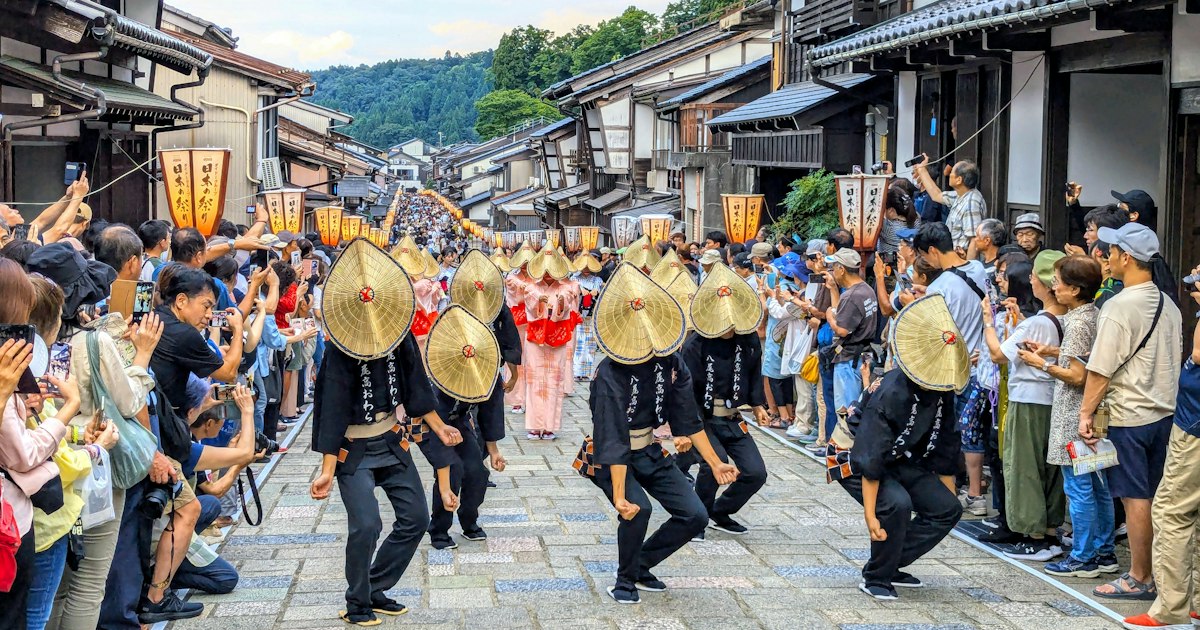
- Festival mikoshi carriers and taiko drum teams, who need sure footing while moving in a crowd
- Farmers and gardeners working in mud or uneven terrain
- Traditional craftsmen — roof tilers, carpenters, and rope workers
Where You’ll Actually See Them in Use
You don’t need to seek out a construction site to spot jika-tabi — just attend a summer matsuri. Festivals with mikoshi processions (Tokyo’s Sanja Matsuri in Asakusa, Osaka’s Tenjin Matsuri, and countless neighborhood shrine festivals from late spring through autumn) are the easiest place to see dozens of pairs in action at once, usually matched with matching happi coats. If you’re building a Japan itinerary around festival season, jika-tabi shops tend to cluster near shrine neighborhoods and old shopping streets precisely because of this seasonal demand.
Buying Jika-Tabi: Budget, Mid-Range, and Splurge
Prices vary a lot depending on whether you want a disposable work pair or a durable, festival-grade boot.
- Budget (¥2,000–¥4,000): Basic canvas jika-tabi from hardware stores (Komeri, Joyful Honda, or any local “sagyō-fuku” workwear shop) in this range. Functional, not flashy, usually black or navy.
- Mid-range (¥4,000–¥8,000): Brand-name pairs from Asahi’s Sokaido line or Tokusei, often with better cushioning, reinforced soles, and more toe-count options (buttons up the side — more buttons means a tighter, more supportive fit, useful for anyone doing real physical work in them).
- Splurge (¥10,000–¥30,000+): Specialty festival jika-tabi in dyed patterns, leather-trimmed versions, or custom-fitted pairs from long-established tabi makers in Kyoto or Asakusa. These are bought by serious festival participants and taiko performers who want both durability and a sharp look under a happi coat.
Where to Buy Them as a Visitor
Tokyo’s Asakusa district, the spiritual home of Sanja Matsuri, has several long-running tabi and jika-tabi specialists on the backstreets near Senso-ji — look for shops with rows of canvas boots in the window rather than kimono. Workwear chains like Workman (ワークマン) carry affordable jika-tabi nationwide and are an easy stop if you’re not visiting a festival district specifically. In Kyoto, traditional footwear shops around Nishiki Market and the Gion area sometimes stock higher-end versions aimed at craftsmen and performers.
If your trip includes a textile- or craft-focused stop, it’s worth pairing a jika-tabi purchase with a visit to a town built around a specific traditional textile, the way Arimatsu’s shibori tie-dye district near Nagoya does for cloth — these niche craft towns often have small workwear or tabi shops tucked among the specialty stores, and the staff are used to explaining sizing to outsiders. Getting between regions for festival season is straightforward by rail; if you’re routing through the Tokyo–Osaka corridor around festival dates, it’s worth knowing the differences covered in this Shinkansen comparison guide so you don’t overpay for speed you don’t need on a shopping day.
Sizing: The Part Everyone Gets Wrong
Jika-tabi run small and narrow by Western standards, and unlike sneakers, they’re meant to fit snugly, almost like a glove, because the rubber sole needs to flex with your foot rather than around it. A few concrete tips:
- Go up about 0.5–1cm from your usual Japanese shoe size (jika-tabi are sized in centimeters, e.g. 24.0, 24.5, 25.0 — not US/UK/EU sizing).
- If you wear a US men’s 9 (EU 42), start by trying a 27.0cm and adjust from there — but try them on if at all possible, since fit varies by brand.
- Check the toe-button count (kohaze) before buying: 4-koha are standard and easier for beginners to put on; 5- or 6-koha give a tighter ankle fit favored by experienced wearers but take longer to fasten.
- Don’t buy jika-tabi sized for thick socks — most are designed to be worn with thin tabi socks or bare feet, so sizing up “to be safe” usually just makes them sloppy and unsafe on uneven ground.
Common Mistakes to Avoid
The biggest mistake is treating jika-tabi like sneakers and buying online sight-unseen in your home shoe size — the fit is genuinely different, and a size that “should” work often doesn’t. Second is assuming any pair will do for festival carrying: thin budget versions offer little protection if the mikoshi’s wooden poles or another carrier’s feet come down on yours, so if you’re actually planning to carry a shrine rather than just watch, ask the shop staff for a sturdier mid-range pair. Third, cheaper canvas pairs aren’t very waterproof, which matters if you’re buying for actual yard or construction work rather than a one-off festival. Finally, remember these are a cash-friendly purchase at small workwear shops — many of the older specialty stores in Asakusa or near craft towns don’t take cards, so carrying enough yen matters; the breakdown in this currency exchange guide is useful if you’re planning several small-shop purchases on the same day.
Caring for a Pair You Bring Home
Canvas jika-tabi should be air-dried out of direct sun after getting wet or sweaty — the rubber sole can separate from the canvas upper if left damp for long stretches. Stuff them with paper to hold their shape in transit, since the soft canvas collapses easily in a packed suitcase. If you bought a higher-end dyed or leather-trimmed pair, treat it like any other leather good and keep it away from humidity. Language isn’t usually a barrier at these shops since sizing is mostly done by trying pairs on, but if you want to ask about material or care instructions in more detail, a translation app or device like those covered in this guide to translation gadgets can help with the more technical vocabulary around workwear that doesn’t always come up in standard tourist phrasebooks.
Whether you end up with a ¥2,500 pair of basic canvas boots or splurge on a dyed festival-grade set, jika-tabi are a rare souvenir that’s both authentically functional and genuinely wearable once you’re home — good for gardening, light labor, or just standing out as the person who actually knows what Japanese construction crews wear on their feet.