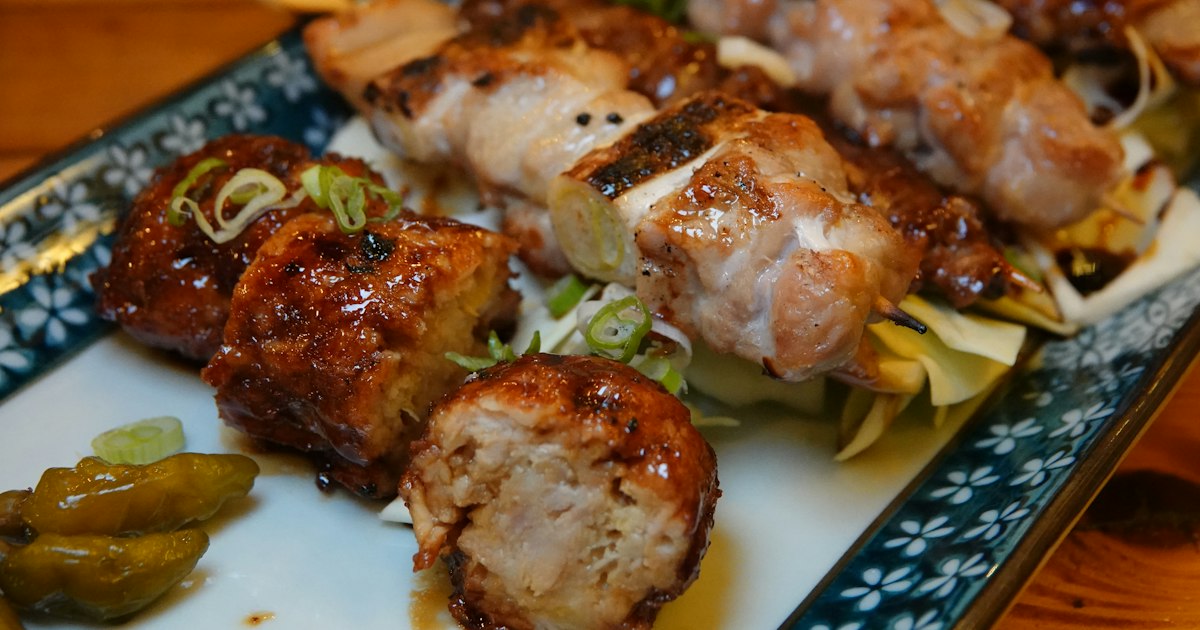
If you’ve ever sat at a yakitori counter and noticed locals happily crunching through something that definitely isn’t meat, there’s a good chance it was nankotsu — chicken cartilage, grilled or deep-fried until it snaps between your teeth instead of chewing like regular poultry. It’s one of those dishes that rarely makes it onto English menus, which means most visitors walk straight past it. That’s a shame, because at under ¥400 a serving in most places, it’s one of the cheapest and most distinctive bites in Japanese izakaya culture.
What Exactly Is Nankotsu?
Nankotsu (軟骨) simply means “soft bone,” and on a yakitori menu it refers to chicken cartilage, usually taken from one of two spots: the keel cartilage at the front of the breastbone (sometimes labeled mune nankotsu) or the small round cartilage from the knee joint (hiza nankotsu). Neither is actually bone — it’s a firm, translucent connective tissue with almost no fat and no real “meat” flavor of its own, which is exactly the point. What you’re eating it for is texture: a clean, resistant crunch that’s closer to biting into a water chestnut or a crisp apple than anything you’d expect from chicken.
Don’t confuse it with sunagimo (gizzard), another common yakitori item that’s also chewy but has a denser, more rubbery bite and a slightly mineral taste. Nankotsu is lighter and crunchier, and it’s the one that tends to win over first-timers once they try it with an open mind.
Grilled vs. Fried: The Two Ways to Order It
You’ll encounter nankotsu in two forms, and it’s worth knowing the difference before you order:
- Yakitori-style (grilled on a skewer): Diced cartilage threaded onto a stick and grilled over charcoal, seasoned either with salt (shio) or a sweet soy glaze (tare). This is the classic counter-bar version, cooked to order and served piping hot.
- Karaage-style (deep-fried, no skewer): Often listed as nankotsu no karaage or nankotsu no tatsuta-age, this comes as a small plate of bite-size pieces, lightly battered or just dusted in starch, fried until golden, and tossed with salt, pepper, and sometimes garlic or a squeeze of lemon. This is the version most people mean when they picture “crunchy fried chicken cartilage” — it has a crisp outer shell with that same snappy cartilage underneath.
Most yakitori-ya (grill specialists) only do the skewer version; general izakaya more often serve the fried plate. If a menu just says “nankotsu” with no other context, it’s worth asking “yaki, soretomo karaage?” (grilled, or fried?) so you get the one you actually want.
How Much It Costs, Budget to Splurge
Nankotsu is a budget item almost everywhere, which is part of its charm:
- Budget (¥300–400): Chain yakitori izakaya like Torikizoku run an everything-the-same-price model, with nankotsu skewers priced around ¥350–400 each (plus tax) at last check — order two or three along with a mug of beer and you’ll barely dent ¥2,000 for the meal.
- Mid-range (¥150–350 per skewer, or ¥400–700 for a fried plate): Independent yakitori-ya charge per skewer individually, and nankotsu is usually one of the cheaper items on the board since it’s an offcut. A plate of karaage-style nankotsu at a standard izakaya runs roughly ¥400–700 for a shareable portion of 6–8 pieces.
- Splurge (¥6,000–10,000+): Specialty yakitori restaurants that use branded chicken — Nagoya Cochin, Satsuma jidori, and similar heritage breeds — serve nankotsu as one course within an omakase tasting menu. The cartilage itself isn’t more expensive, but the surrounding chicken and the chef’s-counter experience is.
Where to Order It
Nankotsu is everywhere yakitori is served, but a few areas are worth building an evening around:
- Omoide Yokocho, Shinjuku, Tokyo: A narrow alley of tiny grill stalls just west of Shinjuku Station, open mostly from early evening into the night. Smoky, crowded, and exactly where you want to be pointing at a skewer menu and ordering by trial and error.
- Yurakucho yakitori alley, Tokyo: The lanes of grill counters tucked under the elevated train tracks near Yurakucho Station fill up fast after work hours (roughly 5–11pm), with salarymen and tourists shoulder to shoulder at tiny counters.
- Nakasu yatai, Fukuoka: The open-air food stalls along the Naka River typically open around 6pm and run late. Many yatai close for a scheduled cleaning break for a stretch in early February, so if you’re planning a winter trip, check that the stalls are running before you go.
- Nagoya’s yakitori and tebasaki specialists: Nagoya is best known for chicken wings, but the same izakaya menus almost always carry nankotsu, often from the region’s prized Nagoya Cochin breed.
If offal and unusual regional specialties are your thing, nankotsu pairs well with a trip built around other dishes most guidebooks skip — crab innards, for instance, covered in our guide to kani miso, or Okinawa’s slow-braised pork in our piece on tebichi.
How to Order Like a Local
At a counter-style yakitori-ya, you’ll usually order by calling out the item and seasoning directly to the grill chef rather than filling in a slip: “Nankotsu, shio, hitotsu” (one cartilage skewer, salted) or “Nankotsu tare” for the sweet-soy version. Most places sell skewers individually, so it’s normal to order two or three at a time and keep adding as you go rather than ordering everything up front.
If you’d rather not rely on spoken Japanese, pointing at a photo menu or the item written in kanji (軟骨) works fine almost everywhere — counter staff are used to tourists gesturing at what they want. For travelers who are Deaf or hard of hearing, this picture-and-point style of ordering is one of the easier food experiences in Japan precisely because it doesn’t depend on catching spoken menu items over grill noise; our guide on communication strategies for Deaf and hard-of-hearing travelers has more on navigating situations like this.
Common Mistakes to Avoid
- Expecting it to taste like chicken: Nankotsu is about texture, not flavor — if you’re hoping for something that tastes like a drumstick, you’ll be disappointed. Go in expecting a crunchy, mild, salty snack.
- Ordering without specifying grilled or fried: The two versions have different textures and different price points. If the menu lists both, pick the one you actually want rather than letting it default.
- Skipping it because it sounds strange: There’s no cartilage-shaped surprise here — unlike kani miso or tebichi, nankotsu looks and eats like a regular fried or grilled snack. It’s one of the least intimidating “unusual” Japanese foods to start with.
- Showing up too early: Most yakitori-ya and yatai don’t open until late afternoon or early evening (often 5–6pm), and some skip lunch service entirely. Don’t plan a midday nankotsu hunt.
Best Time to Try It
Nankotsu isn’t seasonal — it’s on menus year-round — but it’s best enjoyed the way it’s meant to be eaten: hot off the grill or straight out of the fryer, with a cold beer, on a weekday evening when yakitori-ya are busiest and the charcoal is going full tilt. Weeknight hours of roughly 6–9pm tend to be peak time at the popular alleys, so if you want a seat rather than a standing spot, aim for just after opening.