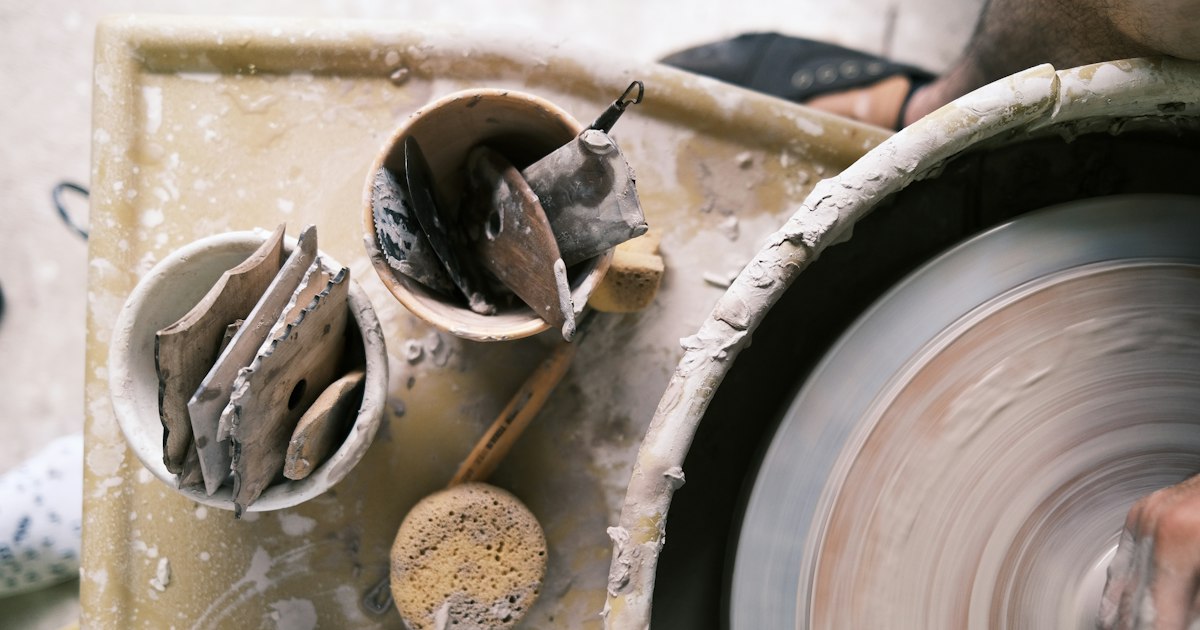
Photo by Taylor Heery on Unsplash
If you’ve ever eaten off a plate in Japan — at a ramen shop, a ryokan breakfast, or a friend’s dining table — there’s a good chance it was Mino ware. Produced in the hills east of Nagoya, Mino ware (美濃焼, Minoyaki) supplies more than half of all the ceramic tableware made in Japan, yet almost no foreign visitors make the short trip to see where it comes from. That’s good news for you: it means wholesale prices, quiet showrooms, and a working pottery town instead of a souvenir circuit.
What Makes Mino Ware Different
Mino ware isn’t one look — it’s a production region, not a single style, which is exactly why it ended up on so many Japanese tables. The area around Tajimi, Toki, and Mizunami in eastern Gifu Prefecture has been firing clay for over a thousand years, but its signature styles emerged in the Momoyama period (late 1500s), when tea ceremony culture demanded bolder, more expressive pottery than the refined wares coming out of Seto nearby. Four classic glazes came out of that era and are still produced today:
- Shino — thick, milky-white glaze with a soft, almost cratered texture and reddish “fire marks” (hi-iro) where it meets the clay.
- Oribe — bold copper-green glaze, often paired with asymmetrical, deliberately irregular shapes.
- Kiseto — a warm, understated yellow glaze.
- Setoguro — glossy black, achieved by pulling pieces from the kiln while still red-hot.
Mino ware was designated a traditional craft (dentō kōgei) by the Japanese government in 1978, but unlike many crafts with that label, it never stopped being everyday, mass-produced tableware — which is exactly why it’s worth buying here rather than at a department store back home.
Where It’s Made — and How to Get There
The production area is known as the Tōno region: Tajimi City is the heart of it, with Toki and Mizunami close behind. From Nagoya Station, take the JR Chuo Line rapid train to Tajimi Station — it’s about 30–40 minutes and costs roughly ¥680–770 one way. Tajimi’s old merchant quarter, Ichinokura, is a short walk from the station: a cluster of Edo- and Meiji-era storehouses (kura) and narrow lanes now holding small galleries, kilns-turned-shops, and the occasional café. It’s compact enough to cover on foot in an hour or two, longer if you start browsing.
If you’re coming through Nagoya anyway, it’s worth timing your day trip around a meal — Nagoya’s tebasaki fried chicken wings make a solid dinner before or after the pottery hunting.
The Best Time to Go: Festival Season
The single best time to buy Mino ware is the annual Minoyaki Matsuri (Mino Ware Festival), held in Tajimi over a weekend in mid-April. Dozens of manufacturers and wholesalers set up direct-sale tents selling overstock, seconds, and discontinued lines at a fraction of retail — mugs and small bowls for ¥100–¥500, sets that would run ¥5,000+ in a shop going for a third of that. It draws big crowds from across the Chubu region, so arrive early on the first morning if you want first pick of the good stuff, and bring cash and a sturdy bag — boxes and bubble wrap run out fast by afternoon. Exact dates shift slightly year to year, so check the current schedule before you plan a trip around it.
Outside of festival weekend, late spring and autumn are the most comfortable seasons to wander Ichinokura’s outdoor lanes — summers in this part of Gifu get hot and humid, and if you’re visiting in late summer or early autumn it’s worth checking the typhoon season guide before locking in dates, since this is a day trip you’ll want clear weather for.
Where to Buy It
You don’t need festival timing to find good deals — Tajimi and Toki have a permanent layer of outlet-style shops built around the industry’s own overstock:
- Factory outlet shops (B-hin/kata-ochi stores) sell “B-grade” pieces — ones with a minor glaze flaw or slight warp invisible to most buyers — at 30–70% off. This is where budget-minded shoppers should start.
- Ichinokura’s small galleries in Tajimi carry individually made pieces from local potters, including contemporary takes on Shino and Oribe glazes, at prices closer to craft-market than factory-outlet.
- Toki and Mizunami have larger wholesale-adjacent showrooms aimed at restaurant buyers, which also sell to walk-in visitors — useful if you want to buy a matching set of ten rather than a single souvenir bowl.
Most small shops and festival stalls in this area still lean cash-heavy, though card and QR acceptance has grown; if you’re relying on your phone to pay, it’s worth knowing how PayPay and Rakuten Pay work for tourists before you go, and carry backup cash regardless.
Budget, Mid-Range, and Splurge Picks
Budget (¥300–¥1,500): A single rice bowl or small Oribe-glazed dish from an outlet store or festival stall. Great for a light souvenir that still packs some weight and story.
Mid-range (¥2,000–¥6,000): A Shino-glazed mug, a pair of matching sake cups, or a mid-size serving plate from an Ichinokura gallery — the sweet spot for something you’ll actually use at home and that looks clearly handmade.
Splurge (¥10,000–¥30,000+): A signed piece from an established potter’s studio — a full Oribe tea bowl or a larger Shino vase. These are sold with a maker’s name and sometimes a certificate, and are the ones worth the extra care in packing for the flight home.
Common Mistakes to Avoid
- Assuming Tajimi has one central pottery mall. It doesn’t — the shops are spread across Ichinokura’s lanes and scattered outlet buildings, so a rough plan (or a shopkeeper’s recommendation for “where else to look”) saves time.
- Skipping the breakage check. Ask shops about shipping — many outlet stores and galleries can ship within Japan, which is far safer than packing stoneware in carry-on luggage yourself.
- Confusing Mino ware with Seto ware. The two regions are neighbors and share glaze names (Oribe, Kiseto) because of shared history, but they’re distinct production areas — don’t assume Seto souvenirs are the same product.
- Going on a weekday expecting galleries to be open. Some of the smaller Ichinokura shops and studios keep irregular hours or close certain weekdays; a quick call or a look at posted hours before walking across town saves a wasted trip.
- Treating it purely as a shopping trip. If you enjoy tracking down a specific Japanese craft and the culture around it, this pairs well with other specialist-shopping detours — the Omiya Bonsai Village guide covers a similar deep-dive shopping trip near Tokyo if you want the same kind of day elsewhere in Japan.
Mino ware rewards exactly the kind of traveler who’s willing to go one town past the obvious stop. Nagoya gets you most of the way there in under an hour, and what you bring home — a bowl with a real maker and a real kiln behind it — beats anything stacked on a souvenir shelf.