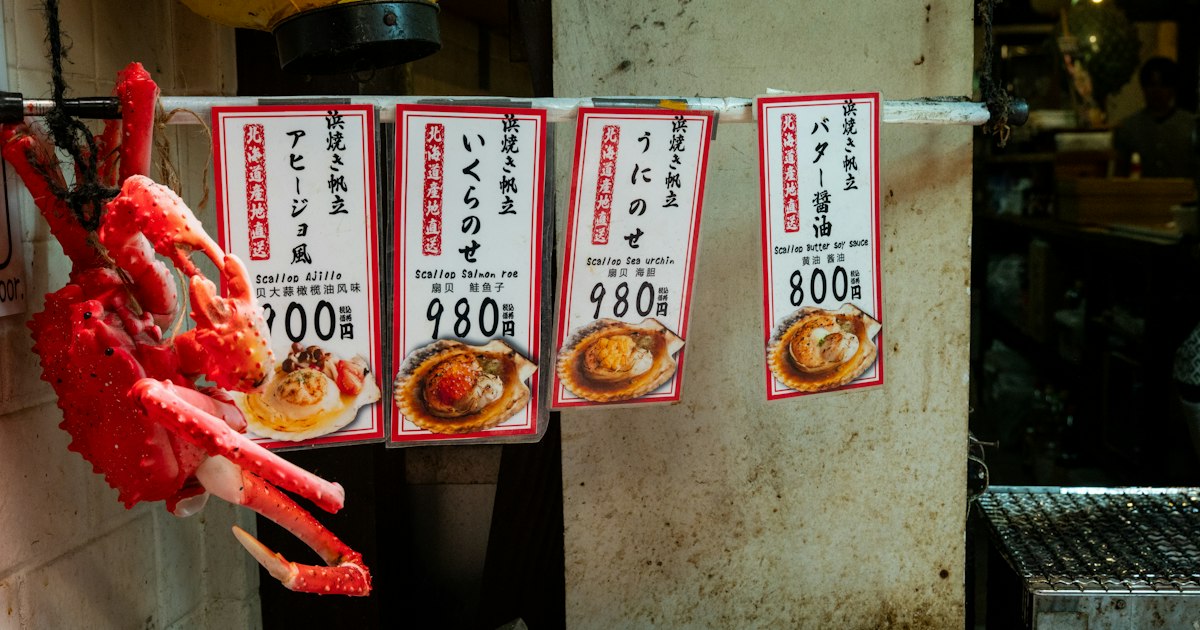
Photo by EMANUELE Ricciardi on Unsplash
Every November, fishing ports along the Sea of Japan erupt into celebration as the first boats of the season haul in zuwaigani — snow crab — and restaurants from Kyoto to Hokkaido start chalking “kani” specials onto their boards. For visitors, it’s one of the most satisfying seasonal food experiences in the country: sweet, delicate crab meat eaten steamed, grilled, raw as sashimi, or simmered into a hot pot at the table. Here’s how to time it right, where to go, and how to avoid overpaying for a disappointing plate.
What exactly is zuwaigani?
Zuwaigani (ズワイガニ) is Japan’s most prized crab, distinct from the larger, spinier taraba-gani (king crab) and the squat kegani (hairy crab) also sold in winter. Zuwaigani has thinner legs and a more delicate, slightly sweet flavor that Japanese diners generally rank above king crab for quality, even though king crab is bigger and photographs better. Regional names add to the confusion for first-timers: crab landed in Fukui is branded echizen-gani, in Tottori it’s matsuba-gani, and in Hyogo/Kyoto it’s often called kasumi-gani or Tajima-gani. They’re all the same species — the branding reflects the port and the quality grading, not a different crab.
The very best specimens are tagged with a small plastic ring on one claw, indicating they were certified by local fishing cooperatives for size, weight, and shell firmness. A tagged echizen-gani from Fukui can fetch tens of thousands of yen at auction for a single large male crab — these are the ones gifted in boxes at department stores.
When is the season?
Zuwaigani season on the Sea of Japan side runs from around November 6 to late March, with a closure in the summer months to protect stocks. The sweetest window for visitors is December through February, when the crab has fattened up for winter and meat yield is highest. Late January to mid-February is often considered the peak, coinciding with the egg-laying season for females (seko-gani or koubako-gani), which are smaller but prized for their roe and sold at a fraction of the price of males.
This overlaps with peak ski season in places like Niseko, so if you’re already planning a Hokkaido powder trip (see our guide to Niseko, Hokkaido’s powder snow capital), it’s easy to build in a crab detour, since Hokkaido’s own crab markets in Sapporo and Otaru run through the same months. Just note that heavy snow and occasional winter storm delays can affect train and flight schedules into the San-in and Hokuriku coasts — check conditions before locking in a single-day crab pilgrimage.
Best regions to eat it
Fukui and Ishikawa (Hokuriku coast) — home of echizen-gani, considered by many the top-tier crab. Kanazawa’s Omicho Market has multiple crab stalls and sit-down counters where you can get a full crab set for lunch. Echizen Town itself holds a crab festival in November.
Tottori — matsuba-gani country, and Tottori Prefecture lands more zuwaigani by volume than anywhere else in Japan. Kasumi Port in Hyogo (just over the Tottori border) is a famous, slightly less touristy base for crab-focused ryokan stays.
Kyoto and Kobe — Kyoto doesn’t land crab itself, but its restaurants source heavily from the nearby San-in coast, and kani kaiseki (multi-course crab dinners) are common in traditional restaurants, including some tucked into the lantern-lit lanes of Pontocho Alley.
Hokkaido — not the origin of “zuwaigani” branding culture in the same way, but excellent, affordable crab at Sapporo’s Nijo Market and Otaru’s canal-side shops, often sold by weight for take-away as well as eat-in.
Tsukiji Outer Market, Tokyo — the easiest option if you can’t travel to the coast. Several stalls sell steamed crab legs and crab sashimi by the piece, though prices run higher than at the source.
What it costs and how to order
Prices vary a lot by grade, region, and whether it’s market, restaurant, or ryokan dining:
- Budget (¥1,500–3,500): A few crab legs or a half-crab at a market stall, eaten standing or at a counter. Nijo Market and Omicho Market are good for this.
- Mid-range (¥4,000–9,000): A set lunch with half or whole crab, rice, miso soup, and small sides at a dedicated crab restaurant. Many coastal towns have set-menu specialists that cater specifically to day-trippers.
- Splurge (¥15,000–40,000+ per person): A kani kaiseki dinner or a one-night ryokan stay with a full crab course — sashimi, grilled, steamed, crab hot pot (kani nabe), and crab porridge (zogani) to finish the broth. Kasumi and Kinosaki Onsen are classic places for this kind of overnight crab-and-hot-spring trip.
At markets, it’s normal and expected to ask for a price before pointing at a crab — many stalls display weight-based pricing per 100g rather than a flat price, and a live, uncooked crab bought whole will need cooking instructions if you plan to take it back to a kitchen. If you’re buying to ship home as a gift, most department store food halls (depachika) offer vacuum-packed, cooked crab with export-friendly packaging, though check your home country’s customs rules on seafood before committing.
Common mistakes to avoid
- Confusing crab types. Taraba-gani (king crab) is often cheaper per kilo but less flavorful than zuwaigani; some tourist-area menus list both without much distinction, so look for “zuwai” specifically if that’s what you want.
- Assuming bigger is better. Female crab (seko-gani) is smaller and can’t legally be sold outside its home prefecture in some regions, but it’s often tastier for the price because of the roe — don’t skip it assuming the big male crab is automatically the better order.
- Not checking if it’s frozen. Fresh, live-caught crab (always true at the source ports in winter) tastes notably different from previously frozen imported crab, which is common in Tokyo restaurants outside of winter. Ask “namagani desu ka?” (is this fresh/raw crab?) if unsure.
- Underestimating the mess and time. A proper crab meal is slow and hands-on — most restaurants provide picks, scissors, and sometimes gloves. Don’t book a tight schedule right after a kaiseki crab dinner.
Getting there and paying
Kanazawa and Tottori are both reachable by direct shinkansen or limited express from Osaka, Kyoto, or Tokyo in roughly 2.5–4 hours, making a day trip or one-night stay realistic from the Kansai region. Smaller crab towns like Kasumi or Echizen require a transfer to a local line, so build in extra time, especially in snow season when trains can run slower or be delayed.
Most market stalls and smaller crab restaurants in coastal towns still prefer cash, though this is changing — bigger restaurants and department store food halls increasingly accept PayPay or Rakuten Pay and major IC cards. It’s still wise to carry enough cash for a full crab meal when heading to smaller fishing towns, since card machines can be unreliable or absent entirely at the smallest family-run spots.
A quick seasonal pairing
Crab season lines up neatly with Japan’s broader winter food calendar — hot pots, warming rice dishes, and drinks meant to be enjoyed slowly after a cold day at the market. If you want something non-alcoholic to pair with a crab dinner, a warm cup of amazake is a traditional, mild-sweet counterpoint that many coastal towns sell alongside their seafood in winter stalls.