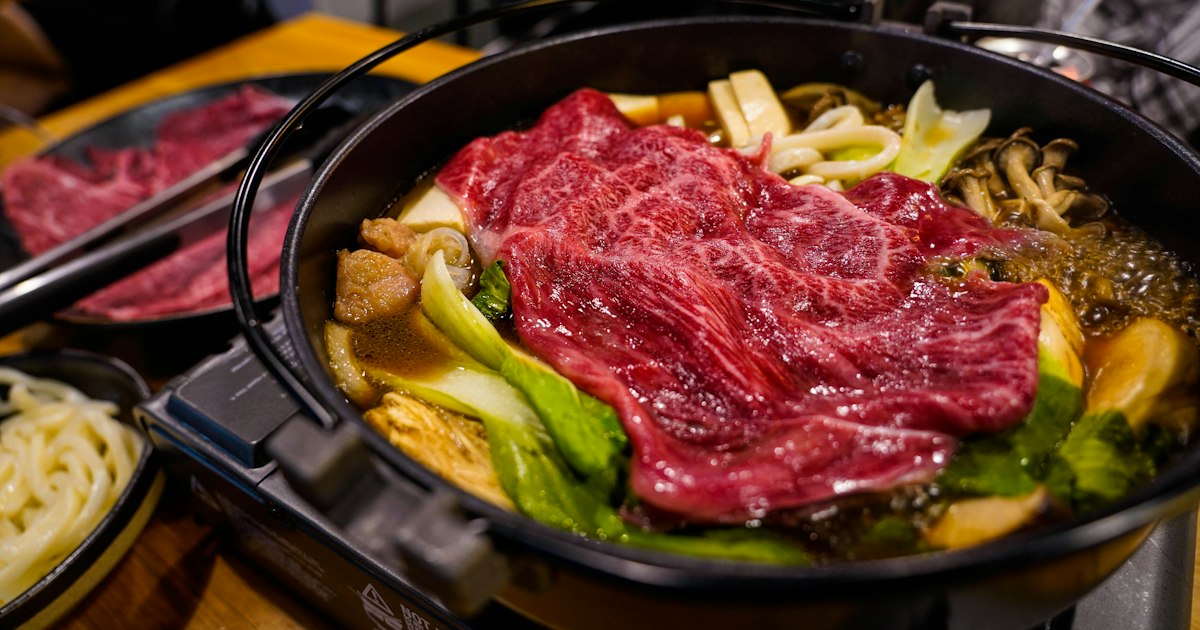
If you ask someone from Akita Prefecture what dish they miss most when they leave home, odds are good they’ll say kiritanpo. It’s rice, but not as most travelers know it: pounded and grilled onto cedar skewers, then simmered in a savory chicken broth with mushrooms, burdock root, and green onion until it’s soft on the outside and chewy within. It’s one of Japan’s great regional comfort foods, and almost unheard of outside Tohoku — which is exactly why it’s worth seeking out. Here’s what kiritanpo actually is, when to go for it, and where to eat a good bowl without wasting a meal on a mediocre one.
What Is Kiritanpo, Exactly?
Kiritanpo starts as freshly cooked short-grain rice that’s mashed in a mortar until about two-thirds of the grains are crushed — just enough to hold together, but not pounded smooth like mochi. The rice paste is molded around a cedar or Japanese cypress skewer in a cylinder shape and grilled over charcoal until the surface turns golden and lightly crisp. The name comes from its resemblance to a “tanpo,” an old-fashioned padded spear tip used in kendo practice.
On its own, grilled kiritanpo is sometimes brushed with sweet miso and eaten as a snack — look for this version, called “miso tanpo,” at roadside stands and festivals. But the dish most visitors come to Akita for is kiritanpo-nabe, where the skewers are removed, the rice sticks are cut into bite-sized lengths, and they’re added to a hot pot at the table.
Kiritanpo-Nabe: The Classic Hot Pot
A proper kiritanpo-nabe is built on dashi made from Hinai-jidori, a prized local breed of free-range chicken, simmered with soy sauce into a clear, deeply savory broth. Into the pot go maitake mushrooms, burdock root (gobo), negi (Japanese leeks), konnyaku, and seri (a peppery wild parsley that’s a signature Akita winter vegetable), along with chicken pieces. The kiritanpo rice sticks go in last, only for a few minutes — just long enough to soak up the broth without dissolving into mush.
Expect to pay roughly ¥1,500–¥2,500 for a single-serving kiritanpo-nabe set at a casual restaurant, and ¥3,000–¥6,000 per person at a specialty restaurant serving it as part of a multi-course meal with regional sake. Many places require a minimum of two diners for the hot pot version, since it’s traditionally cooked in a shared pot at the table — solo travelers should call ahead or ask if a single-portion nabe is available.
Best Time to Visit for Kiritanpo
Kiritanpo is a cold-weather dish through and through. Restaurants serve it from around October through March, with the richest flavor in November and December when the new rice harvest and fresh seri are both in season. Odate City, widely credited as kiritanpo’s birthplace, holds an autumn Kiritanpo Festival (usually in October) where a massive communal pot — large enough to feed hundreds — is cooked outdoors. If your trip lines up with this, it’s worth the detour; otherwise, aim for a December or January visit when nabe season is in full swing and most restaurants have it on the menu without needing advance notice.
Outside this window — spring and summer — many restaurants quietly drop kiritanpo-nabe from the menu or only offer the grilled miso version, so don’t plan an Akita trip around it in warmer months.
Where to Try It in Akita
Budget: Izakaya and teishoku (set meal) restaurants around Akita Station and in the city’s Omachi nightlife district often list kiritanpo-nabe as a seasonal item for ¥1,500–¥2,000, usually sized for one or two people. This is the easiest way to try it without a reservation.
Mid-range: Specialty kiritanpo restaurants, concentrated in Akita City and in Odate, serve it as a proper course with Hinai-jidori chicken sashimi or yakitori on the side, typically ¥3,000–¥4,500 per person. These are the places to go if you want to taste the difference good broth and real Hinai-jidori make.
Splurge: Ryokan and kappo-style restaurants in Kakunodate or around Tazawa-ko pair kiritanpo-nabe with a full kaiseki spread and local Akita sake (the prefecture produces some of Japan’s best, including Yuki no Bosha and Takekuma), running ¥6,000–¥10,000+ per person. If you’re combining kiritanpo with a visit to Kakunodate’s samurai district, this is worth booking in advance.
Getting to Akita from Tokyo is straightforward: the Akita Shinkansen (Komachi) takes about 3.5–4 hours directly from Tokyo Station, or you can fly to Akita Airport in roughly 1 hour 15 minutes from Haneda. For Odate specifically, Odate-Noshiro Airport has flights from Haneda in about 70 minutes, which is faster than the train if that’s your main destination.
Cash is still common at small-town restaurants in Akita, though QR code payment is spreading — if you’re relying on your phone to pay, it’s worth reading up on QR Code Payments in Japan: Using PayPay & Rakuten Pay as a Tourist before you head somewhere rural, since not every kiritanpo restaurant takes cards.
Where to Try It Outside Akita
If your itinerary doesn’t reach Tohoku, Akita Furusatokan, the prefecture’s antenna shop in Nihonbashi, Tokyo, sells vacuum-packed kiritanpo rice sticks and nabe broth kits you can take home or cook in a rental kitchen, along with Hinai-jidori products when in stock. It’s a reasonable fallback, though the texture of fresh-grilled kiritanpo doesn’t fully survive packaging — treat it as a souvenir option rather than a replacement for eating it in Akita. A handful of Tohoku-regional restaurants in Tokyo and Osaka also run kiritanpo-nabe as a winter special, usually worth a quick search for “きりたんぽ” plus your city before you go.
Common Mistakes to Avoid
- Confusing it with mochi. Kiritanpo looks similar but isn’t pounded into the stretchy, gluey texture of mochi — it’s firmer and holds its shape in broth. Don’t expect mochi’s stretch.
- Ordering it outside winter. If you visit Akita in summer, you may only find miso tanpo (the grilled skewer snack), not the hot pot. Check the season before building a trip around it.
- Not checking the party size. Many restaurants serve kiritanpo-nabe as a shared pot with a two-person minimum. Solo travelers should ask ahead rather than assume it’s orderable for one.
- Overlooking allergens in the broth. The soy-based dashi typically contains soy and sometimes sesame, and it’s built on chicken stock, so it isn’t suitable for vegetarian, vegan, or halal diets as traditionally made. If you’re traveling with dietary restrictions, our guide to Food Allergy Cards & Menu Translation in Japan is useful for checking ingredients at smaller restaurants that may not have English menus.
- Treating it as a one-off curiosity instead of planning around it. Kiritanpo is best enjoyed as part of a winter Tohoku itinerary rather than a single detour. If you’re already chasing cold-season specialties, it pairs naturally with a trip built around other winter foods — see our guide to Zuwaigani: Japan’s Winter Snow Crab Season for how to structure a broader winter food trip.
Kiritanpo won’t show up on most first-time Japan itineraries, which is exactly its appeal — it’s a dish you have to go looking for, in a prefecture most tourists skip entirely. If rice itself interests you as a travel subject, it’s worth noting Akita’s grain also turns up in other regional specialties; for a lighter, non-alcoholic rice drink elsewhere in Japan, see Amazake: Japan’s Sweet Fermented Rice Drink. But for the real thing, a cold night in Akita with a steaming pot of kiritanpo-nabe and a cup of local sake is hard to beat.