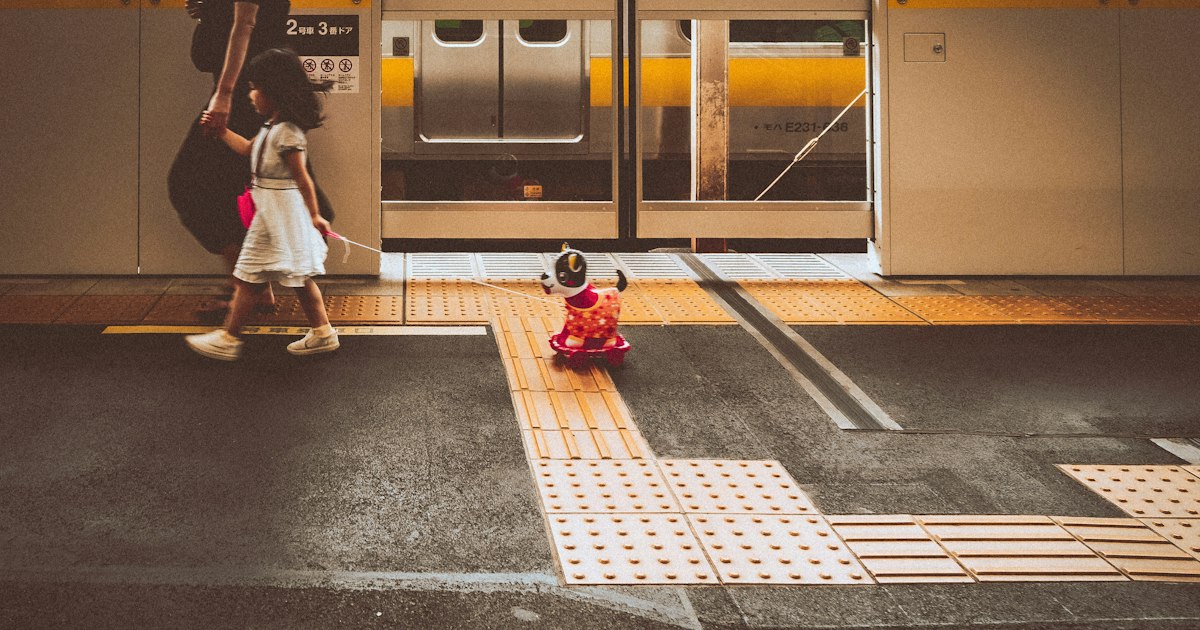
Photo by Se. Tsuchiya on Unsplash
Japan has a reputation for being tricky with strollers — narrow sidewalks, stairs at older stations, crowded trains — but it’s also one of the easier countries in Asia for nursing and diaper changes once you know where to look. The infrastructure exists; it’s just scattered across department stores, train stations, and a dedicated baby-facility network that most tourists never hear about. Here’s how to actually find it, what it costs (usually nothing), and the mistakes that trip up first-time parents.
Start With “Akachan no Eki” and Baby Room Apps
Many Japanese municipalities run a program called Akachan no Eki (“Baby Station”) — a network of registered facilities (community centers, pharmacies, malls, city offices) that guarantee a nursing space, a changing table, and hot water for formula, marked with a small baby-and-bottle sticker near the entrance. Tokyo, Osaka, and most major cities participate, though the signage is mostly in Japanese.
The easiest way to find any of this on the ground is the free app Mamapapamap (ママパパマップ), made by baby brand Pigeon. It lists well over 90,000 facilities nationwide — nursing rooms, diaper-changing stations, and baby rest areas — searchable on a map, with icons for hot water, microwaves, and whether the space is private or shared. It’s in Japanese, but the map pins and icons are usable without reading it. Download it on hotel wifi before you head out for the day, since signal inside basement-level malls and stations is often weak.
Department Stores and Shopping Malls: Your Most Reliable Option
If you’re near a major department store (Isetan, Takashimaya, Daimaru, Seibu) or a big suburban mall, you have a baby room guaranteed. These are usually tucked on a mid-to-upper floor near the restrooms — often the same floor as the kids’ clothing section — and open during store hours, typically 10:00 to 20:00 or 21:00. Standard setup: a curtained or partitioned nursing area with chairs, a changing table, a hot-and-cold water dispenser for mixing formula, and sometimes a microwave. All of this is free and doesn’t require being a customer.
Malls built in the last ten years tend to be the most generous with space — Lalaport, Aeon Mall, and the big complexes on Odaiba like DiverCity and Aqua City all have dedicated, well-signposted baby rooms with multiple private nursing stalls, which is useful if you’re spending a full day out there with kids anyway.
Train Stations and the Shinkansen
Coverage at train stations is uneven. Large JR and metro hub stations (Tokyo, Shinjuku, Shibuya, Osaka, Kyoto) usually have a multipurpose restroom (多目的トイレ) with a fold-down baby seat and changing table, and increasingly a separate nursing room nearby — look for a baby-chair pictogram on the station map near the ticket gates. Smaller stations may have nothing beyond a baby seat bolted inside a regular accessible stall, so don’t count on privacy for nursing outside the big stations.
On the Shinkansen, every train has a multipurpose room (多目的室), free to use and not bookable in advance — it’s first-come-first-served, so ask a conductor to unlock it when you need it. It’s the best option for nursing or a diaper change on a long ride, since the regular onboard toilets are too small for a changing mat. If you’re navigating Tokyo’s subway network with a stroller rather than JR lines, it’s worth understanding how transfers actually work between the two separate systems — see our guide to the Tokyo Metro vs. Toei Subway split, since cross-system transfers sometimes mean exiting gates and re-entering, which is a lot more stressful with a stroller than a connecting corridor.
Stroller Access: Elevators, Stairs, and When to Just Take a Taxi
Elevator coverage has improved enormously since Tokyo and Osaka hosted major international events, and most central stations now have at least one step-free route from street to platform. The catch is that it’s often a long detour — one elevator serving the whole station, located far from your actual exit — and it’s not unusual to add 5–10 minutes to a transfer. Google Maps and the Navitime app both show elevator icons on station layouts, which is worth checking before you commit to a transfer with a sleeping baby in the stroller.
Rush hour (7:30–9:30 and 17:30–19:30 on weekdays) is genuinely rough for strollers on Tokyo trains — cars are packed shoulder to shoulder and staff may ask you to fold the stroller and hold your child. If your schedule allows it, shift station travel to mid-morning or early afternoon. For anything involving multiple transfers, heavy bags, and a cranky toddler, a taxi is often worth the extra cost (a 20-minute Tokyo taxi ride runs roughly ¥2,000–3,500) — Japanese taxis have trunk space for a folded stroller and drivers are used to helping load it.
Diapers, Formula, and Supplies on the Road
You won’t need to pack diapers for the whole trip. Convenience stores (7-Eleven, Lawson, FamilyMart) stock a small range of diapers and wipes in a pinch, but for real selection and better prices go to a drugstore (Matsumoto Kiyoshi, Sundrug) or, best of all, a branch of Akachan Honpo, Japan’s dedicated baby superstore chain. A pack of Merries or Moony diapers runs roughly ¥1,500–2,200 depending on size and count, and Akachan Honpo locations almost always have their own free nursing and changing room on site, plus staff used to helping confused tourists. One fit note: Japanese diaper sizing (S/M/L/XL by weight in kg) tends to run slightly narrower than Western brands, so if your baby is between sizes, size up.
Liquid baby formula in ready-to-pour cartons (by Meiji and Glico) has been sold since 2019 and is a genuine lifesaver for travel — no mixing, no hot water needed, just attach the included nipple. It’s pricier per feed than powder but worth it for a flight or Shinkansen ride.
Airports: Covering Both Ends of the Trip
Narita and Haneda both have multiple nursing rooms spread through their terminals, free to use, generally with the same hot-water-and-changing-table setup as department stores, plus some play areas for older siblings. If your itinerary has you connecting between the two airports — for a domestic flight or hotel change — note that it’s a longer, costlier trip than it looks on a map; our Narita to Haneda route comparison breaks down the bus, train, and taxi options, which matters more when you’re timing it around a feeding or nap schedule rather than just minimizing cost.
Common Mistakes to Avoid
- Assuming station-level toilets double as nursing rooms. They usually only have a changing seat, not a private nursing space — check the app first if privacy matters.
- Not checking elevator routes before a transfer. A “step-free” station can still mean a 300-meter walk between elevators.
- Traveling during rush hour with a stroller. Shift to off-peak hours whenever your schedule allows.
- Packing a full diaper supply from home. It adds dead weight to your luggage for no reason — Akachan Honpo and drugstores have you covered within a day of landing.