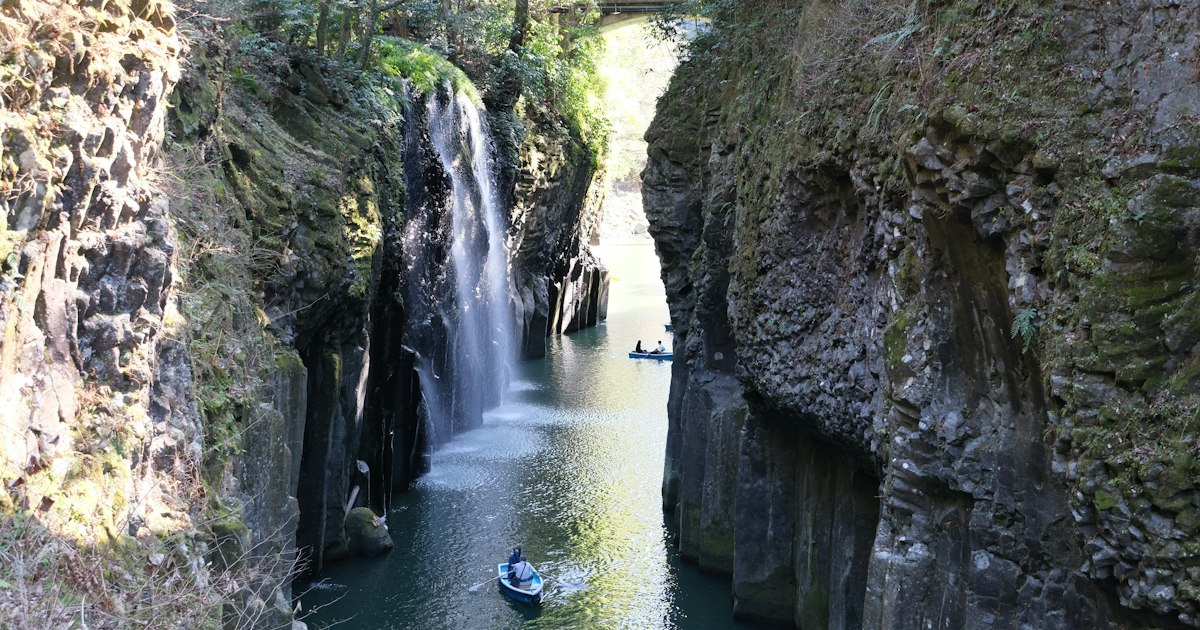
Photo by Luo Jin Hong on Unsplash
Takachiho Gorge, carved into the mountains of northern Miyazaki Prefecture on the southern island of Kyushu, is the kind of place that photos don’t quite prepare you for. Sheer basalt columns, stacked like organ pipes by an ancient Mt. Aso eruption, drop straight into the Gokase River, and a single waterfall — Manai Falls — pours 17 meters into the water below. The signature way to see it is from a rented rowboat, gliding right under the falls, but getting there and timing your visit well takes a bit of planning since this isn’t a day trip you can do by train.
Getting There: Why There’s No Train
Takachiho’s old JR rail line was damaged by a typhoon in 2005 and never reopened, so there is no direct train service to the town. Your realistic options are:
- Rental car (recommended): About 1.5–2 hours from Miyazaki Airport or Miyazaki City, and roughly 2 hours from Kumamoto via the Kyushu Expressway and local roads. A car also lets you combine Takachiho with Mt. Aso in Kumamoto Prefecture, which is a popular pairing.
- Highway bus: Direct buses run from Kumamoto Station/Kumamoto Airport (around 2 hours) and from Fukuoka (around 3.5–4 hours). Book ahead during peak seasons, as seats sell out.
- Local bus from Nobeoka: If you’re relying on JR trains, take a Nippo Line train to Nobeoka Station, then transfer to a Miyazaki Kotsu bus bound for Takachiho (roughly 70–90 minutes).
There’s no shortcut here — budget extra transit time compared to more rail-friendly destinations, and don’t assume you can wing it with just a Japan Rail Pass.
Renting a Rowboat Under Manai Falls
The gorge’s main draw is the boat rental dock near Manai Falls, where you can hire a small rowboat and paddle out toward the waterfall yourself. Rentals typically run around 3,000 yen for 30 minutes per boat, with a maximum of three people (or two adults plus a small child) per boat, and life jackets are provided. Operating hours generally run from around 8:30 or 9:00 to 17:00, shifting earlier in winter — but these details change with the season and management, so confirm current hours and pricing locally or via the Takachiho tourism office before you go.
Two things catch visitors off guard. First, boats are suspended whenever the river rises after heavy rain — common during the rainy season in June and after typhoons — so there’s no guarantee you’ll get on the water even if you’ve traveled a long way for it. Second, demand massively outstrips supply on weekends, holidays, and especially during autumn foliage season (November). It’s not unusual to wait two to three hours for a boat slot, and the gorge now uses a numbered ticket or reservation system at peak times to manage the queue. Arrive right at opening on a weekday morning if a boat ride is non-negotiable for you.
Walking the Gorge for Free
If the boat line is too long, or you’d rather not pay at all, the paved walking path along the gorge’s rim is free and takes about 20–30 minutes round trip. It offers excellent views down into the canyon and of Manai Falls from above, and in many ways is less crowded than the dock itself. This is also the better option with small children or anyone uneasy about boats, and it’s a good fallback plan if rentals are suspended for high water.
Best Time to Visit
Spring (cherry blossoms, usually early April) and autumn (foliage, peaking mid-to-late November) are the most beautiful — and most crowded — windows. Early morning on a weekday, right at opening, is consistently your best bet for short lines and soft light for photos. Summer brings lush green walls and cooler air inside the gorge itself, a welcome break from Kyushu’s humidity, but also a higher chance of rain-related boat suspensions. Winter is quietest overall, though rental hours run shorter and it can be genuinely cold on the water.
Beyond the Gorge: Shrines and Myth
Takachiho’s name comes from Japanese creation mythology — this area is said to be where the sun goddess Amaterasu’s grandson descended to earth. Two sites make that tangible:
- Takachiho Shrine: A short drive from the gorge, free to enter, and home to a nightly kagura dance performance (around 1,000 yen, roughly 8:00–9:00 pm) where local performers act out mythological stories in traditional costume — worth the detour even if you don’t understand the narration.
- Amano Iwato Shrine: About 10 minutes from the gorge by car, this shrine marks the cave where Amaterasu is said to have hidden herself, plunging the world into darkness. The actual cave is viewed from across the river and isn’t entered, but the adjacent Amanoyasugawara riverbed — stacked with thousands of small stones left by visitors — is a striking, quiet stop.
If you’re collecting shrine stamps on your trip, both locations sell goshuin, and our guide to starting a goshuincho covers the etiquette and cost (usually 300–500 yen per stamp) if this is new to you.
Budget, Mid-Range, and Splurge
- Budget: Skip the boat, walk the free rim trail, and visit both shrines (free or near-free) — a satisfying half-day for well under 2,000 yen per person.
- Mid-range: Add the rowboat (~3,000 yen per boat) and the evening kagura performance (~1,000 yen), and plan to eat in town — local specialties include Takachiho beef and freshwater fish like ayu.
- Splurge: Stay overnight in one of Takachiho’s small ryokan or guesthouses so you can hit the boat dock at opening before day-trippers arrive, then continue on to Mt. Aso the next day rather than rushing back.
Takachiho rewards visitors who come prepared rather than those who show up expecting Tokyo-level convenience. If dramatic, myth-steeped landscapes like this appeal to you, Shimane’s Oki Islands and Iwate’s Tono — another folklore-rich rural pocket of Japan — are worth bookmarking for a future trip north.