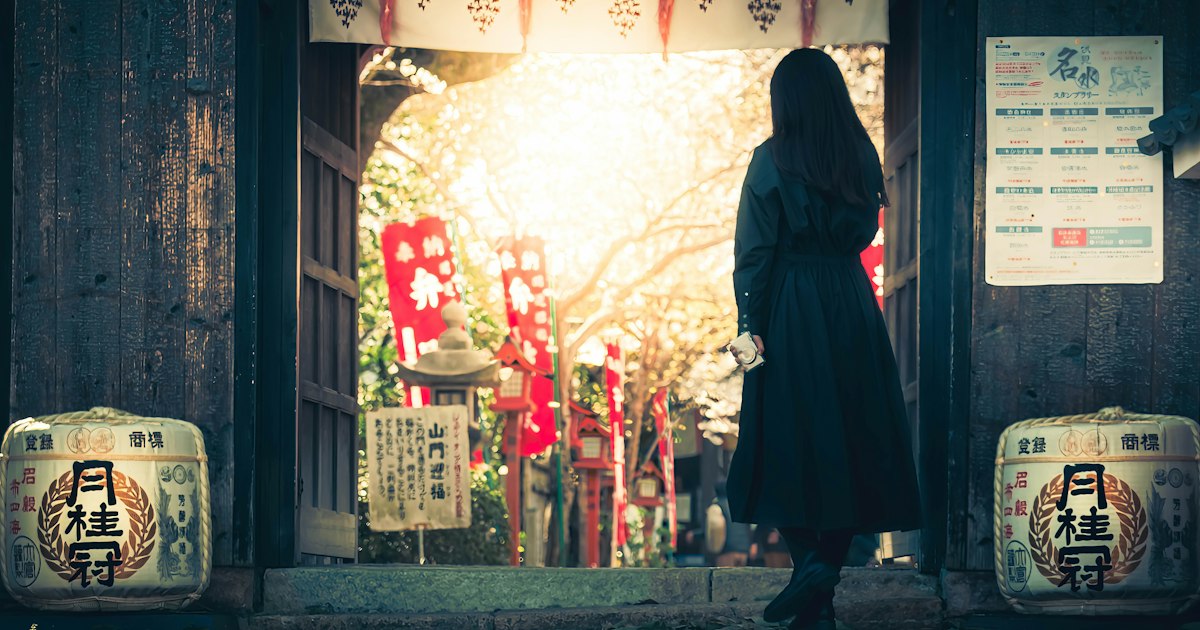
Photo by James Pere on Unsplash
You don’t need to master Japanese bowing to travel comfortably in Japan — nobody expects a foreign visitor to execute a perfect 45-degree keirei. But knowing the basics of ojigi (お辞儀), the general term for bowing, will help you read social situations correctly, avoid a few common awkward moments, and show respect in places where it genuinely matters, like shrines, ryokan, and family-run shops. This guide covers the main bow types, when each is used, and the mistakes visitors make most often.
The Three Main Types of Bow
Japanese bowing isn’t one gesture — it’s a scale of formality measured mostly by the angle of the bend from the waist, with hands at your sides (for men, typically) or clasped in front (common for women). You don’t need to memorize the exact degrees, but it helps to recognize what you’re seeing:
- Eshaku (会釈) — about 15 degrees. A light nod-bow used for casual greetings, passing a coworker in the hallway, or acknowledging a shopkeeper. This is the one you’ll use most as a tourist.
- Keirei (敬礼) — about 30 degrees. The standard business and service bow. Staff at hotels, department stores, and restaurants use this when greeting or thanking customers.
- Saikeirei (最敬礼) — 45 degrees or deeper. Reserved for formal apologies, deep gratitude, religious settings, or addressing someone of significantly higher status. You’ll rarely need this one, but you’ll see it from staff during apologies or at shrine ceremonies.
As a visitor, a simple head nod or a slight bow from the shoulders in response to a bow is almost always sufficient and appreciated — nobody is grading your form.
Where You’ll Actually Encounter Bowing
You don’t need to bow constantly, but a handful of situations come up often enough to know what’s expected:
- Checking into hotels and ryokan. Staff will often bow when greeting you and again when handing over your key or passport. If you’re staying somewhere that requires passport presentation — which is mandatory for foreign guests at Japanese accommodations — a small nod when the staff hands it back is a natural, polite response. See our guide on checking into a Japanese hotel for the full ID process.
- Restaurants, izakaya, and shops. Staff bow when you enter (“irasshaimase”) and when you leave. You don’t need to bow back deeply — a nod is fine. This is a good moment to also brush up on chopstick etiquette, since table manners and bowing etiquette tend to get asked about together by first-time visitors.
- Shrines and temples. This is where bowing has real ritual meaning, not just social politeness. At a Shinto shrine, the standard sequence at the offering hall is: bow once, toss a coin (¥5 or ¥1 coins are traditional, though any small coin works), ring the bell if there is one, bow twice deeply, clap twice, make a silent wish, then bow once more deeply. This two-bow, two-clap, one-bow pattern is consistent nationwide. A central Tokyo spot to practice this is the Toyokawa Inari Shrine tucked into the Akasaka embassy district — read more in our Akasaka neighborhood guide.
- Weddings and formal gift-giving. If you’re invited to a Japanese wedding, bowing comes up when presenting your cash gift (goshugi) to the receptionist — a small bow as you hand over the envelope is standard. We cover exact amounts and envelope etiquette in our goshugi guide.
Common Mistakes Visitors Make
None of these will cause real offense — Japanese hosts are generally forgiving toward foreign visitors — but avoiding them will make your interactions smoother:
- Bowing and shaking hands at the same time. If someone extends a hand, go with the handshake; mixing a deep bow with a handshake looks confused rather than respectful. Many Japanese businesspeople who deal with foreign visitors will offer a handshake specifically to simplify things.
- Over-bowing. Repeatedly bowing back and forth (sometimes jokingly called the “bow-off”) is a real phenomenon between two polite people, but as a tourist, one bow per exchange is enough. You don’t need to match a 45-degree staff bow with your own 45-degree bow.
- Bowing with hands in pockets or while holding items awkwardly. It’s a minor thing, but tucking phones away and freeing your hands before a bow — especially at a shrine — looks more natural and respectful.
- Treating a nod as disrespectful. Some visitors overcorrect and attempt full deep bows everywhere, which can actually read as odd or overly formal from a foreigner. A relaxed head nod in casual settings is completely normal and expected.
- Forgetting the shrine sequence order. Clapping before bowing, or bowing once instead of twice at the offering hall, is the most common visitor slip-up. If you forget the sequence, just watch the person in front of you in line — shrines are self-explanatory once you’ve seen it done once.
Timing and Season Notes
Bowing isn’t seasonal, but certain high-bow-frequency occasions cluster at specific times of year, which is worth knowing if you want to see it in context:
- New Year (early January) brings hatsumode, the first shrine visit of the year, when millions of people perform the full bow-clap-bow sequence at shrines nationwide — lines at major shrines like Meiji Jingu can stretch for hours, but smaller neighborhood shrines are quieter and just as valid.
- Wedding season (spring and autumn) means more opportunities to see formal bowing at hotel banquet halls and shrines if you happen to be invited to one.
- Graduation and job-hunting season (March–April) fills train stations with students in formal suits practicing deep, formal bows — a distinctly Japanese sight if you’re visiting during this window.
Do You Need to Bow at All?
Honestly, no — not in the sense of being required to. Japan is used to foreign visitors, and a polite nod, a smile, and “arigatou gozaimasu” (thank you very much) will serve you well in nearly every interaction, from convenience stores to department stores. Bowing becomes more relevant the deeper you go into formal or traditional settings: a kaiseki dinner, a tea ceremony, a shrine visit, a stay at a traditional ryokan, or if you’re working with a private guide who can walk you through etiquette in real time at temples and historic sites. If you’re unsure, matching the intensity of the bow offered to you — a nod for a nod, a slight bow for a slight bow — is a safe rule that works almost everywhere.
The Bottom Line
Ojigi is less about rigid rules and more about reading the room. Shopkeepers and hotel staff bow as a matter of professional courtesy and don’t expect a mirrored performance from tourists; shrines are the one place where the specific bow-clap-bow sequence genuinely matters and is easy to pick up by observation. Relax, nod when nodded to, bow when it feels ritually appropriate, and you’ll be doing exactly what’s expected of a respectful visitor.