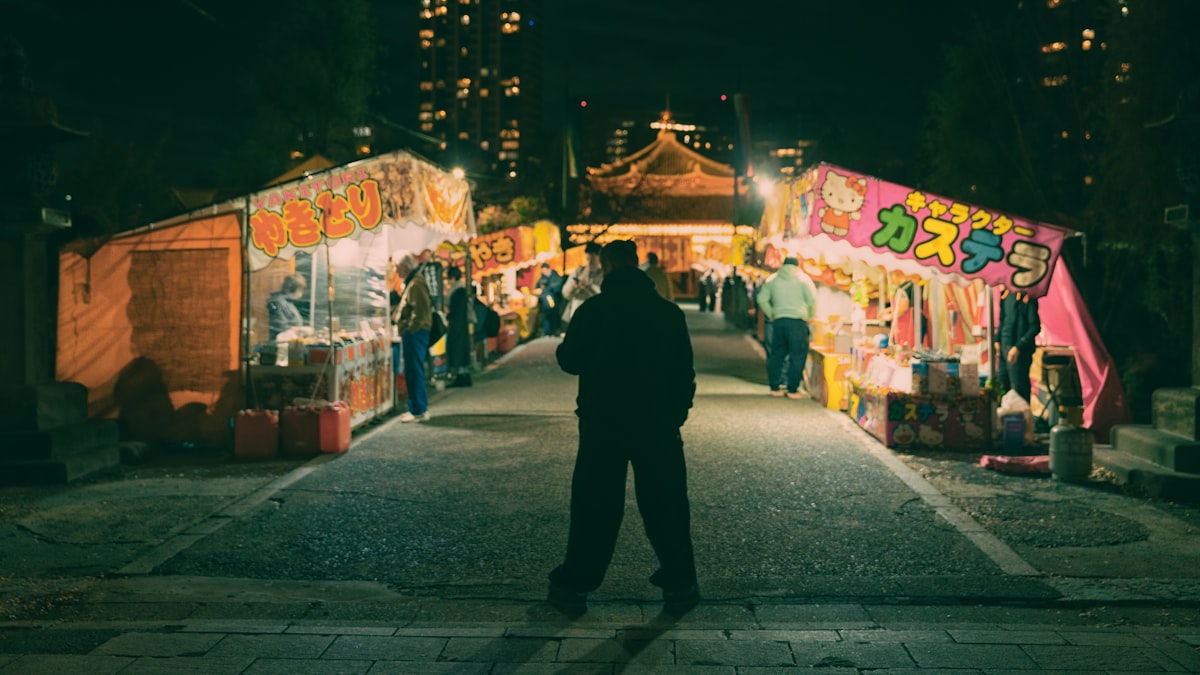
From festival stalls to market lanes, Japanese street food is delicious, cheap, and everywhere. Here’s what to try and where to find the best bites.
Must-try street foods
- Takoyaki — octopus-filled batter balls, Osaka’s icon; see our Dotonbori guide.
- Okonomiyaki — savory griddle pancakes.
- Yakitori — grilled chicken skewers.
- Taiyaki — fish-shaped cakes with sweet filling.
- Dango & taiyaki, candied fruit (ringo-ame), and kakigori (shaved ice) in summer.
Where to find it
- Festival stalls (yatai) — the best street-food scene; see our festivals guide.
- Market streets — Nishiki Market (Kyoto), Kuromon (Osaka), and Tsukiji.
- Fukuoka’s yatai — riverside food stalls; see our Fukuoka guide.
- Temple approaches like Nakamise in Asakusa.
How to enjoy it
- Carry cash — stalls are cash-only (see money in Japan).
- Eat near the stall — eating while walking is frowned upon; there are often standing areas.
- Bin your trash properly (or carry it) — public bins are scarce. See our etiquette guide.
Konbini counts too
Don’t overlook convenience-store hot snacks (fried chicken, oden, nikuman) — cheap and genuinely good. More in our must-try food guide.
What street food typically costs
- Most stall items run JPY 300-700 per portion — takoyaki (6-8 pieces) is usually JPY 500-600, a yakitori skewer JPY 150-300, and taiyaki JPY 200-300 each.
- Festival stalls (yatai) sometimes price slightly higher than everyday market stalls, since you are also paying for the atmosphere and limited-time setup.
- A reasonable budget for grazing your way through a market or festival lunch is around JPY 1,500-2,500 for two or three different items plus a drink.
Common mistakes to avoid
- Eating while walking through a market — most Japanese food markets expect you to eat near the stall or in a designated standing area, not stroll and eat; look for a small counter or step to the side.
- Assuming every stall takes cards — most street food is strictly cash, and small-denomination coins move things along faster during a rush.
- Skipping the queue-watching trick — a short line at a stall in a busy festival or market is a good, low-risk way to find the best vendor without research.
Seasonal street food to watch for
Street food shifts with the seasons: kakigori (shaved ice) and cold noodles dominate summer festival stalls, roasted sweet potato (yaki-imo) carts appear on autumn and winter streets, and New Year shrine visits (hatsumode) bring their own stall lineup of amazake (sweet rice drink) and grilled mochi. If you are visiting for a specific matsuri, check our festivals guide for what is in season.
Street food for different diets
Vegetarians will find dango, taiyaki, and most candied fruit safe bets, but should ask before ordering takoyaki or okonomiyaki, which often contain fish flakes (katsuobushi) or a fish-based sauce even in an otherwise vegetable-heavy dish — see our vegetarian and vegan in Japan guide for phrases that help. Travelers with shellfish allergies should be cautious with takoyaki (octopus) and any stall selling grilled seafood skewers at festivals.
Regional street food specialties
Beyond the nationwide favorites, look for regional specialties tied to where you are: Hiroshima-style okonomiyaki layered with noodles, Osaka’s negiyaki (a lighter, green-onion version of okonomiyaki), Sendai’s grilled beef tongue skewers, and Okinawa’s sata andagi (fried sugar doughnuts). Seeking out the local variation rather than the generic version is one of the easiest ways to eat well while traveling between cities.