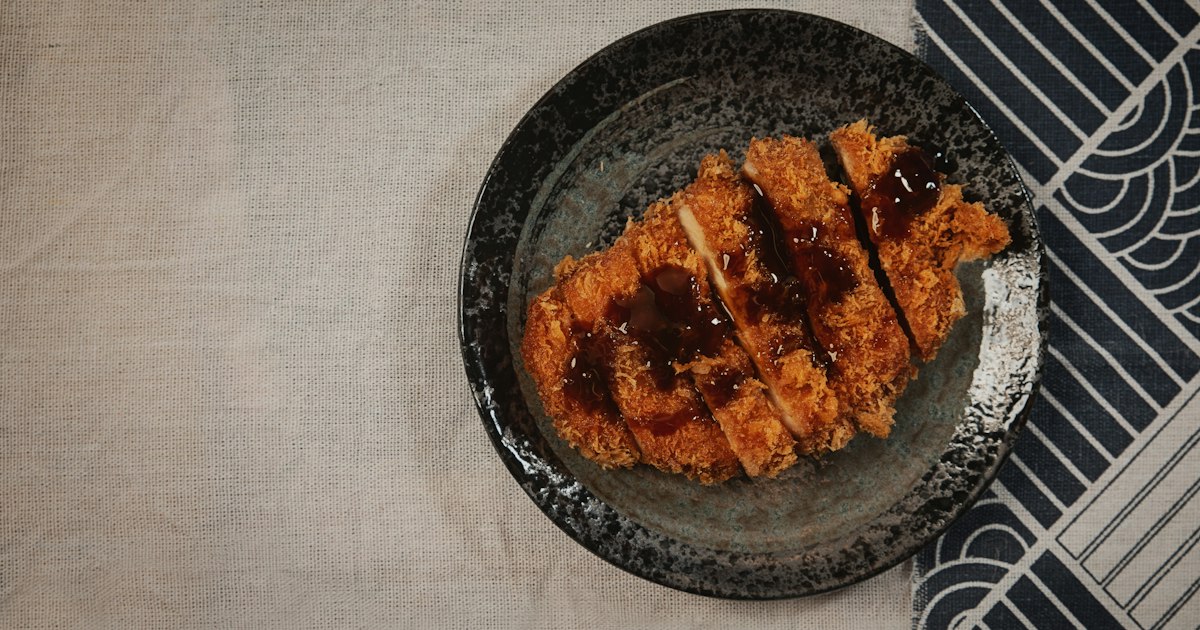
Photo by Charles Chen on Unsplash
If you’re passing through Nagoya and only have time for one regional dish, make it misokatsu. This is a thick, deep-fried pork cutlet smothered in a glossy, almost chocolate-dark miso sauce — sweet, savory, and unmistakably Nagoya. It looks nothing like the tonkatsu you’ll find elsewhere in Japan, and it tastes completely different too, thanks to the region’s signature hatcho miso. Here’s what it actually is, what it costs, and exactly where to go.
What Makes Misokatsu Different
Standard tonkatsu is served with a tangy, Worcestershire-style sauce or just a squeeze of lemon. Misokatsu swaps that for a sauce built on hatcho miso, a dark, intensely fermented soybean paste that’s been made in the Nagoya area (specifically Okazaki, a short train ride away) for centuries. The miso is simmered down with dashi, sugar, and mirin until it turns into a thick, almost caramel-like glaze — bitter-sweet, salty, and rich enough to cut through the fried pork without feeling heavy.
You’ll see it served a few ways: sauce poured directly over a whole cutlet (teppan misokatsu, often sizzling on an iron plate), cutlet strips you dip into a side bowl of sauce, or misokatsu as the topping on a rice bowl (misokatsu-don). All three are worth trying if you have more than one meal in the city.
Where to Eat It
Budget (around 1,000–1,400 yen): Misokatsu Matsunoya is a casual chain found all over Nagoya, including inside Nagoya Station’s underground mall, with set meals (cutlet, rice, miso soup, shredded cabbage) typically in this range. It’s a reliable, no-fuss option if you’re catching a train and want something fast.
Mid-range (around 1,500–2,200 yen): Yabaton is the name most locals point to first. The original shop is in the Yaba-cho area near Osu, a few minutes’ walk from Yaba-cho Station on the Meijo subway line, and there are now branches at Nagoya Station (JR Central Towers and the Esca underground mall) and in Sakae. Order the “waraji tonkatsu” — named because the two cutlets are roughly the size and shape of straw sandals (waraji) — if you’re hungry, or the regular hire-katsu (pork loin) set if you’re not. Most locations run from around 11:00 to 21:00 or 22:00, though hours vary slightly by branch and it’s worth checking the specific outlet before you go, especially around lunch when queues form.
Splurge (3,000 yen and up): For a sit-down, teppan-style version with thicker, higher-grade cuts of pork, look at restaurants in and around Sakae and the Nagoya Station towers that specialize in set courses — these often come with small side dishes, a choice of miso or regular sauce, and more attentive service. If you want to taste misokatsu as part of a broader Nagoya food crawl, pairing it with hitsumabushi (grilled eel over rice) at a nicer restaurant is a common way locals treat visiting guests.
Getting There
Nagoya sits directly on the Tokaido Shinkansen line between Tokyo and Osaka/Kyoto, so it’s an easy stopover rather than a detour — about 100 minutes from Tokyo and 50 minutes from Kyoto on the Nozomi. If you’re coming from the Kansai side, it’s also worth knowing that Nagoya is reachable via the Kintetsu network, one of the private railways that often gets overlooked by tourists focused only on JR passes; see our guide to Kansai’s private railways for how fares and routes compare to the Shinkansen. Once you’re in Nagoya, almost every misokatsu restaurant worth visiting is clustered around Nagoya Station or the Sakae/Osu area, both of which are a short subway ride apart.
Best Season and Timing
Misokatsu isn’t seasonal — it’s a year-round, any-weather comfort food, which makes it a good backup plan on a rainy day when outdoor sightseeing is off the table. The one timing tip that actually matters is mealtime crowding: the famous spots like Yabaton’s original Yaba-cho location get a genuine line at lunch (roughly 12:00–13:00) on weekends. Arriving right at opening or going for an early dinner around 17:00 avoids most of the wait.
Common Mistakes to Avoid
- Assuming it tastes like regular tonkatsu sauce, just darker. Hatcho miso sauce is noticeably more savory and slightly bitter-sweet, closer to a thick teriyaki than to Worcestershire sauce. If you’re sensitive to strong fermented flavors, ask for the sauce on the side rather than poured over the whole cutlet.
- Ordering the biggest cutlet without checking the size. The “waraji” cutlets at Yabaton are genuinely huge — two cutlets meant to be shared or eaten by someone with a big appetite. Solo diners should default to the regular-size set.
- Skipping the cabbage and rice refills. Many set meals include free refills on shredded cabbage, rice, or miso soup — ask if you’re still hungry rather than ordering a second cutlet.
- Not budgeting cash. Some of the smaller, older misokatsu shops (as opposed to the chain outlets in station malls) are cash-only or have limited card terminals, so carry some yen just in case.
If You Like Miso, Go Deeper
Misokatsu is Nagoya’s answer to a broader Japanese habit of marinating or sauce-ing food in regional miso styles. If the flavor profile appeals to you, it’s worth comparing it to Kyoto’s version of miso cooking: saikyo yaki uses a sweet white miso to marinate fish, which is almost the tonal opposite of Nagoya’s dark, assertive hatcho miso — tasting both back-to-back on a longer Japan trip is a good way to understand just how differently miso can be used from region to region. And if pork is your focus in Nagoya, locals will also point you toward the city’s grilled offal scene; our guide to horumon yakiniku covers where to find that if you want a second, very different kind of meaty meal while you’re in the area.
Misokatsu doesn’t require reservations, special planning, or a particular season — just an appetite and a short trip to Yaba-cho, Sakae, or Nagoya Station. It’s one of the easiest regional specialties in Japan to work into even a tight itinerary, and one of the most distinctive.