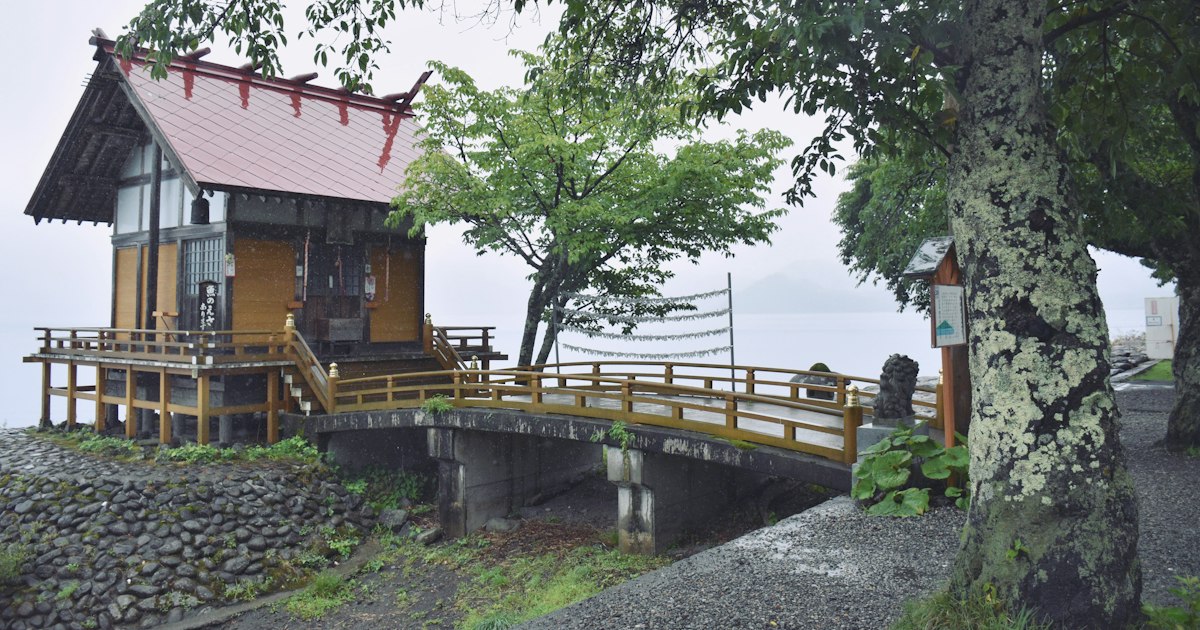
Photo by Hong Ki Tang on Unsplash
Lake Tazawa doesn’t announce itself the way Mount Fuji or Kyoto’s temples do. It sits quietly in the mountains of Akita Prefecture, a near-perfect caldera lake whose water is so deep and so clear that it shifts between cobalt, teal, and near-black depending on the light. Add a gilded statue of a legendary young woman standing on the shore, a ring road made for slow cycling, and some of Tohoku’s best-hidden onsen a short drive away, and you have a destination that rewards the kind of traveler willing to go one region past the obvious itinerary.
Why Lake Tazawa Is Worth the Detour
Lake Tazawa is Japan’s deepest lake, plunging to 423.4 meters, deep enough that the lake almost never fully freezes even in Akita’s brutal winters, unlike shallower lakes nearby. It formed inside a volcanic caldera, which is why the shoreline curves in such a tidy, almost circular loop, roughly 20 kilometers around. The water’s color is the main event: on clear days it reads a saturated cobalt blue, thanks to the depth and mineral clarity, and locals half-jokingly call it “Tatsuko blue” after the statue that has become the lake’s symbol. If you’ve enjoyed other volcanic lakes in Japan, this one belongs on the same list as Hokkaido’s Lake Shikotsu and Lake Toya or the crater-rim views at Lake Mashu, though Tazawa is easier to reach and has a more walkable, bikeable shoreline than either.
The Legend of Tatsuko and Her Golden Statue
The lake’s best-known landmark is a bronze statue coated in gold leaf, standing in the shallows on the eastern shore near Katakurazaki. It depicts Tatsuko, a village girl in local legend who prayed to stay beautiful forever and was transformed into a dragon, becoming the guardian spirit of the lake. A matching statue of her mother, Matsuzaki, is paired at a small shrine nearby, Gozanoishi Shrine, which is dedicated to the deity Tatsuko is said to have become. Both the statue and the shrine are outdoors, free to view, and accessible any time of day; sunrise and late afternoon are the best times for photos, since the statue faces the water and catches the light differently throughout the day. There’s no admission fee and no set “hours” here, which is unusual for a named sight in Japan.
How to Get There from Tokyo
The gateway is Tazawako Station, served directly by the Akita Shinkansen “Komachi,” which runs from Tokyo Station via Morioka. The ride takes roughly 3 hours to 3 hours 40 minutes depending on the train, and a one-way reserved seat costs around ¥16,000-17,000; the Komachi is covered by the Japan Rail Pass and most JR regional passes that include the Akita Shinkansen, so it’s worth checking your pass coverage before buying a separate ticket. From Tazawako Station, the statue and the main lakeside area are not walking distance, about 7-8 kilometers around the shore, so you’ll need a seasonal sightseeing bus, a taxi (roughly 15-20 minutes, a few thousand yen), or a rental car. If your plans include a longer loop through Tohoku, build in slack: once you’re out this far from Tokyo, missing the last connecting train back matters more than it would in a big city, so it’s worth knowing how shuden timing works before you commit to a late departure from Tazawako.
Best Season and Timing
Lake Tazawa is a year-round destination, but each season gives you something different. Late April through early November is when the “Yurinko” sightseeing bus loops around the lake, stopping at the statue, the shrine, and rental shops, which makes this the easiest window for visitors without a car. Autumn, roughly mid-to-late October, brings foliage along the surrounding ridgelines and is widely considered the most photogenic time, with fewer crowds than Kyoto’s autumn rush. Summer is best for cycling and for the clearest, bluest water, though the lake itself is too cold and deep for casual swimming even in August. Winter turns the shoreline into a quiet snow scene and brings the Tazawako Ski Resort into play, a short drive from the station with lake views from its upper slopes, but the sightseeing bus stops running and taxis become your main option for reaching the statue.
Getting Around the Shore
The 20-kilometer loop road is flat enough and scenic enough that cycling is the preferred way to see the lake if you’re visiting between spring and autumn. Rental shops cluster near Tazawako Station and at a few points along the shore, typically charging around ¥500-600 per hour or ¥1,500-2,000 for a full day, with electric-assist bikes available for a bit more; a leisurely full loop takes about two to three hours with stops. If you’d rather not pedal, the seasonal bus sells single-ride tickets (roughly ¥700-1,000 depending on the stretch) and a one-day pass for unlimited rides, which is the better deal if you’re stopping at more than two or three points. Driving is the most flexible option and the only realistic one in winter, with several small parking areas along the road near the statue and shrine.
Where to Stay: Lakeside and the Nyuto Onsen Villages
Lake Tazawa works well as a day trip from Akita or Morioka, but staying over opens up one of Tohoku’s most atmospheric onsen areas, the Nyuto Onsen villages, about 30-40 minutes by car or seasonal bus from Tazawako Station. On a budget, the Tazawako area has simple guesthouses and a youth hostel near the station from around ¥4,000-5,000 a night. Mid-range travelers do well at one of the lakeside hotels with onsen baths and lake-view rooms, generally ¥10,000-18,000 per person with dinner included. For a splurge, Tsurunoyu Onsen in the Nyuto Onsen group is the one to seek out: a centuries-old thatched-roof ryokan with milky, sulfurous outdoor baths that regularly appear in Japanese travel features, with rooms from roughly ¥20,000-30,000 per person on a half-board plan. If you’re staying at a traditional ryokan in this area, it’s worth knowing in advance about kokorozuke, the small cash-in-an-envelope gratuity custom some older ryokan still practice, since staff rarely explain it and foreign guests often miss it entirely.
Common Mistakes to Avoid
The most common misstep is assuming the statue is walkable from the station; it isn’t, and travelers who find this out after arriving often end up paying for an expensive last-minute taxi. Second, visitors sometimes show up outside the April-to-November bus season expecting the same transport options and get stranded without a car, especially in winter. Third, people occasionally plan to swim or wade deep into the lake on a hot day; the water is cold year-round and the lakebed drops off sharply near the shore, so it’s best treated as a scenery-and-photos stop rather than a swimming spot. Finally, because this is a rural area with limited shops, bring cash; card acceptance at small rental counters and roadside stalls around the lake is inconsistent even now.
Lake Tazawa rewards a slower pace than most stops on a first Japan itinerary, which is exactly its appeal. Pair it with a night or two at Nyuto Onsen and a loop of the shoreline by bike, and it becomes one of the more memorable detours in a Tohoku trip rather than a rushed photo stop on the way to somewhere else.