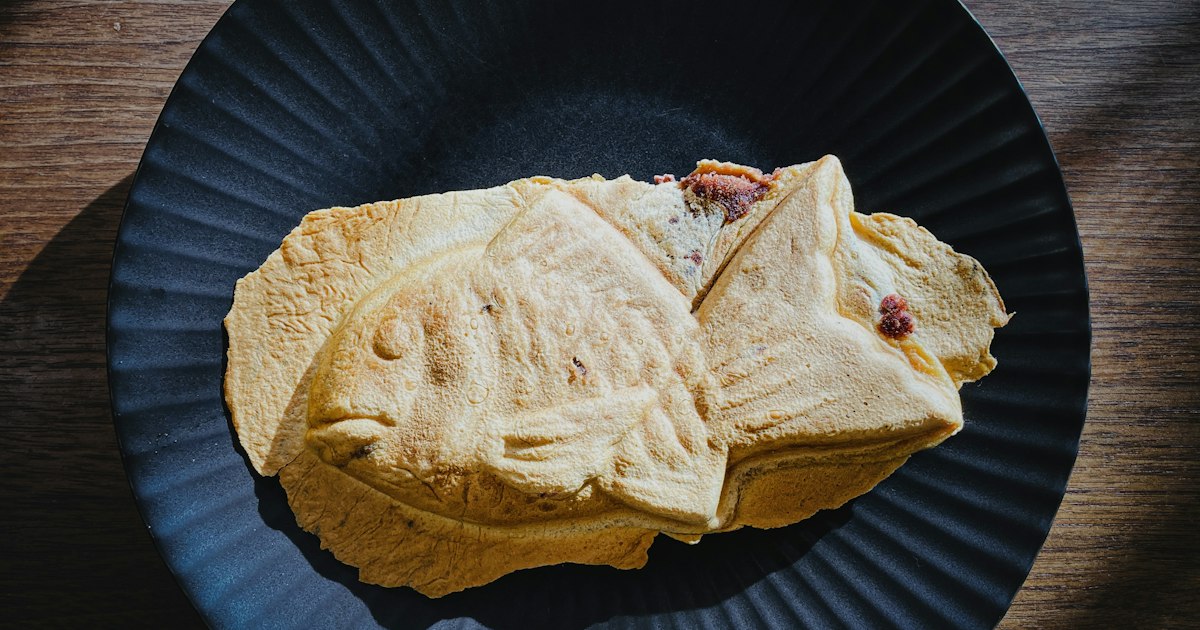
Photo by Kumiko SHIMIZU on Unsplash
If you’ve ever bought a warm, fish-shaped cake stuffed with red bean paste from a street stall in Japan, you’ve eaten taiyaki — and you’ve probably wondered whether you could make it at home. The answer is yes, and Japan sells an entire category of griddle molds for exactly this, from heirloom cast-iron pans to electric countertop machines. The tricky part for visitors is that the shelf isn’t just “taiyaki pans” — it also includes a wider family of novelty molds, sometimes grouped under the broader term kanban-yaki (literally “signboard-grilled”), referring to shop-specific shaped snacks that use the same waffle-iron technique but swap the fish for a shop’s mascot, a star, a heart, or a seasonal character. This guide walks through what each type actually is, what they cost, and where to buy one before you fly home.
What’s the Difference Between Taiyaki Pans and Kanban-yaki Molds?
Taiyaki pans are purpose-built for one shape: the tai (sea bream) that gives the snack its name and its lucky, celebratory connotation in Japanese food culture. A true taiyaki pan has deep cavities with fin and scale detailing pressed into the metal, usually hinged so the two halves close around the batter.
Kanban-yaki molds are the same basic concept — batter poured into a hinged, patterned griddle — but the cavity shape is whatever that particular shop or region wants to sell: a local mascot, a four-leaf clover, a car, a sports-team logo. For home cooks, this matters because a “fish mold” sold as a novelty item is usually smaller and shallower than a dedicated taiyaki pan, and it’s built for speed and cuteness rather than a thick, bread-like fish body. If you want the classic convenience-store-style taiyaki texture, buy a taiyaki pan specifically labeled 鯛焼き器 (taiyaki-ki); if you just want a fun, giftable mold for parties, a kanban-yaki-style novelty mold works fine.
Traditional Cast-Iron Taiyaki Pans: The Souvenir-Shop Classic
Stovetop cast-iron taiyaki pans are heavy, two-handled, clamshell pans that make one or two fish at a time over a gas burner. They’re the type used by actual taiyaki stalls, scaled down for home stoves. Cast-iron versions, including pieces made in the Nambu ironware (nanbu tekki) tradition from Morioka in Iwate Prefecture, typically run ¥6,000–¥15,000 depending on size and finish. They need the same care as a cast-iron skillet — oil the cavities before each use, dry thoroughly, and never soak them — but they produce a crisp, slightly thick shell that’s closest to what you’ll taste from a good taiyaki stand.
Lighter aluminum stovetop versions exist too, usually ¥2,500–¥5,000, and are a reasonable middle ground if you don’t want to deal with cast-iron maintenance or airline baggage weight.
Electric Taiyaki Makers: Easiest for Home Kitchens Abroad
If you’re taking this home to a kitchen outside Japan, an electric taiyaki maker is usually the better buy. These are non-stick, thermostat-controlled countertop appliances that cook 2–6 fish at once and don’t require monitoring a flame. Prices generally sit between ¥3,000 and ¥6,000 for dedicated taiyaki makers from Japanese small-appliance brands. A few brands, such as Vitantonio, sell modular waffle makers with swappable plates, one of which is a taiyaki-shaped plate — a good option if you want one machine that also does regular waffles and hot sandwiches. The main catch for overseas buyers is voltage: Japan runs on 100V, so unless the box explicitly states 100–240V compatibility, you’ll need a step-down transformer to use it safely outside Japan.
Kanban-yaki and Other Novelty Shape Molds: Beyond the Fish
Novelty molds in non-fish shapes are sold at souvenir counters, variety stores, and some festival stalls as a playful alternative to the classic tai shape. They use thinner batter and shallower cavities than a true taiyaki pan, so the result is closer to a soft dorayaki-style pancake than a bready taiyaki shell. These are the ones worth buying as gifts rather than for serious cooking — they’re inexpensive, light to pack, and the shapes (hearts, stars, regional mascots) travel well as conversation pieces. If you’re the kind of traveler who collects distinctive Japanese handmade or novelty goods on every trip, it’s worth browsing alongside other specialty-shopping stops — the yarn and craft shops covered in our guide to Tokyo’s yarn and knitting supply shops keep a similar mix of practical tools and giftable novelty items.
Where to Buy Them in Tokyo
Kappabashi (Kitchen Town), in Asakusa, is the single best place to compare taiyaki pans side by side. It’s a street of restaurant-supply shops that also sell to home cooks, with cast-iron and aluminum pans in multiple sizes. Most shops open around 9:00–10:00am and close by 5:30–6:00pm, and a number of them are closed on Sundays, so plan a weekday visit if possible. The nearest station is Tawaramachi on the Ginza Line, about a 5–7 minute walk north. If you’re in the area, it’s worth pairing the trip with people-watching — Kappabashi is a short ride from Asakusa’s main sights, and if your visit lines up with mid-May, the neighborhood gets loud and crowded during the Sanja Matsuri, when food stalls selling taiyaki and other grilled snacks line the surrounding streets — a good way to taste a few styles before deciding which pan to buy.
For easier, lower-effort shopping, Don Quijote and Loft stock electric taiyaki makers and novelty molds, Nitori carries basic aluminum stovetop pans at low prices, and Daiso sells simple single-fish aluminum pans and silicone molds for ¥100–¥500 — fine for a trial run before committing to a real pan. If you’d rather browse upscale kitchenware in a calmer setting than central Tokyo, the department stores around Futako-Tamagawa carry curated home goods sections that sometimes include higher-end Japanese griddle pans. Amazon.co.jp and Rakuten also ship internationally on many of these items if you’d rather not carry a cast-iron pan in your luggage.
Budget, Mid-Range and Splurge Picks
- Budget (¥100–¥500): Daiso aluminum or silicone molds — fine for testing the batter before buying anything serious.
- Mid-range (¥2,500–¥6,000): Aluminum stovetop pans or an electric taiyaki/waffle maker — the sweet spot for most home cooks taking one home.
- Splurge (¥8,000–¥15,000+): Cast-iron or Nambu ironware taiyaki pans — heavier, needs seasoning, but gives the closest result to a street-stall taiyaki and lasts for decades with basic care.
Common Mistakes When Using These Molds at Home
The most frequent complaint from first-time buyers is sticking, usually from under-oiling a cast-iron pan on the first few uses before it’s properly seasoned — oil generously and expect the first batch or two to be imperfect. The second is overfilling with red bean paste or custard, which leaks out at the seams and burns onto the plate; use less filling than feels intuitive. The third is batter thickness: taiyaki batter should be noticeably thinner than pancake batter, closer to a crepe consistency, or the fish won’t cook through before the outside browns. Finally, don’t buy a 220–240V appliance assumption into a 100V-only Japanese electric maker without a transformer — it’s the single most common reason these machines get returned or sit unused after a trip.