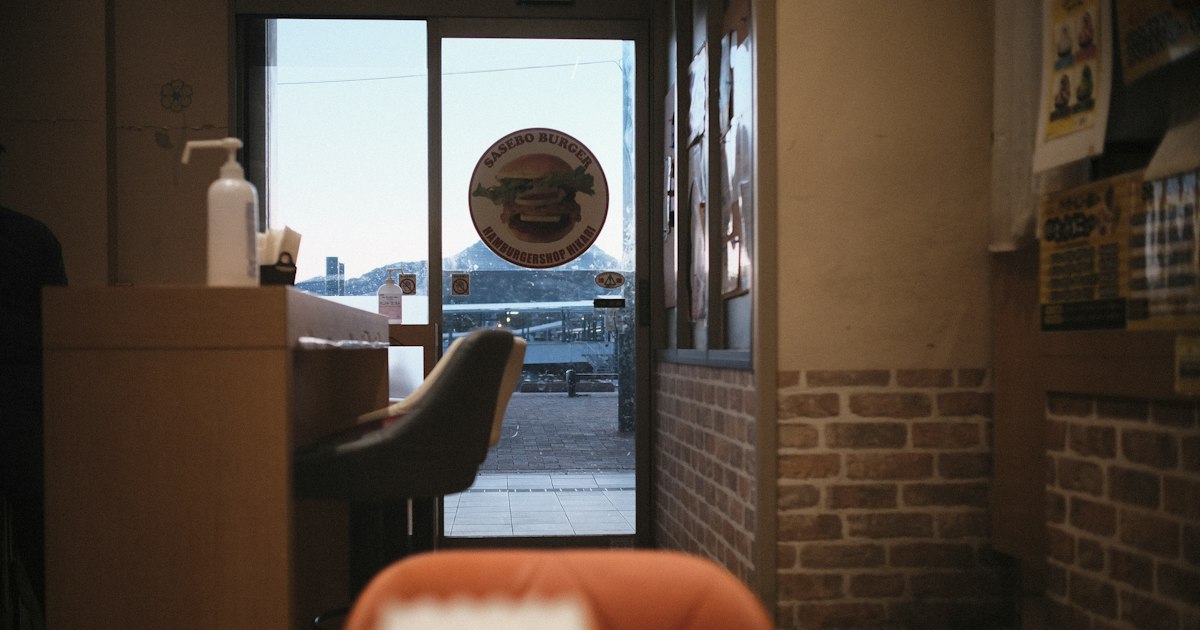
Photo by Our Latest Number on Unsplash
Long before burger chains spread across Japan, sailors stationed at the US Navy base in Sasebo were teaching local cooks how to build a hamburger from scratch. The result, decades later, is a city-wide specialty with its own certification mark, its own “burger map,” and a devoted following among Japanese food travelers who make the detour to Nagasaki Prefecture just for a bun and a patty. Here’s what makes the Sasebo burger worth the trip, and how to eat your way through it without wasting a meal.
Why Sasebo, of All Places, Has Japan’s Burger Pedigree
Sasebo has hosted a US naval presence since the postwar occupation, and today it’s home to US Fleet Activities Sasebo, a base that still anchors the city’s economy and streetscape. In the 1950s, local diners near the base started making hamburgers to order for American servicemen who wanted something familiar — fresh-baked buns, a patty grilled after you ordered it, not assembled in advance. Sasebo is often credited as the city where Japan’s hamburger culture began, predating the arrival of McDonald’s and other chains by roughly two decades. That “made fresh when you order” habit stuck, and it’s still the defining difference between a Sasebo burger and a fast-food one.
What Actually Makes a Sasebo Burger Different
The city’s tourism association runs a loose certification system, and shops that qualify can display a “Sasebo Burger” mark. The core rules are simple: the bun should be fresh (either baked in-house or sourced from a quality bakery, not mass-produced), the patty is grilled to order rather than pre-cooked and held under a heat lamp, and vegetables should be fresh and generously stacked. In practice this means you’ll wait 10–15 minutes for your burger, and it arrives tall, a little messy, and usually too big to pick up cleanly without losing half the toppings onto the plate. Expect lettuce, tomato, onion, and a thick beef patty as the baseline, with bacon, fried egg, avocado, or teriyaki sauce as common upgrades.
Where to Eat: Budget, Mid-Range, and Splurge Picks
There are roughly 20–30 shops around Sasebo carrying the official burger-map designation, ranging from stand-up takeout counters to full sit-down diners, so there’s no single “best” shop — it depends on how much time and appetite you’ve got.
- Budget (around ¥500–900): Small takeout counters and lunch-counter diners near the Sasebo Chuo bus terminal and the Yonkacho/Sanbancho arcades sell a classic cheeseburger or teriyaki burger in this range — order it to go and eat it in nearby Umi-Kaze Park overlooking the harbor.
- Mid-range (around ¥900–1,400): Longtime American-diner-style shops serving a full burger-and-fries set with a drink fall here. These are the places with checkered floors, neon signs, and English-language menus left over from decades of serving base personnel — look for names like Big Man, Hikari, and Log Kit, all well known locally and marked on the Sasebo Burger map available at the tourist information counter inside JR Sasebo Station.
- Splurge (¥1,500 and up): Specialty burgers piled with avocado, a fried egg, extra cheese, and thick-cut bacon, often paired with a milkshake, push into this range at the more polished sit-down spots. Worth it once, especially if you’re sharing fries.
Pick up the printed Sasebo Burger Map (free, in Japanese and English, at the station tourist desk) before you start wandering — it’s the easiest way to confirm which shops currently hold the certification and see their hours at a glance, since smaller family-run diners do occasionally close for a day without much online notice.
How to Get to Sasebo
Sasebo sits in Nagasaki Prefecture, about 1.5–2 hours from Fukuoka’s Hakata Station on the JR limited express “Midori,” which runs directly on the Sasebo Line. Coming from Nagasaki city, there’s no bullet train link — take a limited express or rapid service on the Omura/Sasebo Line, which also takes around 1.5–2 hours depending on the connection. Highway buses from Fukuoka’s Tenjin and Hakata bus terminals are a cheaper, slower alternative at roughly 2 hours. If you’re already headed to Huis Ten Bosch, the theme park is just one stop from Sasebo, making it easy to combine the two into a single day. For the train leg from Fukuoka, you’ll pass through Takeo Onsen on the Sasebo Line — if you have an extra half-day, it’s worth reading up on Takeo Onsen’s library-and-hot-spring combination as a stopover on the way in or out.
Best Time to Visit and Timing Tips
Most burger shops open around 11:00 for lunch and stay open through dinner, though hours vary shop by shop and a number close one weekday (often Wednesday) — check the shop’s posted hours or the burger map before making a special trip. Lunch (11:30–13:30) is the busiest window, especially on weekends, since this is also when day-trippers from Fukuoka and Nagasaki city pass through; arriving right at opening or after 14:00 avoids most of the wait. Weather-wise, Sasebo’s harbor views and outdoor eating spots like Umi-Kaze Park are most pleasant in spring (April–May) and autumn (October–November), when it’s comfortable to eat your burger outside rather than in an air-conditioned diner. Summer in Nagasaki Prefecture is hot and humid, which is fine if you’re eating indoors but less pleasant for a park picnic.
Common Mistakes to Avoid
- Treating it like fast food. Because the patty is grilled to order, a Sasebo burger genuinely takes 10–15 minutes. Don’t order it if you’re trying to catch a train in 20 minutes — budget real sit-down time.
- Skipping the certification mark. Plenty of ordinary restaurants in Sasebo sell a burger on the menu, but only shops on the official map follow the fresh-bun, grilled-to-order standard. Checking the map first avoids a disappointing, generic burger.
- Not bringing cash. Many of the smaller, older diners — the ones with the most character — are cash-only or have limited card readers. Carry yen in case the shop you pick doesn’t take cards.
- Ordering it the same as back home. Sasebo burgers are often sauced with a sweeter, teriyaki- or demi-glace-style sauce rather than ketchup-and-mustard. If you want the classic American profile, ask for it, but trying the house sauce first is part of the point.
Rounding Out the Trip
Sasebo works well as a one- or two-night add-on to a Fukuoka or Nagasaki itinerary rather than a standalone destination — most visitors come for the burger, the harbor views, and a day at Huis Ten Bosch, then move on. If you’re building out the food side of a Kyushu trip, it’s worth comparing another regional specialty worth a detour: Nagoya’s miso-topped pork cutlet, misokatsu, follows a similar “local pride dish” pattern, as does chirashizushi if you want something lighter to balance out a burger-heavy day. For lodging, Sasebo has a modest but decent hotel selection near the station and harbor; if you haven’t settled on a booking platform yet, this comparison of Rakuten Travel, Jalan, and Booking.com covers which one tends to have the better rates for smaller regional cities like this one.