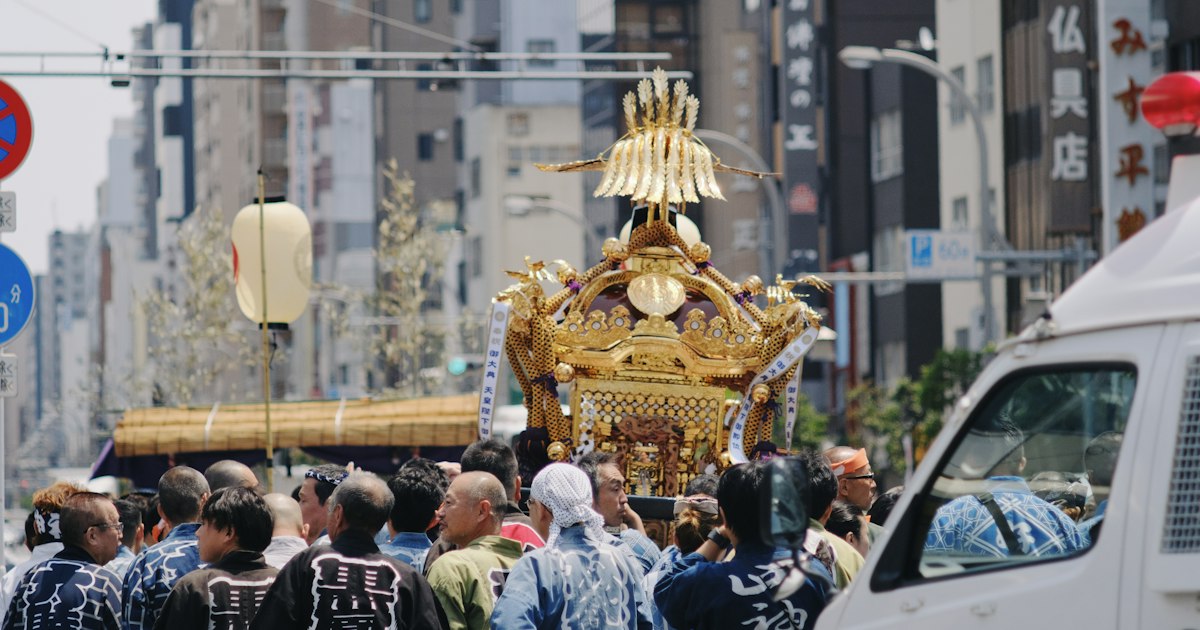
Photo by Trevor Paxton on Unsplash
Three days a year, the quiet temple streets around Senso-ji turn into a shoving, chanting, sake-soaked crowd of a couple million people as neighborhood teams hoist gold-topped shrines on their shoulders and run them through traffic. That’s Sanja Matsuri, and it’s unlike almost anything else on Japan’s festival calendar — closer to a rugby scrum than the serene lantern processions most visitors picture. Here’s how to actually watch it without getting flattened.
What Is Sanja Matsuri, and Why Is It So Wild?
Sanja Matsuri (“Festival of the Three Shrines”) is the annual festival of Asakusa Shrine, held in honor of the three men traditionally credited with founding Senso-ji in the 7th century. Unlike a typical matsuri where a mikoshi (portable shrine) is carried in a stately procession, Sanja’s mikoshi are deliberately jostled, tilted, and bounced by the bearers — it’s believed the rougher the ride, the happier the enshrined deities are. Add roughly 100 neighborhood associations, each fielding their own mikoshi and happi-coat-clad team, plus free-flowing beer and sake, and you get a festival that regularly draws 1.5–2 million spectators over the weekend.
When It Happens and the Three-Day Schedule
Sanja Matsuri runs every year on the third Friday, Saturday, and Sunday of May, rain or shine (it is not cancelled for light rain; only severe weather alters the schedule). Each day has a distinct character:
- Friday – The opening ceremony and Daigyoretsu, a stately procession of geisha, musicians, and performers of the binzasara dance, moving through the neighborhood in the afternoon. This is the calmest day and a good one for families or anyone who wants photos without the crush.
- Saturday – Around 100 “town” mikoshi, one from each participating neighborhood, are carried through the streets from mid-morning and converge on Asakusa Shrine for a blessing. Expect constant, overlapping processions all over the backstreets east and north of Senso-ji.
- Sunday – The main event. The three Honsha (“main shrine”) mikoshi are hoisted out of Asakusa Shrine at dawn, around 6:00 AM, and carried separately through all 44 local districts until they return after dark, often past 8:00 PM. This is the day the crowds peak.
Getting to Asakusa and Where to Stay
Asakusa Station is served by the Tokyo Metro Ginza Line, the Toei Asakusa Line, the Tobu Skytree Line, and the Tsukuba Express — from most central Tokyo hotels it’s a 15–25 minute ride. Senso-ji and Asakusa Shrine sit right next to each other a few minutes’ walk from the station exits, with Nakamise shopping street as the main approach.
If you want to be based in Asakusa for the festival, book early — rooms within walking distance sell out months ahead and prices spike for the weekend. When comparing options, our guide to Rakuten Travel, Jalan or Booking.com is worth reading first, since Japanese booking sites sometimes surface Asakusa ryokan and business hotels that don’t show up on Western platforms. Budget business hotels in the area run roughly ¥9,000–14,000/night during the festival (vs. ¥6,000–9,000 on a normal weekend); a riverside room with a Sumida-gawa view can run ¥25,000+.
Where to Stand: The Best Viewing Spots
The single worst place to watch is Kaminarimon Gate and Nakamise on Sunday afternoon — it’s packed shoulder-to-shoulder and you’ll mostly see the backs of other people’s heads. Better options:
- Asakusa Shrine’s main gate, Sunday around 6:00–6:30 AM — when the three Honsha mikoshi are brought out (Renko-sai). It’s early, but the crowd is a fraction of the afternoon size and this is the single most photographed moment of the festival.
- The backstreets east of Senso-ji (the residential blocks toward Kototoi-dori) — this is where neighborhood mikoshi actually pass close enough to touch, with none of the gate’s crowd barriers.
- Elevated spots — upper floors of cafes and restaurants along the main routes sometimes open to walk-ins or take reservations; ask at your hotel in advance, as these seats go first.
Police set up rope lines and one-way pedestrian flows on the busiest streets by midday Saturday and Sunday — once you’re funneled into one of these, you can’t easily cross to the other side, so decide your vantage point before the crowd builds.
Festival Food, Shopping and Cult Souvenirs
Yatai (food stalls) line the approach streets all three days: yakitori and karaage run about ¥500–800, takoyaki around ¥600, and festival beer or chu-hi in cans from the convenience stores nearby is cheaper than anything sold streetside. Asakusa is also one of the best places in Tokyo for old-fashioned Japanese snacks — the neighborhood’s senbei and dagashi shops are a step beyond the festival stalls, and if you want something crunchy to take home, it’s worth reading up on karinto, the brown-sugar fried snack several long-running Asakusa shops specialize in.
Nakamise itself stays open through the festival (most shops close around 6:00–7:00 PM) and is a reasonable stop for omamori, yukata, and traditional crafts, though prices are tourist-oriented — better bargains exist in the quieter side streets like Denboin-dori.
Common Mistakes First-Timers Make
- Showing up mid-afternoon Sunday expecting a clear view. By noon the main routes are solid crowds; arrive by 9:00–10:00 AM if you want to move freely, or go for the 6:00 AM departure instead.
- Wearing nice clothes. Mikoshi bearers splash beer, sake, and sometimes water on themselves and bystanders near the shrine. Dress like you don’t mind a stain.
- Assuming it’s a family-friendly, calm event like a lantern festival. It’s loud, physical, and alcohol-fueled — not dangerous for onlookers who stay out of the mikoshi’s path, but not a quiet cultural outing either.
- Trying to drive or bike in. Roads around Senso-ji close to traffic for long stretches on Saturday and Sunday; public transit is the only realistic option.
- Booking a hotel the week before. Asakusa and nearby Ueno/Ginza fill up; reserve 2–3 months out if you want anything central.
Budget, Mid-Range and Splurge Ways to Experience It
Watching Sanja Matsuri from the street costs nothing beyond your transit fare and whatever snacks you buy. Mid-range visitors can add a reserved lunch or cafe seat along the route (typically ¥2,000–5,000 per person) for a guaranteed, elevated view without the dawn wake-up. For a splurge, some ryokan and hotel rooms directly overlooking Nakamise or the Sumida River sell out specifically for festival weekend at a premium — if that matters to you, start checking rates as soon as next year’s dates are confirmed, since Asakusa’s best rooms for this weekend go first.