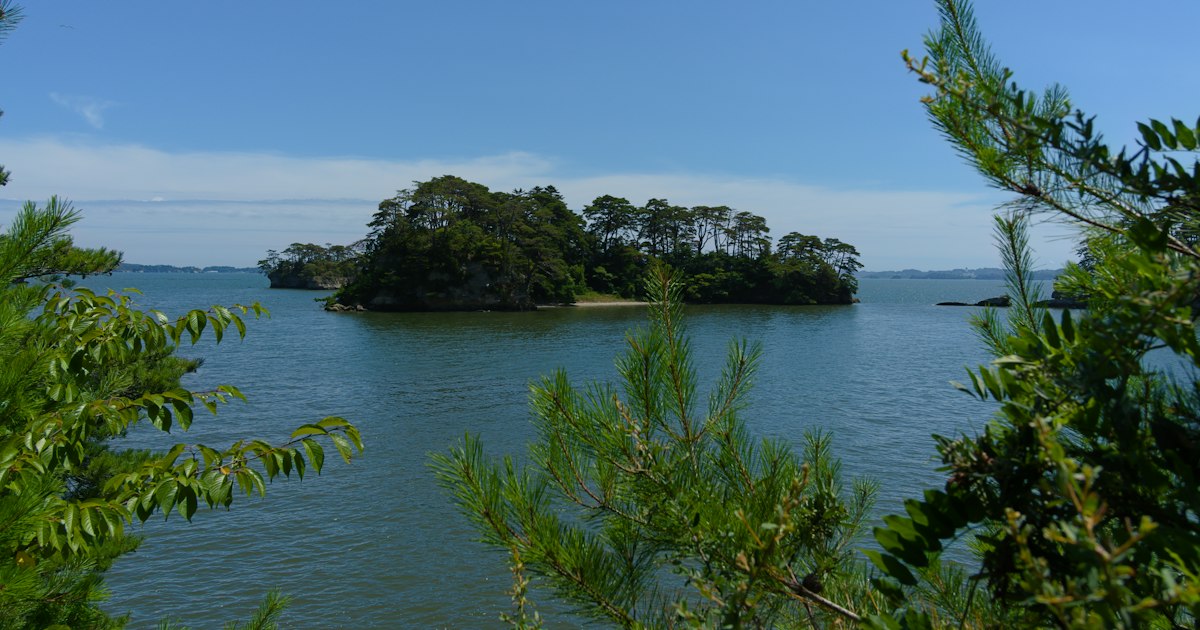
Photo by waa towaw on Unsplash
Matsushima Bay scatters roughly 260 small pine-covered islands across a sheltered stretch of water just northeast of Sendai, and it’s been ranked among Japan’s “Three Great Views” (日本三景, Nihon Sankei) for over 300 years, alongside Miyajima near Hiroshima and Amanohashidate in Kyoto Prefecture. Unlike those two, Matsushima doesn’t require a long detour — it’s a 40-minute train ride from Sendai Station, which makes it one of the easiest high-impact day trips in the Tohoku region. Here’s what’s actually worth your time once you get there.
Why Matsushima Looks the Way It Does
The islands are limestone and sandstone outcrops that have been slowly eroded by the bay’s current into odd, pitted shapes, each one topped with wind-bent black pine trees. The combination of water, white rock, and dark green pine is what 17th-century poets and painters obsessed over, and it’s still the reason people come. One quiet but important fact: in the 2011 tōhoku earthquake and tsunami, the islands acted as a natural breakwater and significantly reduced the wave’s force before it reached Matsushima’s own waterfront, which is part of why the town itself, unlike many other coastal communities in Miyagi, was able to rebuild relatively quickly.
Getting There from Sendai
The simplest route is the JR Senseki Line from Sendai Station to Matsushimakaigan Station — about 40 minutes on a rapid service, roughly 410 yen one-way. This station drops you right at the bay, a two-minute walk from the boat piers and Godaido. Alternatively, the JR Tohoku Main Line runs to Matsushima Station, which is about a 10-minute walk further from the water but closer to Zuiganji Temple’s entrance. If you’re coming by car or bus, there’s also a route via Shiogama, where you can catch a sightseeing boat that cruises through the bay and drops you at Matsushima’s pier instead of doubling back by train — a nice way to see the islands without retracing your steps. If you haven’t sorted lodging in Sendai yet, our guide to which site to actually book through — Rakuten Travel, Jalan, or Booking.com is worth a look, since Sendai hotel availability tightens fast around Tanabata (early August) and the autumn foliage weeks.
The Boat Cruise: What It Actually Costs
The classic Matsushima experience is a 50-minute sightseeing cruise around the bay’s main islands, operated mainly by Marubun and the Matsushima Sightseeing Boat Company from the pier near Matsushimakaigan Station. Standard cruise tickets run around 1,500 yen for adults on a regular boat; the ornate “gozabune” boats shaped like dragons or phoenixes cost more, typically around 2,500 yen, but they’re slower and more about the photo than the view. Boats run roughly every 30 minutes from around 9:00 to 15:00 or 16:00 depending on the season, with reduced schedules in winter. Seagulls will trail the boat the entire ride if you buy a bag of “kappa ebisen” shrimp crackers sold at the pier kiosks for about 100 yen — feeding them off the deck is a minor tradition and genuinely fun for kids.
Zuiganji Temple and the Islands You Can Walk To
Zuiganji is the big cultural anchor here — a Zen temple founded in the 9th century and rebuilt in its current form in 1609 by Date Masamune, the regional lord who essentially built Sendai. The approach is through a cedar-lined avenue, and the main hall’s carved transoms and gilded interiors are considered some of the finest early Edo-period woodwork in the Tohoku region. Admission is around 700 yen, and it’s typically open 8:00 to 17:00 in peak season (shorter in winter, closing as early as 15:30). Right next to it, Entsuin Temple has a quieter rose garden and a mausoleum decorated with Western motifs — unusual for a 17th-century Japanese building — for a separate small admission fee.
For the islands themselves, Fukuurajima is the one you can actually walk onto, connected to the mainland by a 252-meter red wooden bridge. There’s a small botanical garden covering the island, and entry costs around 400 yen. Godaido, the small vermillion-pillared hall perched on its own tiny islet right at the harbor, is free to view from outside and is the single most-photographed structure in Matsushima — it’s connected by a short bridge with gaps between the planks that are intentional, meant to make visitors slow down and focus before reaching the sacred space.
Best Time to Visit
Cherry blossoms along the bay peak in mid-to-late April, and autumn foliage around Zuiganji and Entsuin typically peaks in early-to-mid November — if you’re reading this in early November, you’re close to the window. Evening illumination events are held at Zuiganji during the autumn color season, usually lasting a couple of weeks, and the temple stays open later than usual on those nights. Summer is busiest for domestic tourists because of Sendai’s Tanabata Festival in early August, which pairs well with a Matsushima day trip but means crowded trains and fully booked boats — reserve cruise tickets online or arrive before 10:00 if you’re visiting during that stretch. Winter is the quietest season and also oyster season, which brings its own reward (see below), but some smaller boats reduce their schedule and a few shops close early.
Eat the Oysters
Miyagi Prefecture is one of Japan’s top oyster-producing regions, and Matsushima’s bay — calm, nutrient-rich, and fed by several small rivers — is a major reason why. From roughly November through March, seafood restaurants along the harbor street serve raw oysters, grilled oysters, and oyster hot pot, often at oyster “yagura” huts set up seasonally near the pier where you get a small plate of raw or grilled oysters for around 500 to 800 yen. If you’d rather eat something more portable, a seafood donburi loaded with bay-caught uni, salmon roe, and shrimp from one of the market stalls near the station runs about 1,500 to 2,000 yen — similar in spirit to the seafood rice bowls covered in our guide to chirashizushi, if you want to know what to look for on the menu.
Common Mistakes to Avoid
- Treating it as a half-day trip when it’s really a full day. Zuiganji alone takes an hour, the boat cruise is another hour including boarding, and Fukuurajima is worth 30-45 minutes — pad in lunch and you’ve used five or six hours easily.
- Skipping the boat because “you can see the islands from shore.” You can see some of them from shore, but the cruise reaches the furthest, strangest-shaped islets that give Matsushima its reputation — it’s the single highest-value thing to do here.
- Visiting on a Monday without checking hours. Some smaller museums and shops around the bay close on Mondays or the day after a public holiday; Zuiganji itself stays open daily, but peripheral attractions are less consistent.
- Not bringing cash. Many of the boat ticket counters, shrine admission windows, and the oyster huts are cash-only or cash-preferred, especially outside peak tourist season.
If you’re building a longer Tohoku itinerary, Matsushima pairs naturally with a night in Sendai and, for travelers who like offbeat island detours, it’s worth comparing notes with other small-island day trips closer to Tokyo, like Sarushima in Tokyo Bay — a different scale entirely, but the same appeal of getting out on the water for an afternoon.