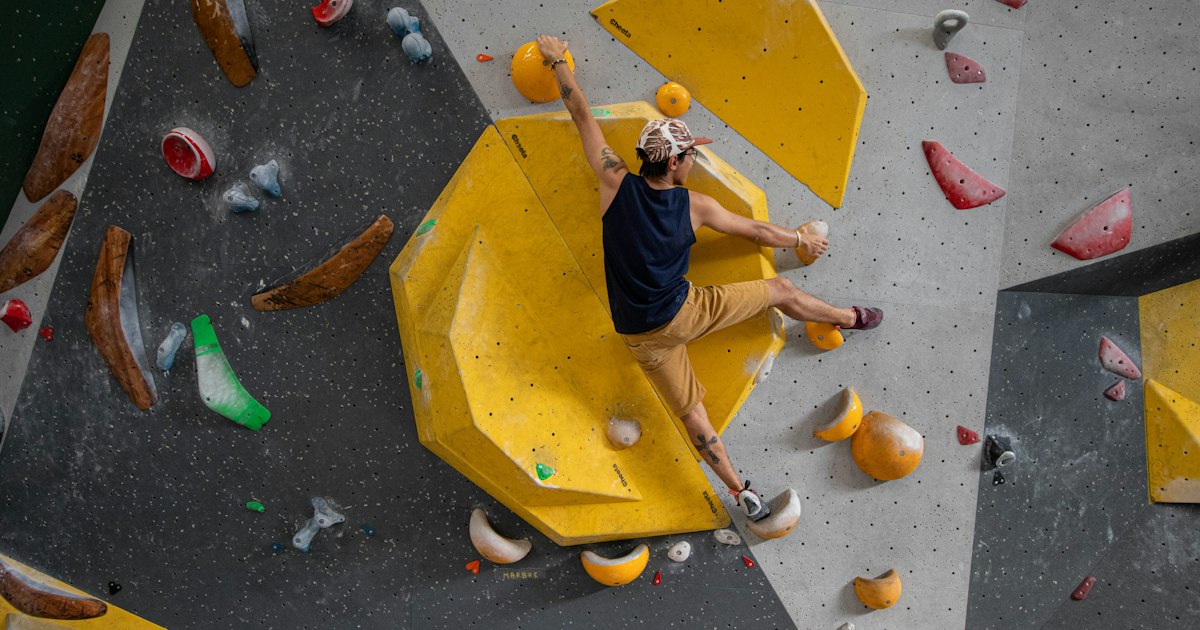
Photo by Nathan Cima on Unsplash
Japan’s bouldering scene is one of the most visitor-friendly hobby subcultures in the country — gyms are dense in every major city, staff are used to seeing foreign climbers with no Japanese ability, and almost none require membership for a single session. If you climb at home and don’t want to lose six weeks of finger strength on a three-week trip, here’s how to find a gym, what it costs, and how to avoid the handful of etiquette mistakes that visiting climbers make most often.
Why Japan Is Worth Packing Climbing Shoes For
Japan has one of the highest densities of commercial bouldering gyms per capita in the world, a legacy of the sport’s Olympic debut and a home-grown competitive scene that produced climbers like Akiyo Noguchi and Tomoa Narasaki. That popularity means gyms are well-maintained, walls are reset frequently (often every few weeks), and grading tends to be consistent and conservative — a Japanese V4 rarely feels like a sandbagged V6. Most gyms also run on a drop-in model rather than a membership model, so a single ¥2,500–¥3,200 day pass gets you full access with zero paperwork beyond a one-time registration form.
Tokyo’s Best Drop-In Gyms for Visitors
Tokyo has the largest concentration of gyms, and several are well known among traveling climbers specifically because staff are comfortable handling English-speaking first-timers:
- B-Pump Ogikubo — one of the city’s most famous gyms, with a strong overhang/competition-style setting and a steady flow of visiting climbers. Day passes run roughly ¥3,000–¥3,500, shoe rental around ¥500.
- Pump2 Climbing (various locations) — a chain with several Tokyo branches, good for slab and technical movement, slightly cheaper day passes (~¥2,500–¥3,000).
- Nose Climbing Gym — known for bouldering and roped climbing under one roof, useful if you climb both disciplines.
- T-Wall locations in and around Tokyo — large, beginner-friendly spaces with plenty of volume-based problems.
Most of these gyms open around 11:00–12:00 on weekdays and close between 22:00 and 23:00, with earlier closing (often 20:00–21:00) on Sundays and holidays — always check the gym’s own site the day you plan to visit, since hours shift seasonally and some gyms close one weekday for wall resets.
Beyond Tokyo: Osaka, Kyoto, and Regional Gyms
Osaka has its own strong scene, with gyms like Rocky Rockers and several branches of regional chains clustered near Umeda and Namba — convenient if you’re already planning a Kansai itinerary around Kyoto temples. Kyoto itself has a smaller number of gyms but still enough to fill an evening session after a day of sightseeing. Regional cities like Nagoya, Fukuoka, and Sapporo each have at least one or two well-reviewed gyms, though hours and English signage get thinner the further you go from Tokyo and Osaka — it’s worth messaging a gym on Instagram or calling ahead if you’re climbing somewhere off the beaten path.
What a Drop-In Session Actually Costs
Budget for the following, in rough JPY terms that hold across most city gyms:
- Budget session: ¥2,500–¥3,000 day pass + ¥400–¥600 shoe rental = under ¥3,600 total.
- Mid-range: ¥3,000–¥3,500 day pass at a flagship gym with better walls, plus chalk bag rental (~¥200–¥300) if you didn’t bring your own.
- Splurge: some gyms sell short-term “visitor passes” bundled with a locker and towel for ¥4,000–¥4,500, useful if you’re coming straight from sightseeing with a day bag.
Cash is still common at smaller gyms, though most Tokyo and Osaka locations now take IC cards or credit cards. Bring exact change or a working IC card as backup.
Gym Etiquette and Common Mistakes Visiting Climbers Make
A few habits trip up foreign climbers specifically:
- Skipping the registration form. Every gym requires a first-visit form (name, contact, sometimes a waiver) even for a single drop-in. Staff will have an English version at major gyms, but bring your passport or hotel address just in case.
- Wearing outdoor shoes past the entrance mat. Like most indoor sports facilities in Japan, bouldering gyms expect you to change into gym shoes or climbing shoes at a designated line — walking the mats in street shoes is one of the fastest ways to get a polite but firm correction.
- Loud brushing and excessive chalk. Japanese gyms tend to be quieter and tidier than many Western gyms; over-brushing holds or leaving chalk clouds is noticed.
- Assuming English fluency. Front desk staff can usually handle a transaction in English, but detailed questions about grading or problem resets go more smoothly with a translation app ready.
- Not checking reset days. Popular sections of a gym get stripped and reset on a rotating schedule — if you’re chasing a specific problem from a video, it may simply be gone by the time you arrive.
Best Time to Go and How to Fit It Into a Trip
Gyms are indoor and air-conditioned, so they’re a reliable plan B during Japan’s brutal July–August humidity or the depths of winter when outdoor plans fall through. Weekday afternoons (before 18:00) are noticeably quieter than weekday evenings or any time on weekends, when local regulars pack the walls after work or school. If your trip is built around rail travel — say a side trip on the Sanriku Railway or a multi-city Shinkansen itinerary — a city-center gym makes an easy evening stop since most are a short walk from a train station and open late enough to slot in after a full day of sightseeing.
Packing List: What to Bring (and What to Rent)
You don’t need to carry climbing shoes across the Pacific if you’d rather travel light — nearly every gym rents shoes and chalk bags for a few hundred yen, and some rent harnesses too if the gym has a roped section. If you do bring your own shoes and tape, Japan’s convenience stores and drugstores sell finger tape and skin balm cheaply, and a 100-yen shop can round out small supplies — the Daiso flagship in Harajuku stocks a wider range of sports and first-aid items than a typical neighborhood branch, including tape and small storage pouches useful for chalk and brushes. If you’re also bringing other gear-heavy hobbies on the trip — say a board picked up at Shonan’s secondhand surf shops or snowshoes from a backcountry rental counter — and you’re worried about lugging it all between hotels, Japan’s same-day luggage forwarding service can send a bag of climbing shoes and chalk ahead to your next hotel so you’re not carrying gym gear through train stations all day.
Whether you’re squeezing in one session between temple visits or building a whole week around gym-hopping, Japan’s bouldering scene rewards visitors who show up with yen in hand, a registration form filled out, and a willingness to follow the house rules — the walls themselves are consistently good enough to make the effort worthwhile.