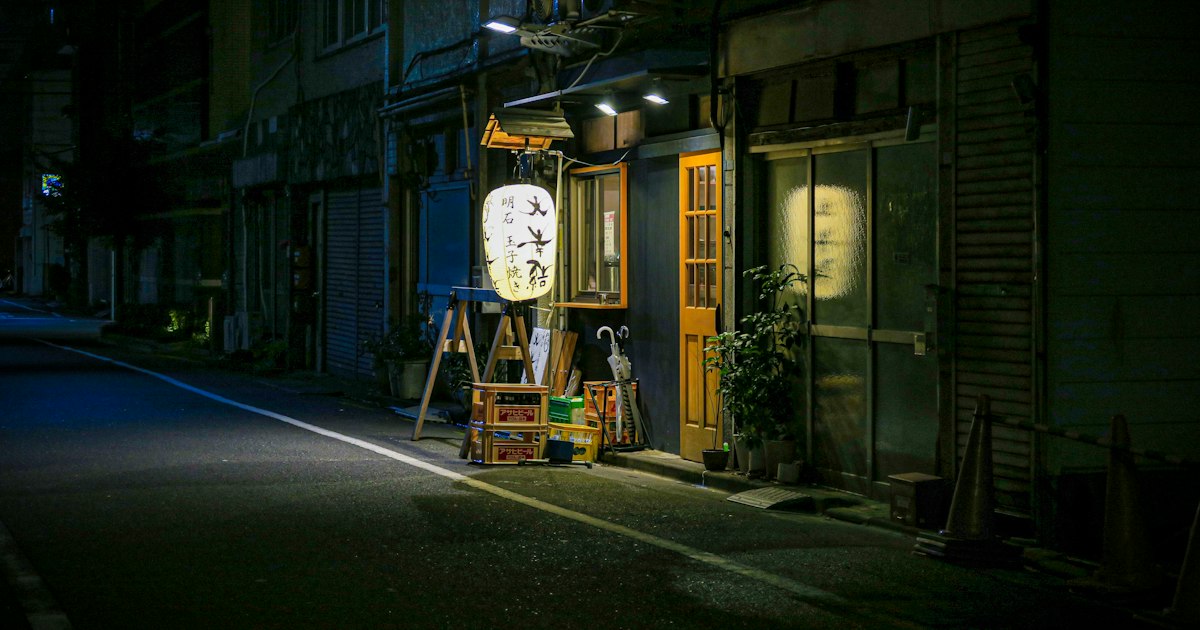
Photo by Shigeki Wakabayashi on Unsplash
Japan is one of the last places on earth where film photography is still a mainstream hobby, not a niche one. That means fresh stock is easy to find and processing labs are everywhere — but “everywhere” doesn’t mean “same-day everywhere.” The old image of a one-hour minilab on every corner has mostly given way to a smaller number of big-box stores that batch rolls off to a central lab. If you’re mid-trip and want to see your shots before you fly home, here’s where to go, what it costs, and how to avoid losing a week of your itinerary waiting for an envelope.
Why Bother Developing Mid-Trip Instead of at Home
Three practical reasons: first, if your camera has a light leak, a sticky shutter, or a loose film door, you want to know after roll one, not after roll twelve. Second, Japanese labs are cheap and good — Fujicolor and Kodak chemistry here is processed in volume, so quality is consistently high. Third, airport X-ray and repeated hand-carrying through humid, hot luggage isn’t great for exposed film sitting in your bag for two more weeks. Clearing rolls as you go reduces risk.
Same-Day and Fast-Turnaround Chains: Kitamura and Yodobashi
Camera no Kitamura (カメラのキタムラ) is the largest camera retail chain in Japan, with roughly 900 stores nationwide, and it’s still the most reliable default for film processing. The catch: fewer stores than before run an in-house minilab machine that finishes in about an hour. Most branches now bag your film and send it to Kitamura’s central lab, with turnaround of 2–7 days depending on the store and day of the week. The flagship-sized stores in places like Shinjuku, Ginza, and Namba (Osaka) are more likely to still have same-day or next-day in-house processing. Always ask at the counter before you hand over your rolls — staff will tell you honestly whether it’s “today,” “tomorrow,” or “next week.” Typical pricing for 35mm color negative (C-41): development only around ¥600–700, development plus a scan to CD/data around ¥1,100–1,400, and development with scan plus a set of prints around ¥1,600–2,000. 120 roll film runs slightly higher.
Yodobashi Camera and Bic Camera, the big electronics chains, also run photo-processing counters inside their larger stores (Yodobashi’s Shinjuku West and Akihabara flagships, Bic Camera’s Yurakucho and Shinjuku East branches are good bets). Pricing is comparable to Kitamura, and these stores are open long hours — typically 9:30/10:00 to 21:00 or 22:00, 365 days a year including most holidays — which matters if you’re squeezing an errand in around sightseeing. Expect a few days’ turnaround unless staff confirm otherwise.
Slide Film, Black-and-White, and Push Processing: Go Specialist
E-6 slide film and black-and-white are a different story — general chains usually send these out, and turnaround stretches to 5–10 days. If you’re shooting Ektachrome, Provia, or traditional B&W and want faster or more careful handling (including push/pull processing), look for independent professional labs clustered around Tokyo’s camera districts — Shinjuku and Nakano both have long-running specialist photo shops that cater to working photographers and handle E-6 and B&W in-house rather than sending it to a general consumer lab. Expect to pay roughly ¥1,500–2,500 for E-6 development and ¥800–1,200 for B&W, with scanning as a separate line item. These shops are smaller and keep more modest hours, often 11:00–19:00 and closed one day a week, so call or check a map listing before making a special trip.
Buying More Film Mid-Trip
Stock in Japan is fresh, well-refrigerated, and often cheaper than what you’ll find overseas — a real reason to pack light on film and restock here instead. Yodobashi Camera and Bic Camera carry the full current Fujifilm and Kodak color and B&W lineups (Fujicolor 100/200/400, Kodak Gold, ColorPlus, Ektar, Tri-X) at their larger branches, usually displayed near the camera department rather than up front. Camera no Kitamura stores also sell film and are more likely to stock odd formats like 120 or 110 if you’re shooting medium format. For something more specific — discontinued stocks, expired film at a discount, or secondhand film cameras to pick up a backup body — Shinjuku’s camera district (home to several multi-floor used-camera specialists) and Nakano Broadway’s camera shops are worth a browse even if you’re not buying.
If you just need a basic point-and-shoot or disposable camera in a pinch, don’t overlook general retailers — larger flagship-size Daiso stores sometimes carry simple single-use film cameras and basic rolls, though selection is far more limited than a dedicated camera shop and shouldn’t be your first stop if you’re shooting seriously.
Timing Your Developing Runs Around Your Itinerary
Drop off your first roll within the first two or three days of your trip, even if it’s not full — it’s your proof the camera works. After that, batch remaining rolls and plan one more drop-off with at least 4–5 days of buffer before you fly home if you want prints or a CD in hand, longer if you’re shooting slide or B&W. Humidity isn’t usually an issue for processing timelines, but national holidays (New Year’s week, Golden Week in late April–early May, and mid-August’s Obon period) can slow down central lab turnaround even at stores that stay open, since the lab itself may run reduced staff. If your trip falls in one of those windows, ask explicitly about holiday delays rather than assuming normal turnaround.
Common Mistakes to Avoid
- Assuming every Kitamura branch does one-hour processing. Many no longer do — ask first.
- Leaving film in checked luggage through multiple airport scans. Carry exposed rolls in your hand luggage and request a hand inspection if you’re worried about high-ISO stock.
- Forgetting to ask for the “scan to data” option. If you want digital files for Instagram before you’ve even left Japan, say so at drop-off — some counters default to prints only.
- Losing track of where you left a camera bag on a train. If a bag with undeveloped film ends up on a bullet train, Japan Railways’ lost-item process does work, but speed matters — see this guide to Shinkansen lost item recovery for exactly what to do and how fast to act.
- Overpacking camera gear instead of forwarding it. If you’re carrying multiple bodies, lenses, and rolls between cities, Japan’s hotel-to-hotel luggage forwarding service can take the bulk off your back for the sightseeing days — details are in this takuhai forwarding guide.
Budget, Mid-Range, and Splurge at a Glance
Budget: Kitamura or Yodobashi, develop-only, no scan — around ¥600–700 per roll, accept a multi-day wait. Mid-range: develop plus scan-to-data at the same chains, roughly ¥1,100–1,400, giving you both a negative to keep and files to share. Splurge: a specialist lab for careful E-6 or push-processed B&W with hand-inspected scanning, ¥1,500–2,500 and up, worth it if the roll has shots you can’t reshoot. Whichever tier you pick, the rule of thumb holds everywhere in Japan: ask about turnaround before you hand the roll over, not after.