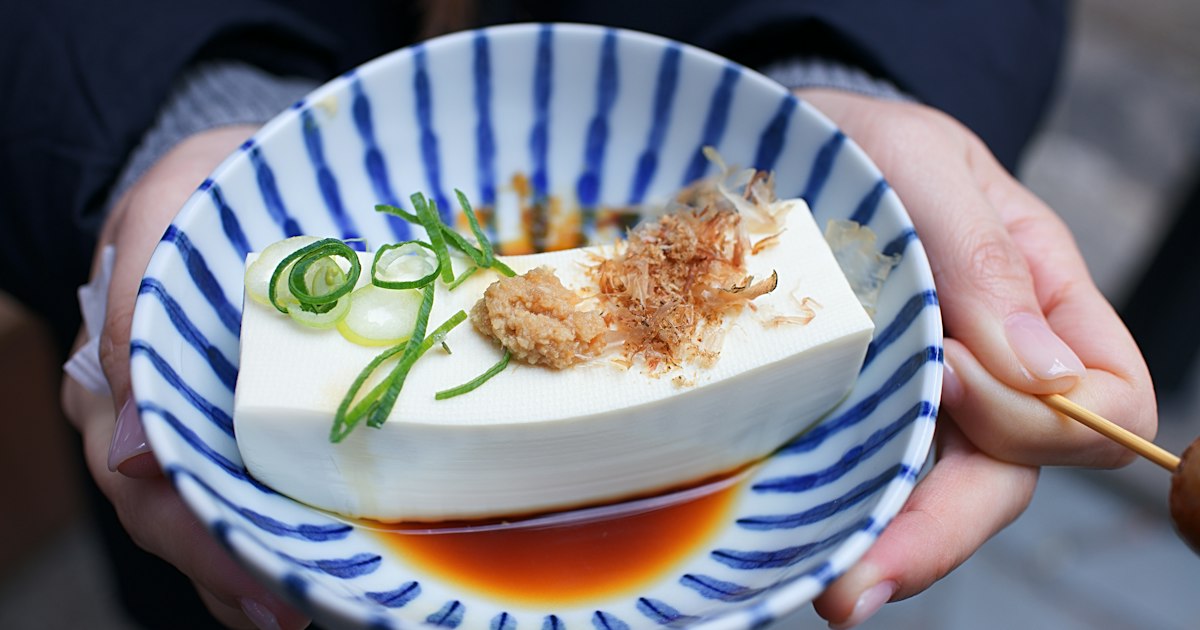
Photo by Sherman Kwan on Unsplash
Order “tofu” at a traditional Kyoto restaurant and you might get something that wobbles like panna cotta, tastes of toasted sesame, and has to be eaten with a spoon because it won’t hold its shape on chopsticks. That’s gomadofu (ごま豆腐) — sesame tofu — one of Kyoto’s quietest culinary specialties and one of the easiest to miss if you don’t know where to look. It isn’t made from soybeans at all, and once you’ve tried the real thing, the supermarket version back home will seem almost unrelated.
What Gomadofu Actually Is
Despite the name, gomadofu contains no soy. It’s made by grinding white or black sesame seeds into a thick paste, then simmering that paste with kudzu (kuzu) starch and water until it sets into a custard-like block as it cools. The kuzu is what gives it that distinctive silky, slightly stretchy texture — closer to the agar-set jelly of tokoroten than to anything soy-based, though gomadofu is denser and far richer, with a deep nutty flavor instead of tokoroten’s neutral one.
It developed within Kyoto’s shojin ryori (Buddhist vegetarian temple cuisine) tradition, where monks needed protein- and fat-rich dishes that used no meat, fish, or dairy. Sesame, pressed for its oil and ground for its paste, fit perfectly. Today it’s served two ways: a firmer version sliced into cubes and dressed with a little soy sauce, wasabi, or sweet miso, and a much softer, almost drinkable version served in a lacquer cup with a spoon.
Nanzenji and Okazaki: The Historic Tofu-Restaurant District
The area around Nanzenji temple in eastern Kyoto has specialized in tofu cuisine for centuries, originally because monks there needed hearty vegetarian food and local spring water was well suited to it. Several restaurants here built entire menus around tofu, and gomadofu usually appears as one course within a multi-dish set.
Okutan, just inside Nanzenji’s temple grounds, has served tofu dishes since the Edo period and is one of the most atmospheric places to try it — low tables, garden views, and unhurried service. Expect a set course built around yudofu (simmered tofu) that typically includes a small dish of gomadofu, running roughly ¥3,500–¥5,000 per person. It’s generally open for lunch only, around 11:00–16:00, and often closed on Thursdays, so check the current schedule before making the trip out.
A short walk away in Okazaki, Junsei has operated a tofu-kaiseki restaurant in a traditional garden setting since the 1800s. Courses here run from around ¥4,000 up to ¥8,000+ for the fuller kaiseki menus, and gomadofu typically shows up as a palate-cleansing course partway through. Both restaurants are a 10–15 minute walk from Keage Station on the Tozai subway line, or reachable by bus from Kyoto Station in about 30–40 minutes.
Ginkakuji and the Philosopher’s Path: The Famous Soft Version
If you only try gomadofu once in Kyoto, the version to seek out is the extremely soft, almost liquid style served at Tofu Cafe Fujino, near the base of the Philosopher’s Path not far from Ginkakuji (the Silver Pavilion). This is the gomadofu that shows up constantly in food photos — scooped with a spoon from a small cup, so soft it barely holds together, available in both white and black sesame versions. A set with both colors plus a simple tofu-based main dish generally costs around ¥1,500–¥2,500, making it one of the more affordable ways to try high-quality gomadofu as a light lunch rather than a formal kaiseki.
It’s a popular enough spot that queues form around midday on weekends, especially in spring and autumn when Ginkakuji and the Philosopher’s Path draw heavy foot traffic. Arriving right at opening (usually around 11:00) or in the mid-afternoon lull avoids most of the wait.
Arashiyama: Gomadofu as Part of a Full Shojin Ryori Meal
Arashiyama’s temples, especially Tenryuji, offer another route into gomadofu: full shojin ryori courses eaten at a temple restaurant, where sesame tofu appears alongside seasonal vegetables, simmered dishes, and rice. Shigetsu, located within Tenryuji’s own grounds, serves this kind of course in tatami rooms overlooking a Zen garden, with set menus generally starting around ¥5,000 and climbing from there. It’s a more formal, slower meal than a casual lunch, so budget at least an hour and a half.
Arashiyama is also where many visitors combine a gomadofu lunch with a ride on the Sagano Scenic Railway through the Hozugawa Gorge — the torokko train station is a short walk from Tenryuji, so a late-morning ride followed by a shojin ryori lunch makes an efficient half-day itinerary.
Buying Gomadofu to Take Home
Gomadofu doesn’t travel as well as dried goods since it’s a refrigerated fresh product, but it’s still worth seeking out for same-trip eating or a next-day treat at your ryokan. Nishiki Market has a few tofu specialty stalls selling individually packaged cups of gomadofu meant to be eaten within a day or two — useful if you want to try it without booking a restaurant seat. Department store basement food halls (depachika) in central Kyoto, such as those at Daimaru or Takashimaya on Shijo-dori, also carry packaged gomadofu from known Kyoto tofu makers, usually in the ¥400–¥900 range per portion.
If you’d rather bring the idea home than the perishable product, kuzu starch and quality sesame paste are both shelf-stable and sold in the same food halls or at specialty kitchenware shops, letting you make a version of it yourself. It’s a similar logic to how specialty goods get shipped or mail-ordered from Japan more broadly, the way mail-order catalogs let people keep buying Japanese ingredients after a trip ends.
Timing, Budget, and Common Mistakes
Gomadofu is served year-round, but it feels most at home in the warmer months, from late spring through early autumn, when the chilled, custard-like texture is genuinely refreshing rather than just a novelty. Many temple restaurants also rotate in seasonal accompaniments — a different pickled vegetable or dipping sauce — so the same dish can taste noticeably different between a spring and autumn visit.
A few things trip up first-timers: ordering it expecting a savory soy-tofu texture and being thrown by how sweet-nutty and dense it actually is; eating it too quickly, since the whole point is the slow, custardy mouthfeel; and skipping the better-known temple restaurants because they look expensive, when a simple gomadofu-focused lunch at Tofu Cafe Fujino is actually one of the cheaper quality meals in that part of Kyoto. It’s also worth bringing enough cash, since some of the older, family-run tofu restaurants around Nanzenji still don’t take cards — and don’t be surprised if an old-fashioned receipt shows a Reiwa-era date instead of the Western calendar year.
For a one-day sense of the range: start cheap and casual at Tofu Cafe Fujino, splurge on a full tofu-kaiseki course at Junsei or Shigetsu if the budget allows, and pick up a packaged portion from a depachika food hall to snack on back at your ryokan in the evening.