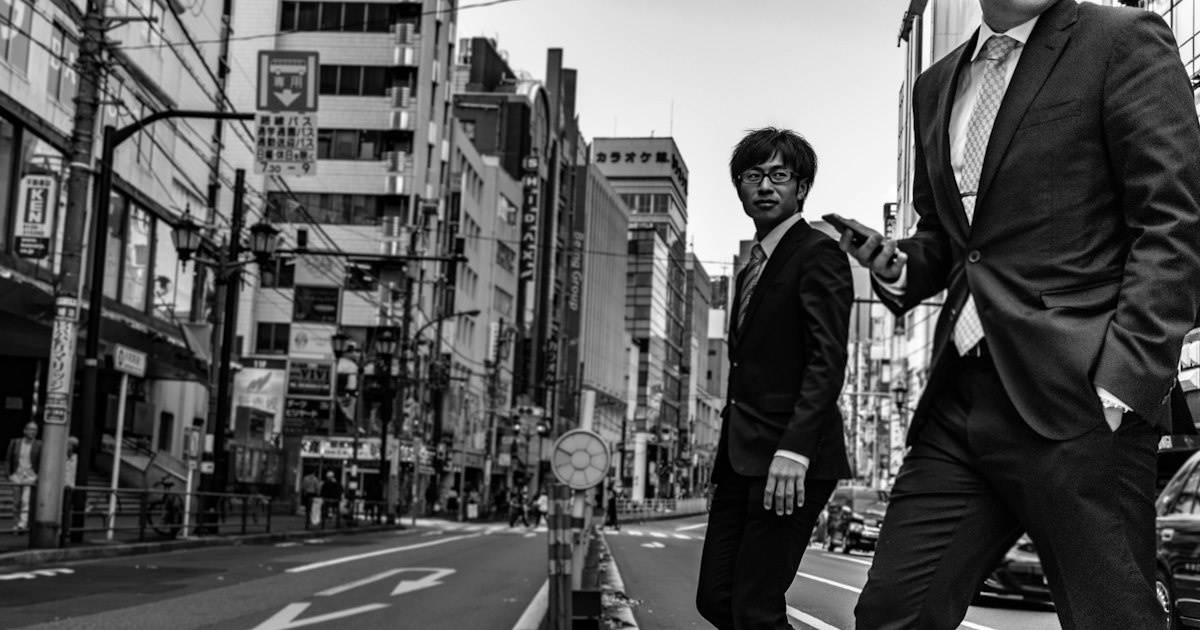
Photo by Pawel Janiak on Unsplash
Getting invited to a black-tie dinner, an embassy reception, a wedding, or a hotel gala while you’re in Japan is a nice problem to have — until you realize your suitcase is full of travel clothes, not formalwear. The good news is that Japan has a well-organized, often same-day rental industry for tuxedos and formal suits, built originally around the country’s wedding-guest culture, where renting rather than owning formal attire is completely normal. Here’s how to actually use it as a visitor.
Why renting is the right call for travelers
Japanese weddings and corporate formal events generate huge demand for short-term formalwear, so an entire retail category exists just to dress people for one or two nights. That means you’re not dealing with a niche costume shop — you’re dealing with mainstream suit retailers and department stores that rent tuxedos, morning coats, and formal business suits as a routine service, with same-week turnaround and staff used to fitting first-time customers. For a visitor who doesn’t want to check a garment bag through security or iron a jacket in a hotel room, this is far more practical than packing your own.
Where to actually go
There are three realistic channels, in order of convenience for a foreign visitor:
- Mainstream suit chains: AOKI, Aoyama (洋服の青山), and Konaka are the Toyota and Honda of Japanese suiting — nationwide chains with large stores near almost every major train station. Many locations offer tuxedo and formal-suit rental alongside their regular suit sales, with staff trained to fit walk-in customers. These stores are usually open daily from around 10:00 or 11:00 to 20:00, with no fixed closing day, which matters if you’re working around a tight trip schedule.
- Department store rental counters: Large department stores in Tokyo, Osaka, and other major cities (Isetan, Takashimaya, and similar) often run formalwear rental corners, especially around their bridal or ceremony-occasion floors. These tend to carry a slightly higher-end range of tuxedos and tailcoats than the suburban suit chains.
- Online rental-and-ship services: Several Japanese rental platforms let you reserve a tuxedo online and have it shipped to your hotel a day or two before the event, then return it in a prepaid envelope or box afterward. This is the best option if your event is outside a major city or your schedule is too packed for a store visit.
If you’re staying at a hotel that regularly hosts black-tie events — think Imperial Hotel Tokyo, the Peninsula, or similar — the concierge can usually arrange a rental tuxedo through a partner shop directly, sometimes with next-day delivery to your room.
What’s included and what it costs
A standard rental package — jacket, trousers, dress shirt, bow tie or necktie, and cummerbund or vest — typically runs somewhere in the ¥10,000–¥25,000 range for a one- to three-day rental period, depending on the brand and whether you’re getting a basic black tuxedo or a more tailored, premium cut. Dress shoes are often a separate add-on, usually another ¥2,000–¥3,000. A full morning coat or tailcoat set for a more formal daytime ceremony tends to sit toward the higher end of that range. Expect to pay a deposit that’s refunded (or partially forfeited) based on the item’s condition when you return it, so treat the rented pieces carefully and avoid eating or drinking in the jacket.
Budget-conscious travelers can keep costs down by renting just the jacket and trousers and pairing them with a shirt and shoes they already own or buy cheaply elsewhere. Mid-range renters get the full matching set from a chain store. If you want something closer to a proper fit with better fabric, the department store counters and a handful of boutique tailor-rental shops in Ginza offer a step up in quality for a higher fee, sometimes with same-day minor alterations like hemming trousers.
Sizing: the part visitors underestimate
This is where most problems happen. Japanese formalwear inventory is sized for the local population, so jacket chests, sleeve lengths, and especially shoe sizes skew smaller and shorter than what’s common in North America, Europe, or Australia. Taller or larger-framed visitors — especially anyone above roughly 185cm or with a chest over about 110cm — should call ahead or check online stock before assuming a same-day walk-in will work. Shoe rental is the single most common bottleneck; larger foot sizes (above about 28cm/US 10) are far less available, so bringing your own dress shoes is a safe hedge. Book a fitting appointment rather than just showing up, since proper fitting takes 30–45 minutes and last-minute rushes near wedding season (spring, March–May, and autumn, September–November) can leave the larger sizes picked over.
Timing your rental around your trip
Reserve at least a few days ahead if your event falls during peak Japanese wedding season, since that’s when rental inventory is tightest at the chain stores. Outside those months, same-day or next-day rental is usually realistic at the big suit chains. If you’re moving between cities on your trip — say, sightseeing in Kyoto before a formal dinner back in Tokyo — and don’t want to lug a tuxedo bag on the Shinkansen, consider using hotel-to-hotel luggage forwarding to send the rented suit ahead to the hotel where your event is happening, rather than carrying it on every train.
Common mistakes to avoid
- Confusing “black tie” with a business suit: Rental staff will ask what the event calls for — black tie, white tie, or lounge suit — and will steer you toward the wrong item if you’re vague. Know the dress code before you walk in.
- Skipping the fitting: Ordering online without trying anything on is tempting but risky given the sizing gap mentioned above; use an in-store fitting whenever your schedule allows it.
- Leaving items on transit: Rented formalwear in a garment bag is exactly the kind of thing that gets left on a train rack in the rush to disembark. If it happens on a bullet train, Japan’s lost-item recovery system is efficient, but you’ll want to act fast — our guide to Shinkansen lost item recovery walks through exactly who to contact and how quickly.
- Returning late: Rental periods are usually strict, with daily late fees. Confirm the return deadline and method (in-store vs. mail) before you leave the shop.
With a little advance planning around sizing and timing, renting formalwear in Japan is genuinely one of the easier logistics problems your trip will throw at you — and far less hassle than trying to fly in with a tuxedo of your own.