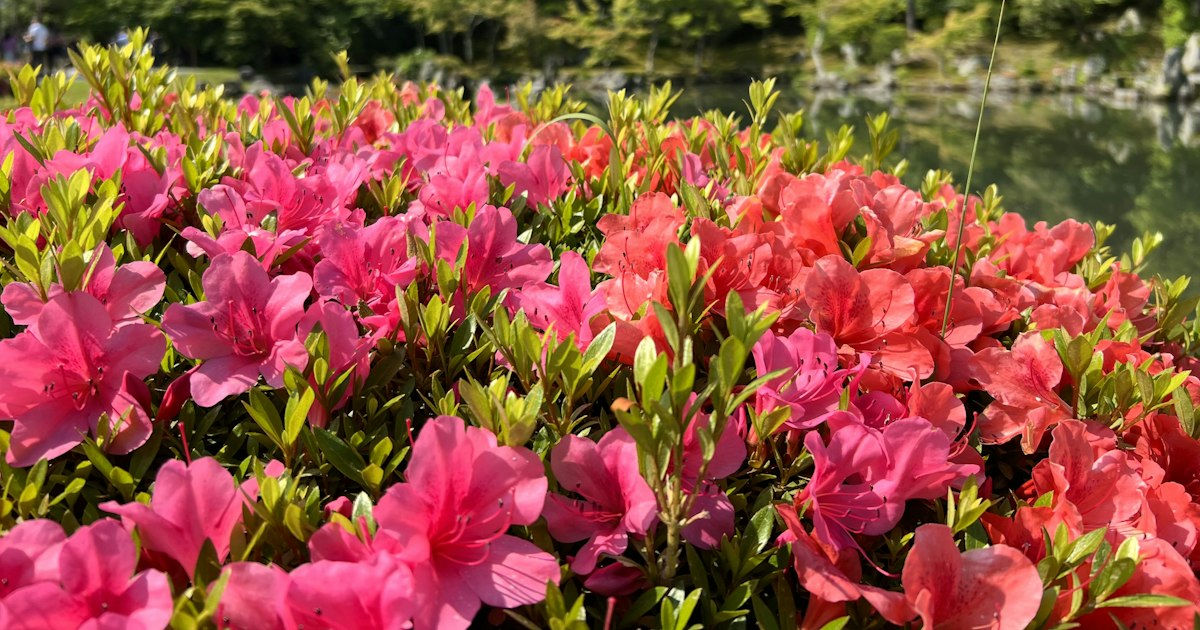
Photo by Miguel Ángel Sanz on Unsplash
Every spring, long before the cherry blossoms finish falling, temples across Japan quietly set up small flower-covered shrines on their grounds, fill a basin with pale golden tea, and invite anyone who walks by to pour a ladleful over a tiny bronze statue of a baby. There are no ticket booths, no crowds pressing for a photo spot, and most visitors have never heard of it. This is Hana Matsuri, Japan’s Buddha’s Birthday festival, and it’s one of the easiest, cheapest, and most genuinely participatory religious rituals a traveler can take part in.
What Is Hana Matsuri?
Hana Matsuri (花祭り, “Flower Festival”) is the popular name for Kanbutsu-e (灌仏会), the Buddhist ceremony marking the birth of Siddhartha Gautama, the historical Buddha. According to legend, when Buddha was born in a garden in Lumbini, sweet rain fell from the sky and nine dragons bathed him. Japanese temples reenact this by building a small canopy called a hanamidō (“flower hall”), decorating it with seasonal flowers, and placing a small standing statue of the infant Buddha — one hand pointing to the sky, one to the earth — inside a basin.
The festival is Buddhist rather than Shinto, and it isn’t a national holiday, so most people continue their regular workday around it. It’s observed at temples of nearly every sect nationwide, from major landmarks to small neighborhood halls, which is part of what makes it accessible: you don’t need to plan a special pilgrimage, just be in Japan in early April and ask whether a nearby temple is holding one.
The Sweet Tea Ritual Explained
The centerpiece of the visit is pouring amacha (甘茶), literally “sweet tea,” over the baby Buddha statue with a small bamboo or wooden ladle — usually three times, though exact custom varies by temple. Amacha isn’t made from tea leaves at all; it’s brewed from the dried, fermented leaves of a hydrangea relative (Hydrangea serrata var. thunbergii), which turn naturally sweet through a compound called phyllodulcin — roughly 400–800 times sweeter than sugar by weight, but with zero caffeine and almost no calories. The tea itself tastes mild, slightly herbal, and pleasantly sweet, closer to a tisane than a dessert drink.
At most temples, after pouring tea over the statue, visitors can also drink a small cup of amacha themselves, usually served free or for a small donation (expect ¥100–¥300 if there’s a charge at all). It’s considered good luck and, historically, was believed to ward off insects and illness — some older households still write amacha-based talismans on paper and paste them above doorways.
Where and When to Experience It
The standard date is April 8, following the solar calendar, and this is when most temples in Tokyo, Kyoto, and other major cities hold their ceremonies — typically for one day only, with the flower altar sometimes left up for a few days before or after. A few temples, particularly in colder regions like Tohoku and parts of Hokkaido where flowers aren’t yet in bloom, hold Hana Matsuri on the old lunar-calendar equivalent, around May 8, so it’s worth checking locally if you’re traveling in the north.
In Tokyo, Sensoji in Asakusa and Zojoji near Tokyo Tower both hold ceremonies, usually mid-morning to early afternoon on April 8. In Kyoto, many of the city’s hundreds of temples participate, including smaller neighborhood temples where the atmosphere is far quieter and more personal than at headline sites like Kiyomizu-dera. There’s no fixed national schedule, so the most reliable approach is to check a specific temple’s own website or call ahead, since hanamidō setup times can shift year to year depending on the weather and flower availability.
Most main halls are open to visitors from roughly 9:00 am to 4:00 or 5:00 pm on the day, and the ritual itself takes only a couple of minutes — you can easily fold it into a longer day of temple-hopping or sightseeing.
Visiting Etiquette and Practical Tips
Hana Matsuri is low-key by design, but a few points of etiquette make for a smoother visit:
- It’s free, but bring small cash. There’s rarely an entry fee for the ceremony itself, though a donation box (saisen-bako) sits nearby, and any amacha served beyond a token cup may cost a small fee. Temples run almost entirely on cash for this kind of thing, so don’t expect a card reader — if you’re unsure why your card might not work anyway, this guide on why foreign credit cards get declined in Japan is worth a skim before your trip.
- Bow before and after pouring. A brief bow toward the statue is customary, the same as at any Buddhist altar.
- Don’t gulp the tea. A small sip from the offered cup is plenty; it’s a ritual gesture, not a beverage stop.
- Photography is usually fine around the hanamidō itself, but ask before photographing worshippers mid-ritual, especially at smaller neighborhood temples where it feels more like a private moment than a tourist attraction.
- Dress is casual. Unlike more formal festivals, there’s no dress code — this isn’t the kind of event that requires special attire the way, say, a Hadaka Matsuri loincloth festival does.
Common Mistakes to Avoid
The biggest mistake visitors make is assuming Hana Matsuri is a big public event with parades or crowds — it isn’t. If you arrive expecting festival stalls and performances, you’ll be disappointed; the actual ritual is modest and contemplative. The second mistake is timing: because it’s not a public holiday, many travelers build an entire Japan itinerary around early April for cherry blossoms and miss that April 8 has its own, unrelated significance — check temple calendars specifically, since blossom-viewing crowds and Hana Matsuri don’t necessarily overlap at the same locations. Finally, don’t assume every temple participates; large, heavily touristed temples are more likely to hold a public ceremony than small residential ones, so calling ahead or checking a temple’s social media the week before saves a wasted trip.
Bringing a Taste of Amacha Home
If you’d like to try amacha outside of the ritual context, dried amacha leaves are sold in small packets at some temple gift shops during the festival period, as well as at Japanese tea specialty stores and herbal tea sections of larger supermarkets year-round, typically for ¥500–¥1,200 for a small box of tea bags. It makes a lightweight, non-perishable souvenir that’s easy to pack. If you’re also curious about other distinctive Japanese sweet drinks worth seeking out while you’re there, kijoshu, Japan’s rare aged sweet sake, makes an interesting adult counterpart — both rely on natural sweetness rather than added sugar, just through very different processes.
Pairing It With the Rest of Your Spring Trip
Because Hana Matsuri ceremonies are brief, they slot naturally into a bigger day of sightseeing. In Kyoto, combine a temple visit with lunch nearby — try gomadofu, Kyoto’s silky sesame tofu, a dish with its own roots in temple cuisine (shōjin ryōri), for a meal that fits the day’s quiet, traditional mood. If early April doesn’t align with your travel dates, Japan’s calendar is full of other regional festivals worth building a trip around, including winter events like the Hachinohe Enburi rice-prayer dance festival in Aomori — a reminder that beyond the famous blossoms and fireworks, some of Japan’s most rewarding festivals are the small, local ones nobody plans a whole trip around until they stumble into one.