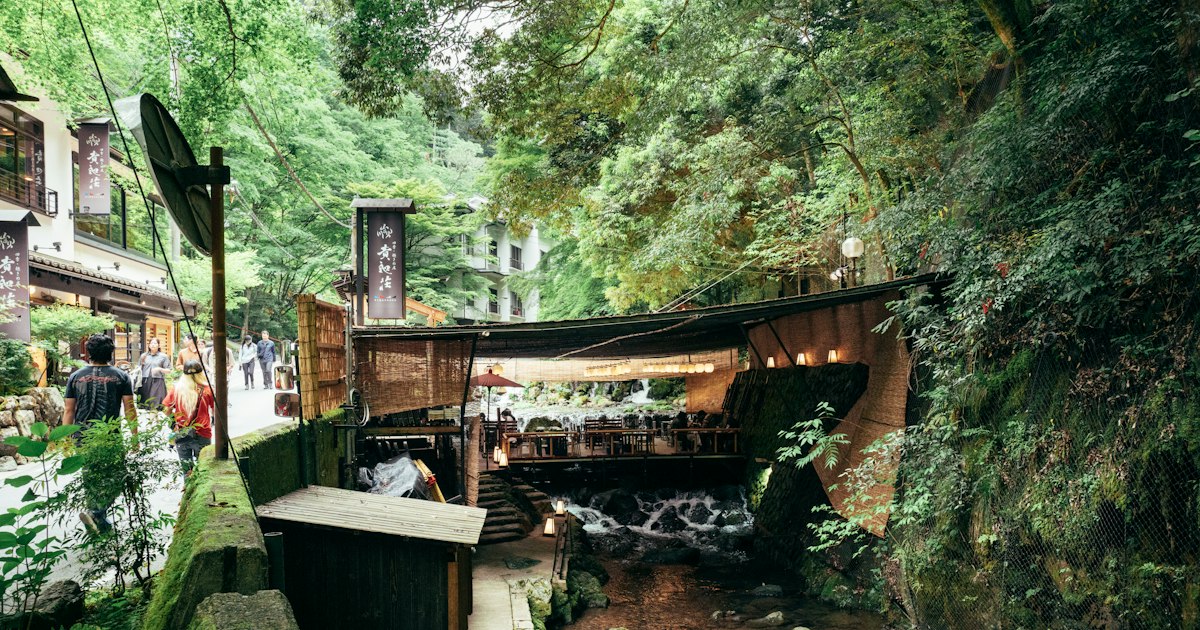
Photo by Loris Boulinguez on Unsplash
If you’re traveling in Japan between May and September and see restaurants building wooden platforms out over a river, you’ve stumbled onto one of the country’s most seasonal food traditions: ayu, or sweetfish, grilled whole over charcoal and eaten on the riverbank where it was caught. It’s not flashy like sushi or ramen, and most foreign visitors never hear about it — but for a few months a year, it’s one of the most atmospheric meals you can have in Japan.
What Is Ayu, and Why Is It Called “Sweetfish”?
Ayu (鮎) is a small freshwater fish, usually 15–25cm long, that lives in Japan’s clean rivers and feeds on algae growing on rocks. That diet is why it’s nicknamed “sweetfish” in English — its flesh has a faint, clean sweetness and a distinct aroma that fans compare to melon or cucumber, totally unlike the fishy taste of most grilled seafood. The skin crisps up over charcoal while the flesh stays soft, and you eat the whole fish, including the slightly bitter internal organs, which locals consider the best part.
Ayu is also a symbol of early summer in Japanese cuisine. Restaurants that serve kaiseki (multi-course traditional meals) often treat the first ayu of the season the way other countries treat the first asparagus or strawberries — as something worth celebrating on the menu.
Best Season and Time to Go
Ayu fishing season officially runs roughly from early June to September, though some rivers allow catches from May. The fish are smallest and most delicate early in the season, then grow larger and fattier by August. Late August into September is often considered peak flavor by locals, just before the season closes.
Riverside ayu restaurants, especially the open-air platform type described below, are strictly seasonal businesses — most close completely from autumn through spring and reopen the following May or June. If you’re planning a trip for later in the year, note that this is a summer-only experience; it won’t overlap with cooler-season travel windows like the one covered in Japan’s Silver Week guide, so build it into a June–September itinerary instead.
For lunch, arrive right at opening (usually 11:00 or 11:30) to get a table with a river view before tour groups arrive. For dinner, platforms lit by lanterns after sunset are the more memorable experience, but book ahead — many of these restaurants only have 20–40 seats total.
How It’s Cooked: Shioyaki Over Charcoal
The classic preparation is shioyaki — the whole fish is skewered through the mouth into an S-curve (so it looks like it’s still swimming), salted generously, and grilled slowly over charcoal until the skin is crackly and the tail and fins are fan-shaped and crisp enough to eat. Many of the better riverside restaurants use binchotan, the same slow-burning white charcoal prized by yakitori and unagi chefs, because it holds steady heat without flaring and doesn’t impart smoky off-flavors. If you’re curious about the charcoal itself, we cover it in our guide to binchotan, which is also sold as a souvenir.
Other common preparations include tempura (whole small ayu, bones and all), sushi, and a simmered dish called ujakani for larger or less photogenic fish. But shioyaki is what people travel for, and it’s almost always the centerpiece of a set meal.
Where to Eat It: Japan’s Classic Ayu Rivers
A handful of rivers have built entire dining cultures around ayu:
- Kamo River, Kyoto (Kibune and Takao): From May to September, dozens of traditional restaurants build kawadoko — wooden dining platforms suspended directly over the river — in the Kibune and Takao districts north of the city. Meals here range from casual noodle lunches to full multi-course kaiseki with ayu as the summer highlight. Expect roughly ¥5,000–¥8,000 for a riverside lunch set with ayu, and ¥15,000–¥30,000+ per person for an evening kaiseki course. Reserve at least a few days ahead for dinner in July and August.
- Nagara River, Gifu City: This is the most famous ayu river in Japan, home to ukai — traditional cormorant fishing, where handlers in straw skirts use trained birds to catch ayu by torchlight, a practice over 1,300 years old. Riverside restaurants and ryokan around Gifu City serve ayu caught from the same river, and some offer dinner packages that include watching the ukai boats pass. Casual riverside shops sell a single grilled ayu on a stick for about ¥500–¥800; full dinner courses run ¥8,000–¥20,000.
- Tama River, Okutama (western Tokyo): The easiest option for travelers based in Tokyo without a long-distance trip. Okutama, about 90 minutes from central Tokyo by JR train, has several riverside restaurants and simple outdoor grill stands serving ayu through summer, with lunch sets around ¥2,500–�art ¥5,000.
- Shimanto River, Kochi: Known as one of Japan’s last major rivers without a dam, the Shimanto is prized for especially clean-tasting ayu, served at small family-run spots along its banks.
Outside Honshu, Kyushu’s rivers have their own ayu culture too — if you’re already visiting the dramatic river canyon at Takachiho Gorge in Miyazaki, ask locally about small eateries near the Gokase River serving ayu caught just upstream; it’s a natural pairing with a gorge visit in summer.
Budget, Mid-Range, and Splurge Options
You don’t need a reservation-only kaiseki restaurant to try ayu. Here’s roughly what to expect at each level:
- Budget (¥500–¥1,500): A single grilled ayu bought from a riverside stall or festival stand, often near fishing spots or rural train stations in ayu regions during summer.
- Mid-range (¥2,500–¥8,000): A set lunch or casual dinner at a riverside or riverside-adjacent restaurant, usually including one grilled ayu alongside rice, soup, and small sides.
- Splurge (¥15,000–¥35,000+ per person): A full kaiseki dinner on a kawadoko platform in Kyoto, or a ryokan dinner package in Gifu combined with watching ukai cormorant fishing — these usually require reservations well in advance, especially for weekend dates in July and August.
Common Mistakes to Avoid
- Showing up without a reservation in peak season. Kawadoko platforms and well-known ukai-viewing restaurants fill up fast on summer weekends; call or book online several days ahead.
- Trying to eat ayu in winter. Most riverside platform restaurants close completely outside the May–September window; some inland restaurants serve frozen or farmed ayu off-season, but it’s not the same experience.
- Removing the skewer and eating with utensils only. It’s normal — even expected — to pick up the whole fish by hand, eat along the spine, and leave a clean skeleton. Staff won’t mind.
- Skipping the innards out of caution. The slightly bitter taste from the internal organs is considered part of the point, not a flaw; try at least one bite before deciding it’s not for you.
- Underestimating travel time to rural riverside spots. Many of the best-known ayu restaurants are outside major city centers and run on limited rural bus or taxi schedules — check the last return bus or train time before you go, especially for evening meals.
Ayu won’t show up on most “must-eat Japan” lists aimed at first-time visitors, which is exactly what makes it worth seeking out — a seasonal, place-specific meal eaten where it’s caught, on a river, in the one stretch of the year when it’s actually available.