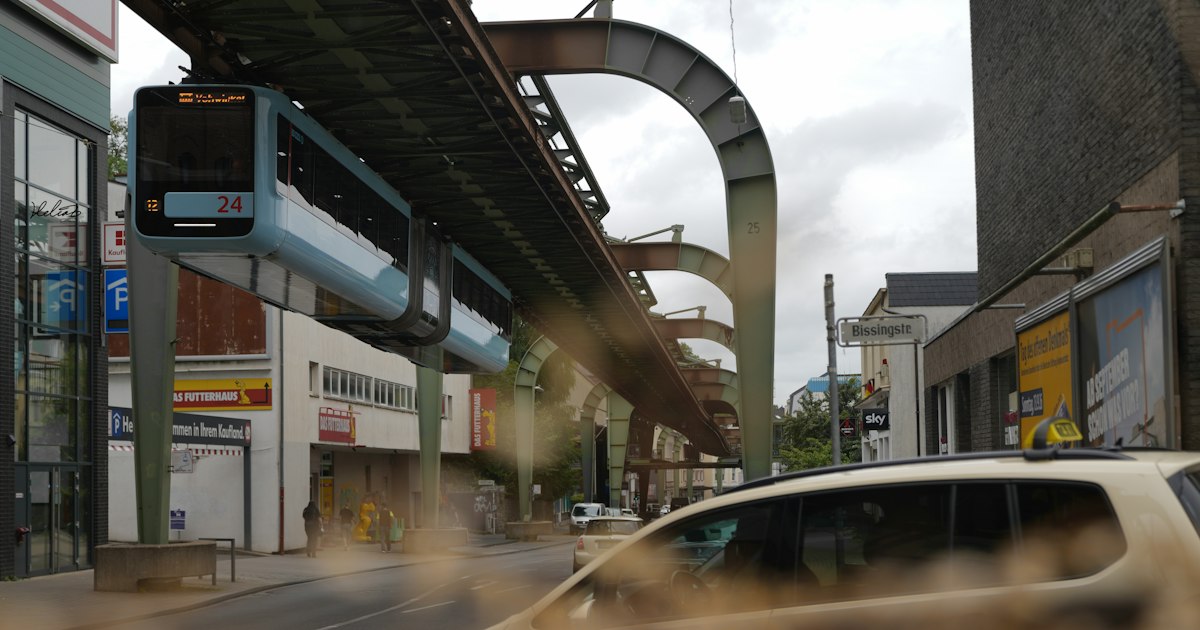
Most visitors to Japan ride a monorail exactly once — the short hop from Haneda Airport into Tokyo — and never think about the technology again. But forty minutes east of central Tokyo, the city of Chiba runs a monorail that’s actually worth riding for its own sake. The Chiba Urban Monorail hangs its cars beneath the track instead of balancing them on top, and Guinness World Records recognizes it as the longest suspended monorail system on the planet. It’s cheap, it’s easy to combine with a Narita Airport layover, and it gives you a view of an ordinary Japanese city that most tourists never see.
What Makes This Monorail Different
Almost every monorail you’ve seen — Tokyo’s, Disney’s, Okinawa’s Yui Rail — is a “straddle-beam” type: the train sits on top of a single rail like a saddle. The Chiba Urban Monorail is the opposite. Its cars hang from a bogie that runs inside a box-shaped beam overhead, so the carriage dangles below the track with nothing underneath it but air and the street. This suspended (SAFEGE-type) design is rare worldwide, and Chiba’s network — split across two lines totaling roughly 15.2 kilometers — is the longest of its kind anywhere, a title Guinness has officially certified. The ride itself feels like gliding; because the wheels run on rubber tires inside the beam rather than steel-on-steel, there’s almost none of the clatter you get on a normal train.
The Two Lines and Where They Go
Both lines meet at Chiba Station, the city’s main JR hub, so you can treat it as your base. Line 1 is the short connector: three stops running about 3.2 km from Chiba Station down to Chiba Minato, the waterfront district on Tokyo Bay, with Shiyakusho-mae (City Hall) in between. Line 2 is the main event — around 12 km heading inland and northeast from Chiba Station, passing Chiba-Kōen (for Chiba Park), Kenchō-mae (the prefectural government office), and Dōbutsu-Kōen, the stop for Chiba Zoological Park, before continuing through the residential hills of Wakaba Ward. Riding the full length of either line takes well under 30 minutes, which makes this an easy half-day detour rather than a commitment.
Getting There from Tokyo or Narita
Chiba Station is a straightforward JR connection: about 40 minutes from Tokyo Station on the Sōbu Rapid Line, or roughly 30–40 minutes from Narita Airport on the JR Narita Line or Sōbu Line. That makes the monorail a genuinely practical stopover if you’re flying in or out of Narita with time to kill — far more useful than another lap around the airport’s duty-free shops. Once you’re at Chiba Station, monorail platforms are inside the same station complex, clearly signed in English as “Chiba Urban Monorail” (千葉都市モノレール).
Fares, IC Cards, and Passes
The monorail uses the same tap-and-go system as the rest of the country, so Suica, Pasmo, and other nationwide IC cards work fine — no need to buy a special card. Fares are distance-based, starting at around ¥210 for the shortest hop and topping out near ¥330 if you ride one line end to end. If you plan to hop off at several stations in one day — zoo, park, waterfront — a one-day pass (around ¥700 for adults, ¥350 for children) pays for itself after just two or three rides. Trains run roughly from 5:30 am to around 11:30 pm, with departures every 10–15 minutes outside rush hour, so there’s no need to plan around a timetable.
What’s Worth Stopping For
- Dōbutsu-Kōen (Zoo): The exit for Chiba Zoological Park, home to the city’s most famous local legend — a gorilla named Tonkichi who climbed out of his enclosure in 2007 using a vine during a storm, only to be captured hours later. The zoo itself is a modest, kid-friendly stop with admission around ¥600 for adults.
- Chiba-Kōen: The exit for Chiba Park, a pond-centered green space with cherry trees that draw local crowds in late March and early April, plus a castle-style tower housing the city’s local history museum.
- Chiba Minato: The waterfront terminus on Tokyo Bay, near Chiba Port Tower, which has an observation deck looking back across the bay toward Tokyo on clear days — a nice sunset stop before heading back.
Best Time to Ride
Because the appeal here is architectural and urban rather than scenic nature, the monorail works in any season — this isn’t a trip you need to time around foliage or snow the way you might for somewhere like Shomyo Falls. That said, late March to early April adds cherry blossoms around Chiba Park to the itinerary, and a clear winter evening gives the best visibility from the Chiba Minato waterfront. Weekday mornings and evenings get commuter traffic from residents heading toward Chiba Station, so midday or weekend riding means more room to enjoy the glass and the view rather than standing in a crowded car.
Common Mistakes to Avoid
The biggest mix-up: this monorail does not go to Tokyo Disneyland. Disney’s Maihama station is on the JR Keiyo Line, a separate system entirely, and first-time visitors who see “Chiba” on a map sometimes assume the two connect — they don’t. Second, don’t expect through-fare discounts between the monorail and JR; they’re separate operators, so your IC card is simply charged twice, once per system. Third, if you’re coming from Narita with heavy luggage, note that neither monorail line serves the airport directly — you’ll need to transfer at Chiba Station, which is manageable but not instant, so budget a few extra minutes if you’re on a tight connection.
Budget, Mid-Range, and Splurge Options
On a tight budget, a single ¥210–330 fare between Chiba Station and the zoo or the waterfront is enough to experience the suspended-car sensation without spending more. For a fuller day, the ~¥700 one-day pass lets you ride both lines and stop at the park, the zoo, and the port tower without re-tapping each time. If you want to turn it into an overnight stop rather than a day trip — useful if you’re breaking up a Narita arrival or departure — Chiba City has a number of self check-in hotels near Chiba Station that work well for a late-night arrival or an early monorail start the next morning.
The Chiba Urban Monorail isn’t going to compete with Kyoto temples or Hokkaido powder for a spot on anyone’s must-see list, but that’s precisely its charm — it’s a genuinely unusual piece of engineering hiding in plain sight on an ordinary commuter line. If riding Tokyo’s last surviving streetcar appealed to you, the suspended monorail is the same kind of transit curiosity, just a different flavor of unusual. And if the gorilla story at Dōbutsu-Kōen has you in the mood for more animal encounters while you’re in Japan, it’s a much gentler preview of the free-roaming experience you’d get at Zao Fox Village up in Miyagi.