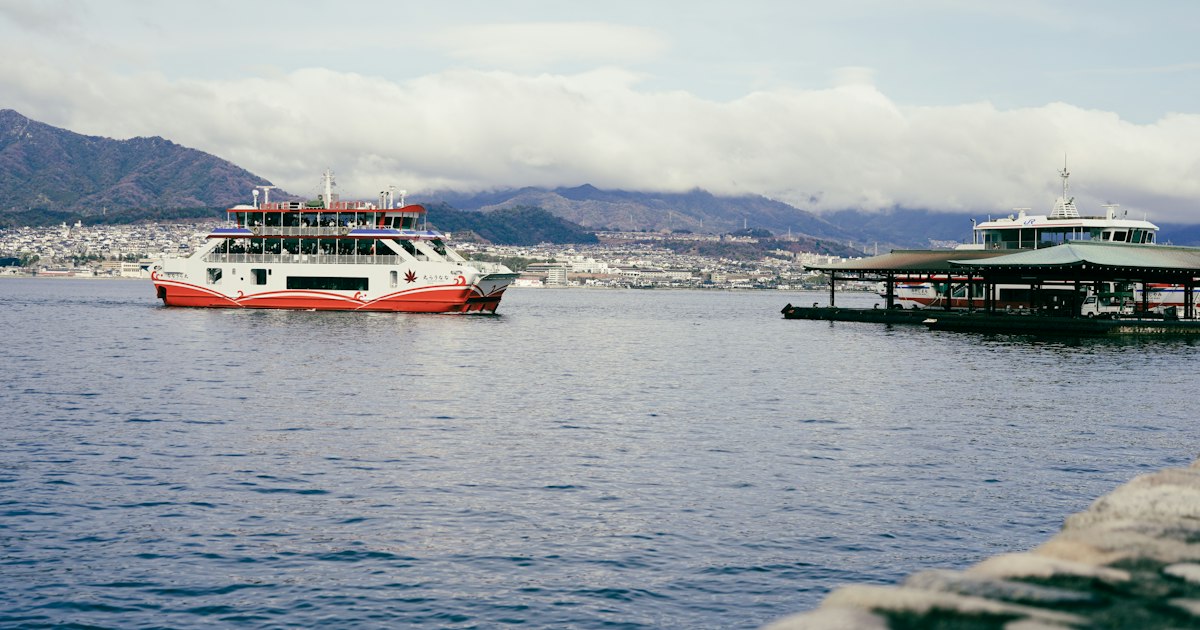
The Seto Inland Sea is one of the few places in Japan where a rental car can genuinely open up a trip — not by driving further, but by driving onto a boat. Dozens of car ferries link the mainland to islands like Shodoshima, Naoshima, and Teshima, and a few long-haul routes connect Honshu to Shikoku directly across the water. Done right, it’s one of the most relaxing ways to island-hop in Japan. Done without checking the fine print first, it can also strand you at a port with a car you’re not actually allowed to load. Here’s what to know before you drive up the ramp.
Why Take a Car Ferry Here Instead of Flying or Driving the Bridges
The Seto Inland Sea sits between Honshu, Shikoku, and Kyushu, dotted with hundreds of islands, many of them connected to each other (but not to the mainland) by toll bridges like the Shimanami Kaido. For islands without a bridge — Shodoshima, Naoshima, Teshima, Megijima, and others — a car ferry is the only way to bring your own vehicle across. The appeal is simple: no repacking bags for a train-and-taxi relay, no waiting on local buses that run four times a day, and the freedom to chase a sunset view or a tucked-away beach on an island’s back roads. For travelers already combining this region with inland Honshu detours, it pairs naturally with places like Takeda Castle Ruins in Hyogo, which sits an easy drive north of the Himeji ferry ports.
The Routes Worth Knowing
A few routes carry the bulk of tourist traffic:
- Uno (Okayama) to Naoshima (Miyanoura), ~20 minutes — operated by Shikoku Kisen, roughly 8-10 sailings a day. Passenger fare is around ¥300-320 one way; a standard compact car runs roughly ¥1,600-2,000, plus the driver’s passenger fare.
- Uno to Teshima (Ieura), ~40 minutes — similar operator and fare structure, fewer daily departures.
- Takamatsu to Shodoshima (Tonosho), ~1 hour — run by Shikoku Ferry and Shodoshima Ferry on alternating schedules; vehicle fares scale by car length, roughly ¥3,000-5,000 for a standard car.
- Himeji to Shodoshima (Fukuda), ~1 hour 40 minutes — useful if you’re coming from the Kansai side rather than Shikoku.
- Hiroshima to Matsuyama, ~2 hours 45 minutes — the long-haul option connecting Honshu directly to Shikoku. This is the one most worth planning around if you want to skip backtracking through Okayama.
Fares and schedules shift with fuel surcharges and seasonal timetables, so always check the operator’s own site (Shikoku Kisen, Shikoku Ferry, or Setonaikai Kisen) within a week or two of travel rather than relying on numbers from a blog — this guide’s figures are a planning baseline, not a quote.
The Rental Car Catch Nobody Mentions
This is the part that trips people up: many Japanese rental car contracts explicitly restrict transporting the vehicle on a ferry, or require advance notice and a signed waiver before you’re covered. The insurance that comes bundled with the rental (and the optional collision damage waiver you probably paid for) can be voided if the car is damaged while on a vessel and the company wasn’t told in advance. This isn’t universal — some companies are completely fine with it, especially on routes they know tourists use, like Uno-Naoshima — but it varies by company, by branch, and sometimes by specific car class.
Call or email the rental counter before you book and ask directly: “Can I take this car on a ferry? Does my insurance still apply?” Get the answer in writing if you can (a confirmation email is enough). Major chains like Toyota Rent a Car, Nippon Rent-A-Car, and Times Car tend to allow it on well-known island routes but may ask you to notify the specific branch beforehand. One-way rentals that start on the mainland and end on an island (or vice versa) are rarer and worth confirming separately, since not every branch network covers island drop-off points.
How Booking and Boarding Actually Works
Most short Seto Inland Sea routes don’t require advance reservations for cars — you simply drive up, pay at a ticket window or vending machine, and queue in a marked lane, similar to a toll booth. Longer or more popular routes (Hiroshima-Matsuyama, and Shodoshima sailings around weekends and holidays) do benefit from a phone or online reservation, especially if you’re traveling with a larger vehicle or during Golden Week, Obon, or New Year’s.
Arrive at least 20-30 minutes before departure for short hops and 40-60 minutes for longer crossings — staff load vehicles by size and sometimes by destination lane, and latecomers can be turned away even with a valid ticket. Once aboard, you leave the car on the vehicle deck (engine off, handbrake on) and head upstairs to passenger seating; most ferries have simple snack counters, and some on the Matsuyama route have reclining tatami rest areas worth grabbing early.
Best Season and Timing
Spring (April-May) and autumn (October-November) bring the calmest seas and clearest views of the islands from the deck — summer is popular but hazier and busier, especially if your trip overlaps with the Setouchi Triennale art festival years, when Naoshima and Teshima ferries fill up fast. Winter sailings run less frequently and are more exposed to cancellation from wind, so build in a buffer day if a ferry crossing is the only way to reach your next stop. Whatever the season, check the operator’s site the morning of travel — these are small vessels on open water, and rough weather cancels sailings with little notice.
Common Mistakes to Avoid
- Not confirming ferry coverage with the rental company first — the single most common and costly mistake.
- Assuming every island has a car ferry — some smaller islands (Megijima, Ogijima) are passenger-only; bring a bike or plan to walk.
- Cutting boarding time too close — vehicle loading closes before the posted departure time, not at it.
- Ignoring vehicle length when buying a ticket — fares are tiered by car length, and misreporting it at the counter can mean a recalculation (or a queue delay) at boarding.
- Planning a same-day return without a buffer — weather cancellations are infrequent but real, especially outside summer.
Budget, Mid-Range, and Splurge Ways to Do It
On a budget, stick to the short Uno-Naoshima or Uno-Teshima hops, which keep both ferry fare and rental car days to a minimum, and consider a basic business hotel or campsite rather than island resorts — if you want an upgraded outdoor stay without actually roughing it, the options covered in this guide to glamping in Japan extend to a few Setouchi island sites. Mid-range travelers basing themselves in Takamatsu or Onomichi for several days of island hopping often do better in a weekly apartment than a hotel — if that’s the plan, it’s worth packing light cooking gear, covered in this guide to compact kitchen gear for short-term stays, rather than eating out every meal. For a splurge, the Hiroshima-Matsuyama long ferry paired with a private car rental lets you build a loose, multi-day loop through Shikoku and back without ever touching a train schedule — slower than the Shinkansen, but it’s the version of the trip where the journey is the point.