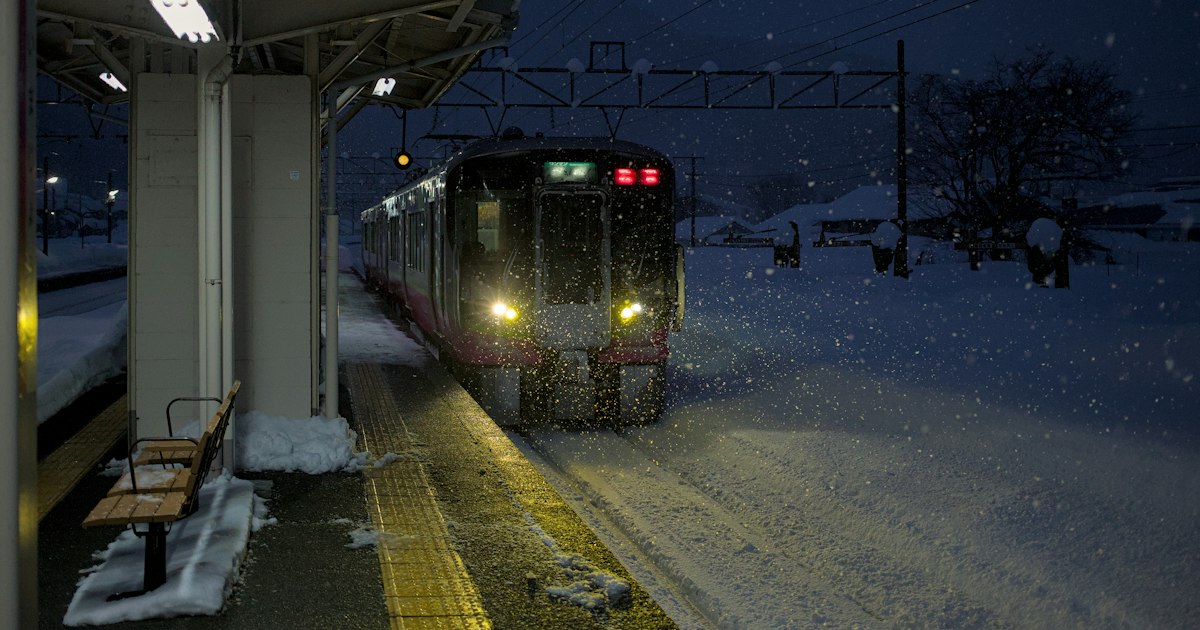
Japan’s bullet trains are so fast and frequent that overnight trains have mostly disappeared — except for one pair. The Sunrise Izumo and Sunrise Seto are the last regularly scheduled sleeper trains in the country, coupling together for the run out of Tokyo each night before splitting in two and rolling on to opposite ends of western Japan. For train fans, budget travelers who want to skip a hotel night, or anyone tired of domestic flights, it’s one of the most memorable ways to get around the country.
What Are the Sunrise Izumo and Sunrise Seto?
Both trains leave Tokyo Station coupled as a single 14-car set and travel together as far as Okayama, where they split. The Sunrise Izumo continues northwest through Okayama and Tottori prefectures to Izumoshi, near Izumo Taisha, one of Japan’s most important Shinto shrines. The Sunrise Seto crosses the Seto Ohashi Bridge into Shikoku and terminates in Takamatsu, the gateway city for the Seto Inland Sea art islands. Because they run as one train for most of the journey, you can book either destination from the same nightly departure.
These are JR East and JR West joint services, operated with the 285 series sleeper trainset that has been in use since 1998. There is no dining car, so plan your food before boarding — a station bento from Tokyo Station is the easiest option, and it’s worth reading our bento box buying guide if you want to pick something more interesting than a standard convenience-store box. (If that link doesn’t resolve, use our general bento guide at japantrove.com.)
The Route and Schedule
The Sunrise Izumo/Seto departs Tokyo Station at 21:50 nightly from a dedicated platform, with an additional stop at Yokohama shortly after. It then runs through Shizuoka, Hamamatsu, and Toyohashi before reaching Okayama around 6:00 the next morning, where the two trains uncouple. The Sunrise Seto arrives in Takamatsu around 7:27, while the Sunrise Izumo continues on through Yonago and Matsue, reaching Izumoshi around 9:58. In the opposite direction, both trains depart their western terminals in the evening and arrive back in Tokyo the next morning around 7:00–8:00. Times shift slightly with each JR timetable revision, so confirm exact departure and arrival times on the JR West or JR East website before you travel.
Because the whole point is sleeping through the journey, timing works out well if you’d otherwise burn a full travel day on the Shinkansen — you go to bed in Tokyo and wake up already in Izumo or on Shikoku, with a full day ahead of you.
Room Types and What They Cost
Fares are built in three layers: the base fare, the limited express (tokkyu) surcharge, and — for private rooms — a bed charge on top. Approximate one-way totals from Tokyo to Izumoshi or Takamatsu:
- Nobinobi Zaseki (budget): Open carpeted sleeping berths with no bed or blanket provided (bring your own or rent one onboard) and no extra room charge — you pay only the base fare plus limited express fee, roughly ¥11,000–13,000 total. This is the only seat type covered in full by the Japan Rail Pass with no supplement.
- Single (mid-range): A private single-occupancy compartment with a real bed, reading light, and a door that locks. Expect roughly ¥18,000–21,000 total including the room charge. This is the most common way to ride if you want privacy without splurging.
- Single Twin / Single Deluxe (splurge): Larger private rooms with a wider bed and more floor space; Single Deluxe is the largest solo cabin on the train, closer to a small hotel room with a window seat. Expect roughly ¥26,000–29,000 total one-way.
- B Twin / Sunrise Twin: Two-person compartments for couples or friends traveling together, priced per room rather than per person.
If you’re weighing whether to spend on a private cabin versus riding cheap and comparing it to how JR prices its other premium seating, our guide to Green Car & Gran Class is a useful reference point — the Sunrise’s Single Deluxe sits in roughly the same comfort tier as Gran Class, just horizontal.
How to Book Tickets
This is the part that trips people up. Sunrise Izumo/Seto tickets go on sale exactly one month before the travel date, at 10:00 AM Japan time, through JR ticket windows (Midori no Madoguchi), JR travel agencies, or the JR East/JR West online reservation systems. Nobinobi Zaseki, being free of a room charge, is by far the most popular option and regularly sells out within minutes of going on sale — especially for Friday and Saturday departures, and during Golden Week, Obon, and New Year. If you want that berth, be at a ticket machine or on the booking site right at the 10:00 AM mark exactly 30 days ahead.
Private rooms are easier to secure but still book up on weekends and holiday periods a week or two out. If you’re relying on a Japan Rail Pass, note that the pass covers Nobinobi Zaseki entirely, but for any private room you’ll need to pay the bed charge separately even with a valid pass — the base fare and limited express fee are covered, the room itself is not.
What to Expect Onboard
Every car has shared shower rooms operated with a card (sold from a vending machine onboard, limited quantity per departure, so don’t wait until the last stop before Okayama to grab one). There are vending machines for drinks and snacks but no proper meal service, which is why stocking up at Tokyo Station beforehand matters. Private rooms have a reading light, a small table, and an outlet; Nobinobi Zaseki berths are simply carpeted platforms divided by low partitions, comfortable enough for a night but worth bringing an eye mask and earplugs for. Announcements are made in Japanese and English at major stops, and the train is generally quiet after lights-out, but it is still a shared space — light sleepers should budget for a private room.
Best Timing and Common Mistakes
Weekday departures (Sunday through Thursday night) are noticeably easier to book than Friday and Saturday, and almost any date is harder during Golden Week (late April–early May), Obon (mid-August), and the New Year holidays. The most common mistakes are assuming you can just show up and buy a ticket at the station (Nobinobi Zaseki is reserved-only and routinely sold out), forgetting that there’s no dining car, and not checking which half of the train your carriage is in — Izumo and Seto cars are adjacent but split at Okayama, so boarding the wrong car means ending up in the wrong city.
If you’re arriving in Takamatsu on the Sunrise Seto, it’s a natural jumping-off point for the Seto Inland Sea art islands — Naoshima, Teshima, and the wider Setouchi Triennale circuit are all a short ferry ride from the port, and our guide to Teshima is a good next stop if you want somewhere quieter than Naoshima. Arriving fresh off an overnight train and straight onto a morning ferry is one of the more efficient ways to start a Shikoku or art-island itinerary without losing a travel day to transit.