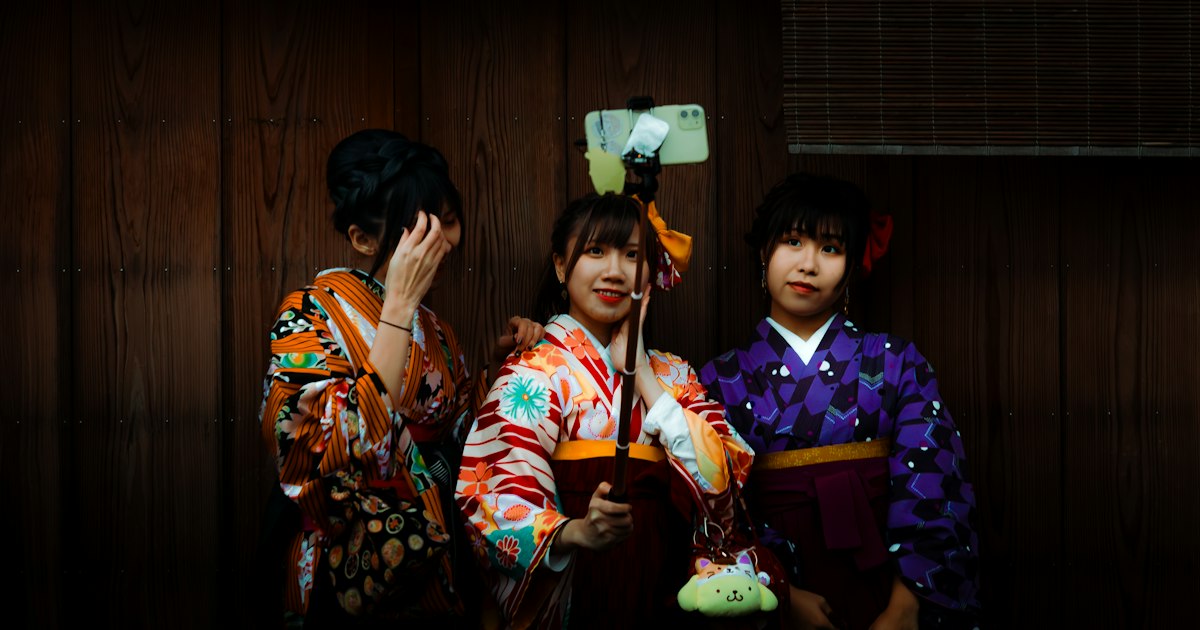
Photo by Chrishaun Byrom on Unsplash
A professional photoshoot has become one of the most popular things visiting families and couples add to a Japan itinerary — not a wedding shoot, just a proper set of portraits in a kimono, under cherry blossoms, or against a temple backdrop, taken by someone who actually knows the light and the locations. Demand from overseas visitors has grown enough that most major cities now have English-friendly studios built specifically around this, with online booking and same-day digital delivery. Here’s how the packages actually work, what they cost, and the mistakes that waste people’s one good shooting window.
Studio vs. Outdoor: Which Package Fits Your Trip
Studio shoots happen in a controlled indoor space — usually a converted apartment or purpose-built set with a backdrop wall, props, and professional lighting. They’re weather-proof, fast (most are done in 45–90 minutes), and ideal if you want kimono or yukata rental included, since the studio handles dressing and hair on-site. Outdoor shoots, by contrast, are location shoots at a park, shrine, old townscape, or waterfront the photographer scouts in advance. They take longer (90 minutes to 2 hours including travel between 2–3 spots) and depend entirely on weather, but they’re what most families actually want for the “this is clearly Japan” shot — torii gates, bamboo groves, canal streets, snow.
Many companies in Tokyo, Kyoto, and Osaka now offer a hybrid: a short studio session for formal kimono portraits, followed by an outdoor walk in the same outfit. If your schedule only allows one slot, outdoor generally photographs better for families with kids who won’t sit still for a studio setup, while studio suits couples wanting clean, editorial-style portraits unaffected by rain or crowds.
What a Typical Package Costs
Prices vary by city and season, but as a rule of thumb for 2026:
- Budget (¥15,000–¥25,000): A 30–45 minute mini session, one photographer, 20–40 edited digital photos, no costume. Common for quick family or couple portraits near a hotel or popular backdrop.
- Mid-range (¥30,000–¥60,000): 60–90 minutes, kimono or yukata rental and dressing included, hair styling for at least one person, 2 locations or a studio-plus-outdoor combo, 50–100 edited photos delivered within a few days.
- Splurge (¥80,000–¥150,000+): Half-day shoots (2–4 hours), multiple outfit changes, full hair and makeup, a second photographer or assistant, scouted private locations (a quiet shrine corner, a reserved garden), and a printed album or framed prints on top of the digital files.
Family packages for 4–5 people typically add ¥5,000–¥10,000 per extra person beyond a base of two, and kids under about 3 are often free. Payment is almost always due in full at booking via credit card online; a few smaller studios in Kyoto’s older districts are cash-only on the day, so check before you go and budget cash accordingly — if you’re also sorting out how to move money around during your trip, our guide to remittance apps and post office options covers the practical side of moving funds while you’re here, though for day-to-day photographer deposits a travel credit card is usually simplest.
Best Season and Timing
Cherry blossom season (late March to early April in Tokyo and Osaka, slightly later in Kyoto in some years) and autumn foliage (mid-November to early December) are by far the most requested — and most booked-out — windows. Studios in Kyoto and Tokyo routinely sell out their best morning slots 2–3 months ahead for these two periods. Outside peak season, early morning (7:00–9:00 AM) slots are the most valuable booking regardless of time of year: fewer tourists in frame, softer light, and cooler temperatures if you’re wearing kimono layers. Many outdoor photographers in Kyoto specifically offer a 6:30 or 7:00 AM “golden hour” slot for this reason — ask for it even if it’s not listed on the booking page.
Winter (January–February) and the rainy season (mid-June to mid-July) are the easiest to book and often discounted 10–20%, but outdoor shoots carry real weather risk in both; confirm the studio’s rain policy (reschedule vs. studio backup vs. partial refund) before paying.
Where Outdoor Shoots Actually Happen
In Kyoto, Maruyama Park, the Philosopher’s Path, and the lanes around Yasaka Shrine are go-to spots precisely because they photograph well in ordinary daylight, not just at sunrise. In Tokyo, Yoyogi Park, the Meiji Jingu approach, and Yanaka’s old backstreets are standard picks for a quieter, less touristy look than Shibuya or Asakusa. In Osaka, several photographers favor the quieter upper floors and side streets near Tenjinbashi-suji, Japan’s longest shopping arcade, for a shōtengai backdrop that reads as authentically local rather than staged. If your package includes kimono, ask whether hair accessories are standard cotton or the pinched-silk kanzashi style — some studios offer an upgrade, and it’s worth knowing what you’re paying extra for; our piece on tsumami zaiku, Japan’s pinched-fabric flower craft, explains what makes the handmade versions different from the mass-produced clips most rental shops default to.
Booking Logistics
Book 4–8 weeks ahead for a normal week, and 2–3 months ahead for cherry blossom or autumn weekends. Most English-friendly studios operate through online booking forms or Instagram DMs rather than phone, and confirm by email within 24–48 hours. Typical business hours for studio front desks are 9:00 or 10:00 AM to 6:00 or 7:00 PM; outdoor shoots themselves often start before the office even opens, so don’t be surprised if your confirmation email is the only contact before shoot day. Get there by train where possible — most studios are a 5–10 minute walk from a major station and give walking directions in the confirmation, since taxis in narrow old districts like Kyoto’s Gion can be slower than walking at peak hours.
Common Mistakes to Avoid
- Booking the only slot that fits your flight schedule. If it’s a midday summer slot, expect harsh light and sweat-through kimono layers; ask about alternate dates before committing.
- Not confirming what “edited photos” means. Some packages include full retouching; budget packages often mean only color correction and cropping, with extra retouching billed per photo (commonly ¥500–¥1,500 each).
- Ignoring the cancellation policy. Many require 100% payment upfront and refund nothing within 48–72 hours of the shoot, rain or not — read this before weather becomes a factor.
- Assuming all locations require no permit. Some gardens and shrines charge a separate entry fee not included in the photographer’s price, or restrict professional-looking tripods and reflectors — your photographer should tell you, but it’s worth asking directly if it isn’t stated.
Get the timing and the questions right upfront, and a two-hour shoot ends up being one of the more reliably memorable parts of the trip — far less effort than it sounds, and far cheaper than hiring the equivalent back home.