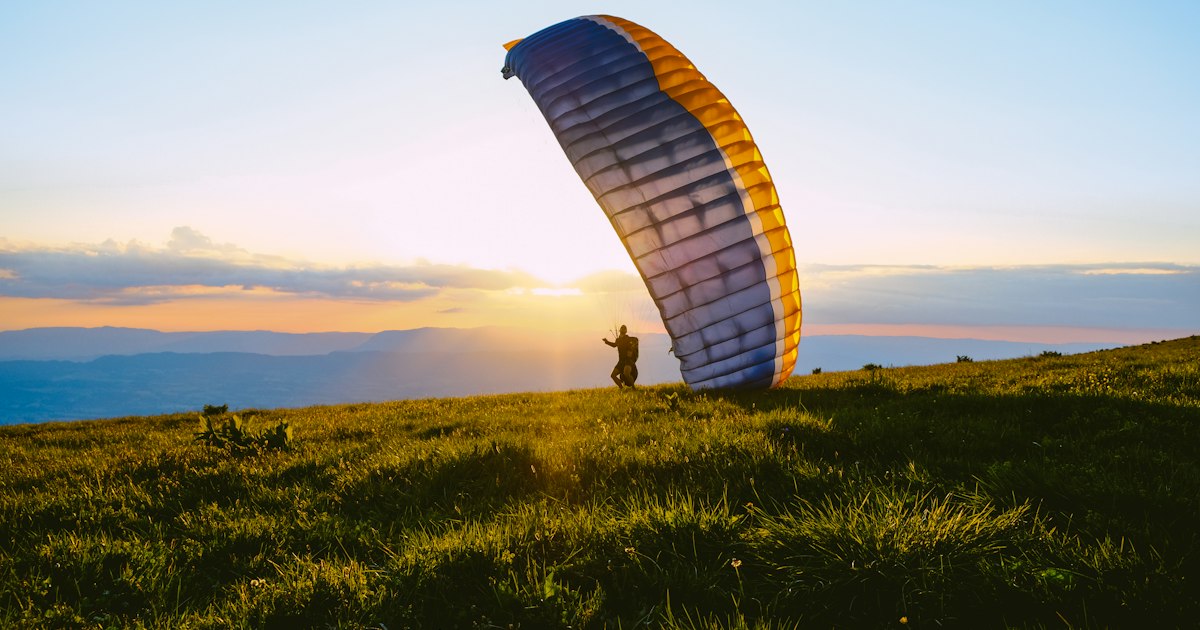
Photo by Juliette G. on Unsplash
Japan’s mountains, coastlines, and reliably clear shoulder-season skies make it a better aerial-sports destination than most visitors assume. You don’t need a license, a local sponsor, or fluent Japanese to jump out of a plane or fly a tandem paraglider here — you need a booking, a weather buffer day, and realistic expectations about what these flights cost and how far you’ll travel to reach the launch site. Here’s where tourists actually go, what it costs in yen, and the mistakes that most often turn a flight day into a no-fly day.
Tandem Skydiving: The Two Dropzones Visitors Actually Use
Japan has a small but established skydiving scene, and almost all tourist bookings funnel into two dropzones.
Skydive Hokkaido, based in Taiki Town in the Tokachi region, is the country’s best-known dropzone and the one most serious jumpers fly to specifically. It sits inland from Obihiro, about a 40-minute drive from Obihiro Airport, and runs tandem jumps from roughly April through November thanks to Tokachi’s unusually stable, low-air-traffic skies. Tandem jumps go out from around 4,000 meters, with a freefall of roughly 40–45 seconds before the canopy opens for a 5–7 minute ride down. Budget roughly ¥40,000–¥45,000 for the jump itself, plus ¥10,000–¥15,000 if you want video and photos — and you’ll want them, since this is the one souvenir you can’t buy in a shop.
Skydive Saitama, near Kumagaya, is the practical choice if you’re based in Tokyo and don’t want to fly domestically first. It’s reachable by JR Takasaki Line to Kumagaya Station followed by a short taxi or shuttle, making it a realistic day trip from central Tokyo. Pricing runs similar to Hokkaido, roughly ¥35,000–¥45,000 for the tandem jump.
Both operators set weight limits for tandem passengers — typically capped somewhere around 90–95 kg including clothing, sometimes with a surcharge tier above that — so check the operator’s current limit before you book if this applies to you.
Tandem Paragliding: Gentler, Cheaper, and Far More Common
Paragliding is the more accessible of the two activities: no freefall, lower cost, and tandem sites scattered across the country rather than concentrated in two locations.
Hakuba Valley, Nagano is the classic choice for mountain scenery — tandem flights launch from around 1,500 meters with views across the Northern Japan Alps, landing on the valley floor. Season runs roughly May to October, flights run around 15–20 minutes door to door (the actual airtime is shorter, 5–10 minutes depending on thermals), and expect to pay about ¥12,000–¥15,000.
Okinawa’s Nago and Onna coast offers tandem paragliding over turquoise water instead of mountains, and its season runs longer — spring through autumn, with flights paused during typhoon passes. Prices run slightly lower, around ¥10,000–¥13,000.
Awaji Island, a short bus ride from Kobe or Osaka over the Akashi Kaikyo Bridge, is the easiest option for travelers based in the Kansai region, with tandem flights over the Seto Inland Sea for roughly ¥10,000–¥13,000.
The Mount Fuji area (Gotemba and Asagiri Kogen) runs tandem paragliding with Fuji as the backdrop when weather cooperates, priced similarly at around ¥13,000–¥16,000.
Best Season and Timing
For paragliding, late spring through autumn (May–October) gives the most stable wind windows nationwide; winter flights exist at some sites but are far more weather-dependent. For skydiving, Hokkaido’s season (April–November) tracks the region’s dry, stable-air months, while Saitama runs closer to year-round but is more exposed to Kanto’s humid, storm-prone summer afternoons. Morning slots generally have calmer air than afternoon ones for both sports, which is why most operators schedule tandem flights in blocks starting early.
How to Get There
If you’re flying into Hokkaido specifically for Skydive Hokkaido, fly into Obihiro Airport (via Tokyo) rather than Sapporo, which is 3+ hours further away by road. For Saitama, the train-plus-taxi route from Tokyo is simpler than driving. For Hakuba, Awaji, and the Fuji five lakes area, many visitors find a rental car the most flexible option since dropzones and launch sites sit outside train networks — if you’re driving a rental in Japan for the first time, it’s worth understanding how the NOC insurance excess waiver actually works before you sign the counter paperwork, since mountain roads and gravel access tracks near launch sites are exactly where minor scrapes happen.
Common Mistakes
- Booking only one date. Both sports cancel for wind and visibility far more often than first-timers expect — Hokkaido and Hakuba operators routinely push bookings by a day or more. Build at least one buffer day into your itinerary, especially if this is the centerpiece of your trip.
- Assuming card payment everywhere. Smaller paragliding operators outside major cities are sometimes cash-only or have unreliable card terminals; carry enough yen to cover the flight and video package.
- Underdressing for altitude. Launch points in Hakuba and Hokkaido sit noticeably colder and windier than the valley floor — a packable windbreaker and gloves make a real difference, and if you didn’t pack them, Alpen and Sports Depo stores carry last-minute outdoor gear in most regional cities.
- Not checking age and weight limits in advance. Most tandem operators set a minimum age (often 16, sometimes younger with a guardian) and a maximum combined weight; find this on the operator’s site before you plan a date around it, not after arriving.
- Skipping travel insurance review. Tandem skydiving and paragliding are sometimes excluded from standard travel insurance policies as “extreme sports” — check your policy’s fine print before booking, not after an injury.
Budget, Mid-Range, and Splurge
Budget: Okinawa or Awaji tandem paragliding without video, around ¥10,000–¥12,000.
Mid-range: Hakuba tandem paragliding with photo package, or Saitama tandem skydiving without video, roughly ¥15,000–¥35,000.
Splurge: Hokkaido tandem skydiving with full video and photo package, ¥50,000–¥60,000 — the one most people say was worth every yen afterward.
Both sports pair well with a broader active-Japan itinerary. If you’re already building a trip around outdoor and recreational activities, visitors comparing options in the same category have also looked at Tokyo and Osaka’s new pickleball courts for a lower-key day between adventure bookings, or a stop at Daisetsuzan National Park if you’re already making the trip out to Hokkaido for Skydive Hokkaido.
Booking Tips
Book directly through the operator’s website or a reputable Japan-based activity platform rather than a third-party reseller, since weather rescheduling is handled far more smoothly when you’re talking to the dropzone or launch site directly. Reserve your slot at least a few days ahead in peak season (July–September for Hokkaido, autumn weekends for Hakuba), and confirm the exact meeting point — several operators meet clients at a station or car park well away from the actual launch field, and the shuttle timing is usually non-negotiable if you want to keep your slot.