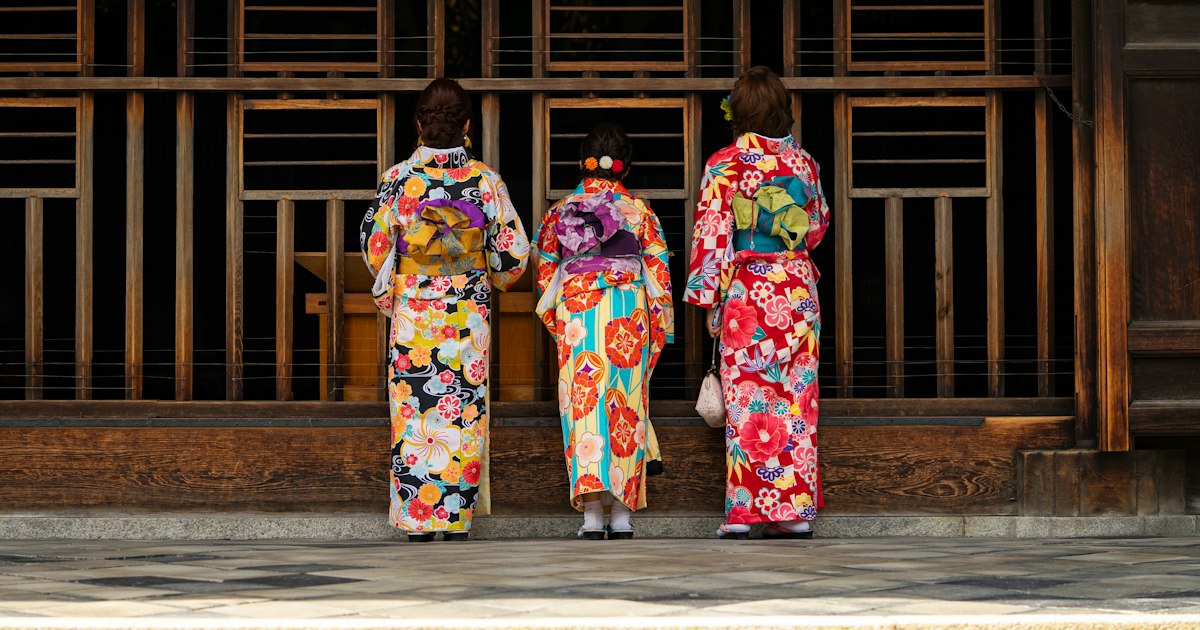
Photo by Damian Hutter on Unsplash
Most visitors who want to wear a kimono in Japan end up at a rental counter near a temple, zipped into a pre-sized polyester set for a few hours of photos. That’s fine for a day out, but it isn’t the same as owning a kimono that was actually measured, cut, and sewn for your body. A genuine made-to-measure kimono — ordered from fabric bolt to finished garment — is a different kind of souvenir: slower, pricier, and something you’ll still be wearing in twenty years. Here’s how the process actually works, what it costs, and how to avoid the mistakes that trip up first-time foreign buyers.
Why “Made-to-Measure” Means Something Different for Kimono
Western tailoring cuts fabric to match a 3D body shape. Kimono tailoring works almost the opposite way: a single bolt of fabric (called a tanmono, roughly 12-13 meters long and about 36-40cm wide) is cut into straight panels and assembled with straight seams. The “custom” part is in how those panels are proportioned to your measurements — shoulder-to-wrist length (yuki), body width (mitake), overall length (mitake-nagai), and sleeve depth — not in sculpting a shape. This is actually good news for visitors: because the construction is panel-based, a kimono shop can order a bolt in a pattern you like and tailor it specifically to you, even if you’re taller, broader, or longer-limbed than the average Japanese customer rental shops size for.
Where to Go: Kyoto’s Textile Districts vs. Tokyo’s Kimono Ateliers
Kyoto’s Nishijin district, north of the city center, is Japan’s historic silk-weaving quarter and the easiest place to see fabric being made before it’s tailored. The Nishijin Textile Center, reachable by city bus from Kyoto Station in about 20-25 minutes, sells finished and semi-custom kimono and can point you toward weavers and tailoring ateliers in the surrounding streets. It’s a good first stop even if you end up ordering elsewhere, because seeing the loom work makes the price differences later make sense.
In Tokyo, Asakusa and Nihonbashi have long-standing kimono retailers used to fitting both locals and tourists, and department stores in Ginza and Shinjuku (Mitsukoshi, Takashimaya, Isetan) have kimono floors with in-house tailoring services and staff who can take measurements on the spot. Yamato, a nationwide kimono chain with multiple Tokyo and Osaka locations, is a practical starting point for first-timers: it’s used to walk-in customers, offers both machine-woven and silk options, and can arrange made-to-order pieces without requiring fluent Japanese. For something at the top of the market, Kyoto-based designers such as Jotaro Saito work in a more haute-couture register, blending traditional weaving with contemporary cuts — worth knowing about if budget isn’t the constraint.
The Fitting Process: Measurements, Fabric, and Timeline
A proper order involves two visits at minimum. On the first, staff take your measurements and you choose fabric — this is where most of the decision-making happens, since pattern, weave, and dye method all affect price far more than size does. On the second visit, usually weeks later, you try on a basted (temporarily stitched) version so the tailor can adjust before final sewing.
Realistic turnaround for a silk, hand-tailored piece is four to eight weeks; rush orders are sometimes possible for a surcharge but aren’t guaranteed, especially during busy shopping seasons around New Year’s and graduation/coming-of-age season (January-March). If your trip is shorter than that, ask upfront whether the shop can ship the finished kimono internationally — many of the shops used to foreign clientele can, for an additional fee.
Budget, Mid-Range, and Splurge: What You’ll Actually Pay
- Budget (¥50,000-150,000 / roughly $340-$1,000): Machine-woven polyester or polyester-blend kimono, custom-tailored to your measurements through a chain retailer like Yamato. Easy to care for, machine-washable in some cases, and a sensible entry point if this is your first kimono purchase.
- Mid-range (¥150,000-450,000 / roughly $1,000-$3,000): Silk komon (all-over pattern, casual-to-semiformal) or tsukesage kimono, hand-tailored. This tier is where most serious made-to-measure buyers land, and it’s the range you’ll see most often quoted in Nishijin-area shops.
- Splurge (¥500,000-2,000,000+ / $3,400-$13,500+): Hand-painted or hand-woven silk, including yuzen-dyed pieces and formal houmongi or furisode, often from a named designer’s atelier. At this level you’re paying for the dye artist and weaver as much as the tailor.
Remember that the obi (sash), undergarments, cord ties, and accessories are sold separately and can easily add another ¥30,000-200,000 depending on quality — ask for an all-in quote before committing, since shops often quote the kimono fabric price alone first.
Best Time to Order
Kimono fabric weight is seasonal: lined awase kimono are worn October through May, unlined hitoe in the June and September shoulder months, and lightweight gauze (ro or sha) in the July-August heat. If you want a kimono you’ll actually wear in Japan’s climate back home, tell the shop your home season and climate, not just “I want a kimono” — a Kyoto summer-weight piece will feel thin and wrong in a cold Western winter. Ordering is possible year-round, but late autumn and spring (outside the New Year’s and graduation rush) tend to have the shortest waits for a fitting appointment.
Common Mistakes Foreign Buyers Make
- Assuming “custom” always means hand-sewn silk. Ask directly whether your order is machine- or hand-tailored and what fabric it is — the vocabulary gap causes real misunderstandings.
- Not budgeting for the obi and accessories separately. A beautiful ¥200,000 kimono with no obi is not wearable.
- Underestimating the timeline. A one-week trip is rarely enough for a full hand-tailored order unless you arrange shipping in advance.
- Trying to wash silk at home. Silk kimono need specialist cleaning (arai-hari), not a washing machine or standard dry cleaner — ask the shop for care instructions before you leave.
Getting Your Kimono Home
Finished kimono fold flat and travel well in a suitcase if wrapped in the paper or cloth the shop provides — don’t let anyone hang it for the flight. If you’re also shopping for other hand-finished Japanese goods on the same trip, the same principle of “get it properly finished before you fly” applies elsewhere too; see our guide on getting a newly bought Japanese knife professionally sharpened before you fly home for a similar case of timing a craft purchase around your departure date. If your kimono won’t be ready before you leave, confirm international shipping costs and customs declaration value with the shop in writing — reputable tailoring shops handle this routinely for overseas customers.