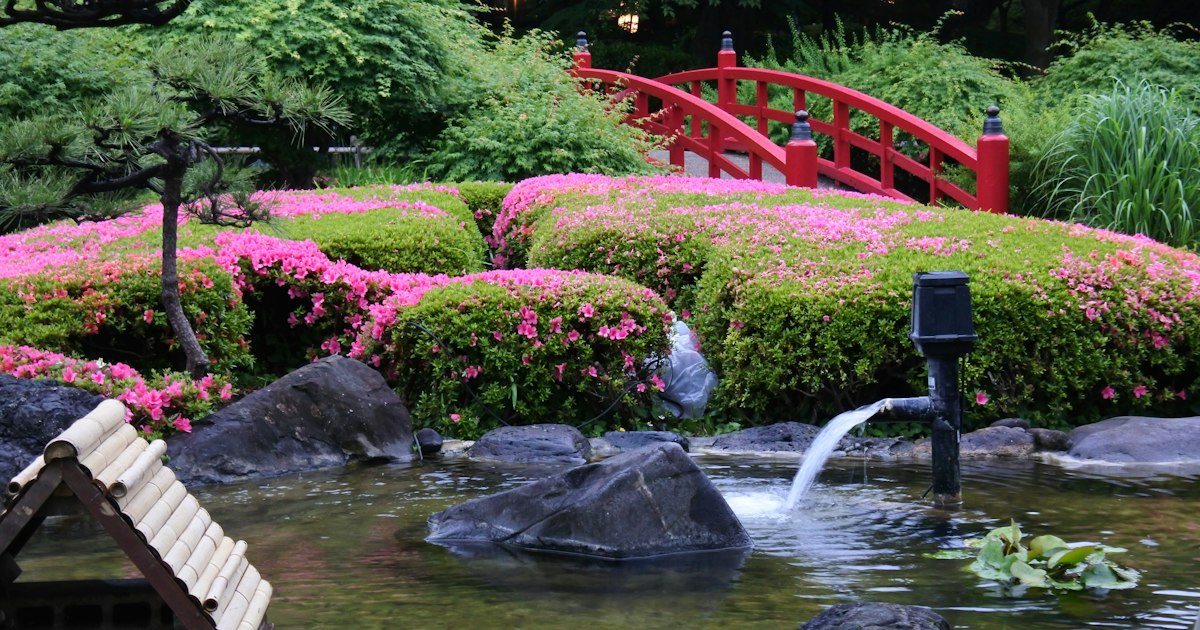
Photo by Parya Tavakoli Tehrani on Unsplash
Most people land in Takamatsu for the udon shops and the Setouchi art islands, then discover almost by accident that the city also holds one of Japan’s finest strolling gardens. Ritsurin Koen (“chestnut grove garden”) was laid out by the Matsudaira lords starting in the early 1600s and took over a century to complete, and unlike Kyoto’s temple gardens, it rarely feels crowded even in peak season. If you’re routing through Shikoku, it deserves a half-day of its own — here’s how to actually plan the visit.
What makes Ritsurin different from other Japanese gardens
Ritsurin is a “strolling pond garden” (kaiyu-shiki teien) split into two halves: the southern garden, which is the classic Edo-period core with six koi ponds, arched stone bridges, and pruned pine trees shaped over centuries, and the northern garden, a more open, modern landscape added in the 20th century with a lawn, plum grove, and small folk museum. The whole thing is backed by Mount Shiun, and the garden designers deliberately used the mountain as a “borrowed scenery” backdrop — so even though the garden itself is flat and walkable, every view has a forested hill rising behind it. That borrowing of natural scenery is the single biggest reason Ritsurin is ranked alongside Japan’s top three gardens (Kairakuen, Kenrokuen, Korakuen) by garden historians, even though it’s far less visited.
Hours, admission, and when to go
The garden is open daily, with hours that shift seasonally — roughly 7:00 to 18:00 in summer (April–September) and 8:30 to 17:00 in winter (October–March); always double-check the current month’s closing time on the official Kagawa tourism site before you go, since an early close is the most common reason people get rushed out. Admission is 410 yen for adults and 170 yen for children (elementary and junior high), payable at the gate in cash or IC card. There’s no need to book ahead — this isn’t a reservation-only garden like some Kyoto temples.
Cherry blossoms (late March–early April) and autumn foliage (mid-to-late November) are the two marquee seasons, and the garden is illuminated in the evenings during those windows, which is worth timing your visit around if you can. That said, the pruned pines and koi ponds look good year-round, and because Ritsurin isn’t on most first-time visitors’ itineraries, even peak-season crowds are manageable compared to Kyoto or Nara. Go early morning on a weekday if you want the ponds to yourself for photos.
Getting there from Takamatsu Station or the airport
Ritsurin Garden sits about 2.5 km south of Takamatsu Station, and the easiest approach is the JR Kotoku Line to Ritsurin Koen Kitaguchi Station (the north entrance), a short one-stop ride. Alternatively, Kotoden’s Kotoden-Ritsurin-Koen Station on the Kotoden Shido Line drops you close to the east gate — useful if you’re also planning to use Kotoden trains elsewhere that day. A taxi from Takamatsu Station takes about 10 minutes and costs roughly 1,000–1,200 yen, which is worth it if you’re short on time or traveling with luggage before a ferry connection to the Setouchi islands.
If you’re flying into Takamatsu Airport, there’s no direct bus to the garden — take the airport limousine bus to JR Takamatsu Station (about 40 minutes, 790 yen) and continue from there. Travelers renting a car to explore more of Shikoku should note that Ritsurin has a paid parking lot near the east gate (around 610 yen for the first hour, less for subsequent hours), and if you’re relying on a rental for the wider region, it’s worth understanding how the NOC insurance excess waiver actually works before you sign the paperwork at the counter.
How much time to budget and a suggested route
Plan for 60–90 minutes if you’re walking through efficiently, or up to 2.5 hours if you want to linger at the teahouse, visit the folk museum, and see both the south and north gardens properly. Most visitors enter from the east gate (closest to the ticket office and main parking) and loop clockwise through the southern garden first — this is the historic core and shouldn’t be skipped even if you’re pressed for time. The northern garden, with its lawn and plum trees, is more skippable if you’re tight on schedule, since it lacks the ponds and bridges that make the southern half distinctive.
A common mistake is treating Ritsurin as a quick 20-minute photo stop between the train station and dinner — the garden’s paths wind enough that you’ll miss the best viewpoints (particularly the views of Mount Shiun reflected in Nanko pond) if you rush. Give it at least an hour.
The teahouse and budget options
Inside the southern garden, Kikugetsu-tei is a preserved Edo-period teahouse right on the edge of the main pond, built for the Matsudaira lords to entertain guests. You can sit on tatami and order matcha with a seasonal wagashi sweet for around 800–900 yen — it’s a genuinely nice way to pause partway through the walk and look out over the water. For a cheaper option, there are vending machines and a small rest house near the east gate selling drinks and light snacks for under 200 yen. There’s no need to splurge beyond the teahouse; Ritsurin isn’t a garden with a fine-dining add-on, so budget travelers can see everything the garden offers for the base 410 yen admission plus tea money if they want it.
Pairing Ritsurin with the rest of your Takamatsu day
Because Ritsurin only takes a morning or afternoon, most visitors pair it with Takamatsu’s famous udon shops, the covered shopping arcades downtown, or a ferry out to the Setouchi art islands (Naoshima, Teshima) the same day. If you’re continuing around Kagawa afterward, the prefecture’s other offbeat sight worth knowing about is Zenigata Sunae, the giant coin-shaped sand sculpture near Kan-onji, which makes a good half-day add-on if you have a rental car. And if you’re stocking up on Japanese kitchenware or souvenirs while in the region, it’s worth knowing you can get a newly bought Japanese knife professionally sharpened before you fly home — a detail travelers often only think about after they’ve already left the shop.
One last practical note: Takamatsu’s mobile coverage is generally solid, but if you’re relying on a prepaid eSIM for navigation between the garden, the station, and the ferry terminal, it’s worth knowing the common fixes in case your connection drops — see this guide on SIM card or eSIM connection problems in Japan before you’re stuck without a map mid-stroll.