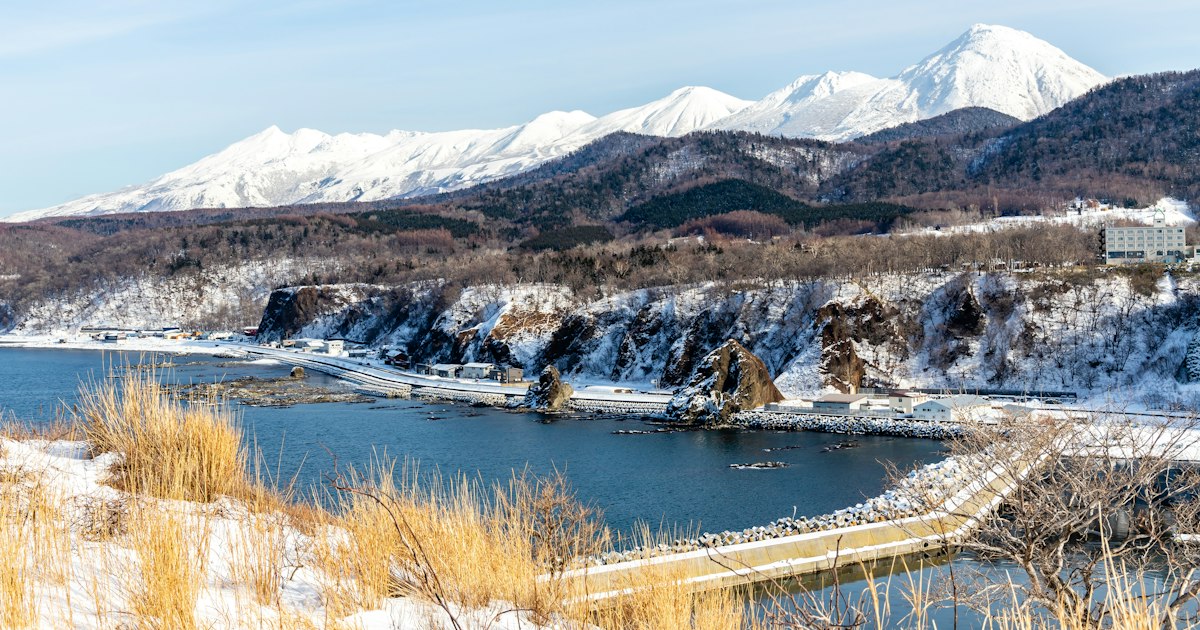
Photo by Bing Hui Yau on Unsplash
Most visitors to Hokkaido get as far as Sapporo, Furano, or Niseko and call it a trip. Daisetsuzan National Park — a wilderness roughly the size of Tokyo’s entire metropolitan area, sitting in the dead center of the island — rarely makes the itinerary, which is exactly why it rewards the effort. In summer it’s Japan’s biggest alpine hiking ground, with the earliest autumn colors in the country. In winter, the hot spring village of Sounkyo inside the park hosts the Sounkyo Icefall Festival, a glowing maze of carved ice with none of the crowds you’d fight through at the Sapporo Snow Festival.
Why Daisetsuzan Is Hokkaido’s Wildest National Park
Daisetsuzan (大雪山, “great snow mountain”) was designated a national park in 1934 and covers about 2,267 square kilometers — Japan’s largest. The Ainu name for the area, Kamuy Mintara, means “playground of the gods,” and it’s not an exaggeration: this is a volcanic highland of jagged peaks, steaming fumaroles, and alpine tundra, including Asahidake (2,291m), Hokkaido’s tallest mountain, and the active crater of Tokachidake. Brown bears live here in real numbers, which is why marked trails, bear bells, and checking current advisories at a visitor center matter more here than almost anywhere else in Japan.
The park has no single “entrance.” Most travelers approach from one of two base areas: Asahidake Onsen on the western side, reached by ropeway for mountain views and short walks, or Sounkyo Onsen on the eastern side, set inside a dramatic gorge and the gateway to both Kurodake and the winter festival.
Getting to Daisetsuzan and Sounkyo
The gateway city is Asahikawa, about 1 hour 25 minutes from Sapporo by limited express train (around ¥5,220 one-way) or a short flight into Asahikawa Airport. From Asahikawa Station, a Dohoku Bus runs to Sounkyo Onsen in about 1 hour 50 minutes (around ¥2,100 one-way); a separate route serves Asahidake Onsen in roughly an hour (around ¥1,700).
Buses run far less frequently outside peak season — sometimes just three or four departures a day in winter — so check the timetable before you plan a day trip. Because the two base areas are 1.5–2 hours apart by road and not directly connected by transit, most people who want to see both Asahidake and Sounkyo properly end up renting a car. If you do, it’s worth understanding how Japan’s standard rental insurance excess waiver actually works before you drive mountain roads that can ice over even in shoulder season — our guide to NOC insurance excess waivers covers what’s and isn’t covered if you clip a guardrail on the pass roads.
Sounkyo Gorge and the Kurodake Ropeway
Sounkyo Onsen itself is a small hot spring town squeezed into a basalt gorge, with the twin waterfalls Ginga (“Galaxy”) and Ryusei (“Shooting Star”) Falls viewable for free from roadside platforms a short walk from the bus terminal. For a bigger view, the Kurodake Ropeway lifts you from the village to the base of Mt. Kurodake in about 7 minutes (adult round trip roughly ¥2,400), with a connecting chairlift continuing higher for an extra fee. From the top lift station it’s a real hike — not a stroll — to the summit, so bring proper footwear even if you’re only going partway up.
This gorge area is genuinely remote, and mobile signal drops out in patches along the cliffside roads and higher trails. If your eSIM or carrier SIM stops connecting once you’re off the main highway, our troubleshooting guide for SIM and eSIM connection issues walks through the usual fixes before you assume the worst. In the rare spot where you have zero signal and need to reach a ryokan or taxi, Japan’s old public phone booths still exist for exactly this reason — see our piece on koshu denwa pay phones for where to find one and what coins or cards they take.
The Sounkyo Icefall Festival
From late January through mid-to-late March, the dry riverbed of the Ishikari River next to the Kurodake Ropeway station fills with enormous ice domes, tunnels, and sculptures, built up over weeks by spraying and freezing river water in layers. After dark — illumination typically runs from around 17:00 to 22:00 — the ice is lit in rotating colors, and on winter weekends there are often small fireworks displays over the gorge. Entry is free. There’s a short ice slide for kids, and a walk-through ice bar area where you can buy hot drinks or local sake served in a cup carved from ice (cash, a few hundred yen per drink).
Compared to the Sapporo Snow Festival, this is a fraction of the size and a fraction of the crowd — you can walk the whole site in 30–45 minutes, but the setting inside a snow-walled gorge, with hot spring steam rising around you, is what makes it worth the detour. Dress for genuinely cold Hokkaido winter nights: multiple warm layers, insulated boots, and hand warmers, since you’ll be standing around outdoors after sunset.
Best Time to Visit: Summer Hiking vs Winter Ice
Daisetsuzan has two distinct high seasons and they don’t overlap. Hiking season runs roughly late June through September, and this is also where Hokkaido’s famous “first autumn colors in Japan” happen — the alpine zone around Asahidake and Kurodake often turns in late August to early September, weeks ahead of anywhere else in the country, with the gorge-level foliage around Sounkyo following in late September to early October. Snow can return to the summits as early as mid-September, so pack layers even for a late-summer hike.
Winter, roughly December through March, is for the Icefall Festival, skiing, and snowshoeing rather than alpine hiking — most high trails are closed or require winter mountaineering experience. There’s no real “shoulder season” advantage to visiting in spring; April and May see lingering snow and reduced bus service without the payoff of either festival.
Where to Stay in Sounkyo
Budget travelers can find simple guesthouses and business hotels in Sounkyo Onsen from around ¥6,000–9,000 a night. Mid-range options are proper hot spring ryokan with half-board (dinner and breakfast included), typically ¥15,000–25,000 per person, letting you soak in an onsen after walking the ice festival in the cold. For a splurge, the larger hotels overlooking the gorge run kaiseki dinner courses with private or scenic bathing from roughly ¥30,000 per person and up — worth booking well ahead on festival weekends, since Sounkyo has limited rooms for a destination that draws a national (if modest) crowd each winter.
Common Mistakes to Avoid
The biggest one is treating Daisetsuzan like a single afternoon stop between Sapporo and Asahikawa — the park is enormous, bus connections are thin, and Asahidake and Sounkyo are not a quick hop apart. Second is underestimating the cold at altitude: even midsummer hikers get caught out by sudden wind and near-freezing temperatures near the peaks. Third, for the festival specifically, is arriving in daylight and leaving before dusk — the ice sculptures are pretty in sunlight but the lighting display is the actual event, so time your visit for after the lights come on. Finally, don’t assume frequent buses back to Asahikawa late at night; in winter the last bus from Sounkyo can leave surprisingly early, so check the return schedule before you settle in for a long dinner.