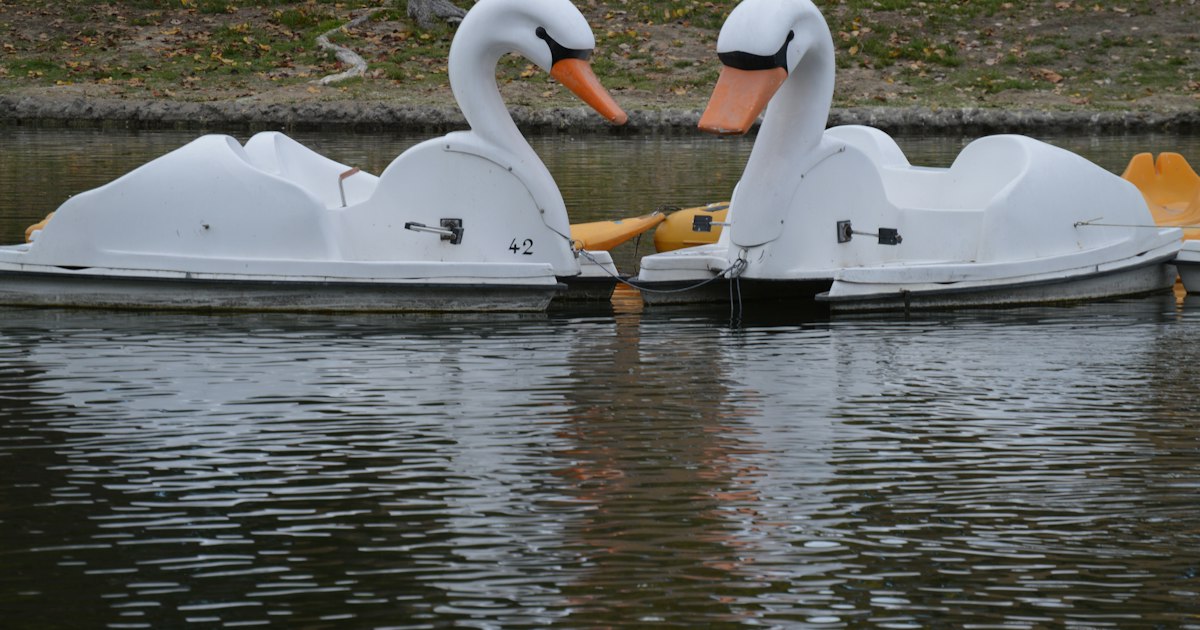
Photo by Larkin Hammond on Unsplash
Long before Tokyo had theme parks, it had park ponds — and on a handful of them, you can still rent a rowboat or pedal a plastic swan around the water for less than the price of a convenience-store lunch. It’s one of the cheapest, least touted things to do in the city, and also one of the most photogenic: cherry blossoms overhead in spring, a skyline of office towers in the background, a flotilla of oversized white birds gliding past a shrine island. Here’s where to go, what it costs, and the one local superstition you should know before you book a boat for two.
Why Tokyo’s Park Ponds Are Worth the Detour
Tokyo’s major parks were landscaped around water on purpose — ponds were dug or dammed for scenic effect well before boating became a pastime, and several still run small boathouses as a leftover from the Showa-era park boom. The appeal for visitors is that you don’t need a reservation, a guide, or much Japanese: you walk up, pay a cashier or a ticket machine, put on a life vest, and you’re on the water within five minutes. It’s also one of the few outdoor activities in central Tokyo that genuinely slows you down — no queue, no screen, just paddling in a loop for half an hour.
Inokashira Park: Kichijoji’s Famous (and “Cursed”) Swan Boats
Inokashira Park in Kichijoji has the best-known boat pond in Tokyo, largely because of the Studio Ghibli Museum nearby and a local legend: Benzaiten, the goddess of water and the arts enshrined on the pond’s small island, is said to grow jealous of couples who ride the swan boats together, and curses them to break up. Locals half-joke about it, tour guides repeat it, and plenty of couples ride anyway — it’s part of the fun rather than a real deterrent.
- Getting there: About a 5-minute walk south from Kichijoji Station (JR Chuo Line or Keio Inokashira Line).
- Boats on offer: Manual rowboats, pedal-powered swan boats, and pedal “cycle boats” without the swan shell.
- Price: Roughly ¥600–¥700 for a 30-minute rental, cash only at the boathouse window — prices are posted at the dock, so treat these as ballpark figures and confirm on arrival.
- Hours: Generally 10:00 AM to around 5:00 PM (last boats launched roughly 30 minutes before close), with occasional maintenance closures and a shutdown over the New Year holidays.
- Best timing: Weekday mornings are near-empty. Cherry blossom season (late March–early April) and autumn foliage (mid-to-late November) are the most beautiful but also the busiest — expect a short wait for a boat on weekends during those windows.
Ueno’s Shinobazu Pond: Boats with a Skyline and a Lotus Field
Shinobazu Pond in Ueno Park is split into sections — one for boating, one left wild for lotus flowers that bloom thickly from July into August — so you get the photogenic lily-pad view without actually paddling through it. There’s also a Benten Hall on an island here, the same deity and the same breakup legend as Inokashira, if you want to test your luck twice on one trip.
- Getting there: A short walk from Ueno Station (JR Yamanote Line, Keisei Ueno Station, or Tokyo Metro), near Ueno Zoo and the Tokyo National Museum.
- Boats on offer: Rowboats and pedal swan boats, typically seating two to four people.
- Price: Around ¥700 for 30 minutes, again paid at the boathouse, not online.
- Season: The boathouse generally operates from early spring through late autumn and closes over winter, so this isn’t a December-through-February activity — plan for March to November instead.
- Pairing it with a day out: Ueno Park is already a museum-and-zoo destination, so a 30-minute boat ride slots in easily as a mid-afternoon break between galleries.
Beyond the Big Two: Quieter Ponds Worth Knowing
If Inokashira and Ueno feel like the obvious tourist stops, a couple of smaller, far less crowded options exist for travelers who want the same experience without the crowds:
- Senzokuike Park (Ota City): A compact neighborhood pond near Senzokuike Station on the Tokyu Ikegami Line, also home to a Benzaiten shrine and the same couples’-curse folklore. Seasonal rowboat rental here is cheap and almost entirely used by locals rather than tourists — a good pick if you want the atmosphere without the lines.
- Showa Kinen Park (Showa Memorial Park), Tachikawa: A large family-oriented park with its own pond and pedal/swan boats, inside a park that also charges a separate entrance fee (around ¥450 for adults). It’s about 40 minutes west of central Tokyo by train, so it works best as part of a bigger day out in the Tachikawa area rather than a quick stop.
If you’re already planning outings further afield, a boat ride pairs naturally with a bigger day trip — something like the Mount Tsukuba cable car and ropeway day trip gives you a contrasting, more rugged outdoor experience on the same weekend.
Prices, Hours and Season at a Glance
- Typical cost: ¥500–¥700 per boat for a 30-minute block at most Tokyo park ponds; pedal/swan boats usually cost a little more than plain rowboats.
- Payment: Cash at the boathouse window is the safe assumption everywhere; don’t count on card or IC card payment.
- Hours: Most boathouses run roughly 10:00 AM–5:00 PM, with the last rental issued 30 minutes to an hour before closing.
- Season: Spring through autumn is reliable. Many ponds close boating in deep winter (roughly January–February) and some shut for brief maintenance days — there’s no centralized calendar, so a quick check of the local park office’s signage or website before you go is worth the five minutes.
- Weather: Boats stop running in rain or high wind, often with no advance notice online, so this is better as a flexible afternoon activity than the single planned highlight of your day.
Common Mistakes and Practical Tips
- Showing up on a rainy or very windy day: Staff close the boathouse with little warning. Have a backup plan for that time slot, especially if traveling with kids — an indoor option like a trampoline park is a reasonable rainy-day swap.
- Assuming it’s year-round: If you’re visiting in deep winter, some ponds simply aren’t renting boats at all. Build in a seasonal alternative — citrus-picking day trips like mikan picking farms run exactly when boat season is quietest.
- Not bringing small cash: Boathouses deal in coins and small bills; don’t expect change for a ¥10,000 note or any card terminal.
- Underestimating weekend crowds at Inokashira: On a sunny Saturday in blossom or foliage season, the wait for a boat can run 20–30 minutes. Arrive at opening or go on a weekday.
- Treating the swan-boat legend too seriously (or not at all): It’s lighthearted folklore, not a real risk assessment — ride together if you want, and enjoy the story either way.
- Forgetting life vests are mandatory: Staff will fit you with one before you board; it’s standard practice, not optional, even for a calm 30-minute loop.
Budget, Mid-Range and Splurge Ways to Do It
There isn’t much price spread here — that’s the appeal. A basic rowboat at any of these ponds (budget option) runs ¥500–¥700 for half an hour. Stepping up to a pedal swan boat (mid-range) usually adds only ¥100–¥200, mostly for the novelty and the photos. The closest thing to a “splurge” is simply combining the boat ride with a full day at the surrounding park — Ueno’s museums and zoo, or Showa Kinen Park’s wider grounds and seasonal flower fields — so the ¥700 boat ride becomes the cheapest line item in an otherwise full day out.