Photo by Nichika Sakurai on Unsplash
Most visitors learn one piece of dialect trivia before they land: Osaka speaks Kansai-ben, the punchy, comedian-favored dialect of “akan” and “ookini.” That’s a fine start, but Kansai-ben is only one branch of a much bigger tree. Travel north to Aomori or south to Fukuoka and you’ll hit speech so different from textbook Japanese that even Tokyoites sometimes need subtitles. This guide covers the dialects worth knowing about, where you’ll actually encounter them on a trip, and how to enjoy the variety without accidentally sounding like you’re mocking someone’s grandmother.
Why Japan Has So Many Dialects
Japan’s mountainous geography kept communities isolated for centuries, and the Edo-period system of domains (han) with restricted travel let local speech drift further apart. Add in the fact that Okinawa was an independent kingdom until 1879, and you get a country where “Japanese” covers everything from mutually intelligible regional accents to what linguists classify as a separate language entirely. Standard Japanese (hyōjungo) is a 19th-century Tokyo-based invention, spread deliberately through schools and NHK broadcasts — which is why older speakers in rural areas often have much thicker dialect than their grandchildren.
Hakata-ben: Kyushu’s Warm, Blunt Charm
Hakata-ben is spoken around Fukuoka City on the island of Kyushu, reachable from Tokyo in about 5 hours by Sanyo-Tohoku Shinkansen or roughly 2 hours by direct flight into Fukuoka Airport (one of the few major Japanese airports with a subway station inside the terminal, 2 stops from Hakata Station). The dialect is known for its sentence-ending particles — “~と” instead of standard “~の” when asking a question, and the all-purpose “~ちゃ” or “~たい” for emphasis. “Yokatta” becomes “yokatto,” and locals greet each other with “genki?” delivered in a sing-song rhythm that outsiders find instantly likeable.
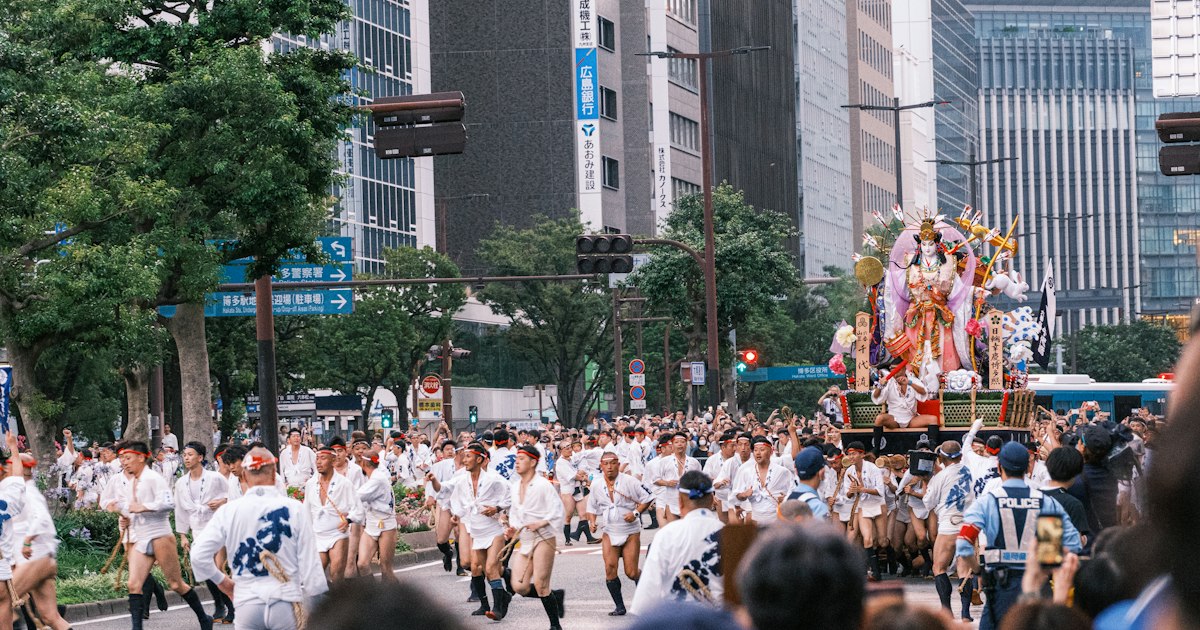
The best time to hear it in full force is the Hakata Dontaku Minato Matsuri (May 3–4), one of Japan’s largest festivals by attendance, with free street performances across downtown Fukuoka. For a quieter, year-round taste, the Hakata Machiya Furusato Kan near Kushida Shrine (open 10:00–17:00, closed the 4th Monday of the month, admission ¥200 for adults, ¥100 for students) runs short dialect demonstrations and sells recordings of old Hakata folk songs. Pair the visit with a bowl of Hakata-style tonkotsu ramen, or if you’re continuing south into Miyazaki, try the region’s own specialty at chicken nanban, where the vinegar-tartar combo is as regionally specific as the accent.
Tohoku-ben: The Dialect Even Japanese Visitors Struggle With
Tohoku-ben isn’t one dialect but a family spread across Aomori, Akita, Iwate, Miyagi, Yamagata, and Fukushima — and within that family, Tsugaru-ben (western Aomori) has a reputation as the hardest Japanese dialect for other Japanese speakers to understand. Vowels merge, consonants soften, and whole words get swallowed; it’s common for Tsugaru-ben speakers to switch to standard Japanese automatically when talking to anyone from outside the region. Shin-Aomori Station is about 3 hours from Tokyo on the Tohoku Shinkansen, making a day or overnight trip very doable.
Your best shot at hearing it live is the Aomori Nebuta Matsuri (August 2–7), where illuminated paper floats parade through the city to taiko drums and the “rassera, rassera” chant. Standing viewing along the route is free; reserved seats run roughly ¥3,000–4,500 and sell out weeks in advance through the official festival association. Outside festival season, local izakaya in Aomori and Hirosaki are the more reliable listening posts — don’t expect to understand much, but the staff will usually soften their speech if you ask politely, “Tsugaru-ben, muzukashii desu ne?” (“Tsugaru dialect is hard, isn’t it?”), which tends to get a laugh and a translation.
Beyond the Big Two
Once you start listening for it, nearly every region has a signature: Nagoya-ben flattens vowels and adds “~mai” for suggestions (“ikumai” instead of “ikou,” let’s go); Hiroshima-ben uses the blunt “~jya” copula familiar from period dramas and gives the region’s speech a gruffer edge than its friendly reputation suggests. If you’re island-hopping through the Seto Inland Sea toward Inujima, the Okayama-Hiroshima dialect belt is worth tuning your ear to on the ferry over.
Hokkaido, settled relatively recently by migrants from across Japan, has a looser, blended dialect with Ainu-derived place names rather than a deep local speech pattern — something worth remembering if you’re heading up toward Mount Yotei near Niseko and expecting a strong regional accent; you likely won’t hear one.
The real outlier is Okinawa. Uchinaaguchi (Okinawan) and the other Ryukyuan languages aren’t dialects of Japanese at all — they’re separate languages in the Japonic family, roughly as distinct from standard Japanese as Dutch is from German, and UNESCO classifies several of them as endangered. Most Okinawans today speak standard Japanese with “Okinawan-accented” Japanese (Uchinaa Yamatoguchi) day to day, reserving true Uchinaaguchi for elders, folk songs, and ceremonies. If your itinerary includes the quieter Yaeyama islands, a stop at Kohama Island puts you in a region where local place names and song lyrics still carry genuine Ryukyuan vocabulary, even if everyday conversation defaults to Japanese.
Common Mistakes Travelers Make
- Assuming one phrasebook covers the country. “Arigatou” works everywhere, but a Kansai “ookini” or Hakata “yokatto” used outside its home region usually just gets a confused smile.
- Mimicking a dialect for laughs. Light, curious questions (“is that Tsugaru-ben?”) land fine; exaggerated imitation can come across as mocking, especially with older speakers who were historically told their dialect was “incorrect” Japanese in schools.
- Treating Okinawan as “cute Japanese.” It’s a distinct language under active revitalization efforts, not a quirky accent — a distinction locals do notice and appreciate when visitors get it right.
- Expecting train announcements or hotel staff to use dialect. Tourism-facing Japanese is almost always standard; you’ll hear real dialect in local shops, taxis, and festivals, not at the front desk.
Souvenirs and Resources for Dialect Lovers
If you want to take the language home with you, regional dialect goods are an easy, inexpensive souvenir category: Hakata souvenir shops near Hakata Station sell dialect phrase tenugui (cotton cloths) and snack packaging printed with local sayings for around ¥500–1,500. Aomori’s A-FACTORY market by the bay sells Tsugaru-ben phrase magnets and dialect comic books (budget pick, under ¥1,000). For something more substantial, regional bookstores stock pocket dialect dictionaries (¥800–1,500) that make far better conversation starters in an izakaya than a standard phrasebook ever will. None of this requires planning — it’s the kind of thing you pick up on the way to catch a Shinkansen home, after a trip that sounded a lot more varied than “Japanese” first suggested.