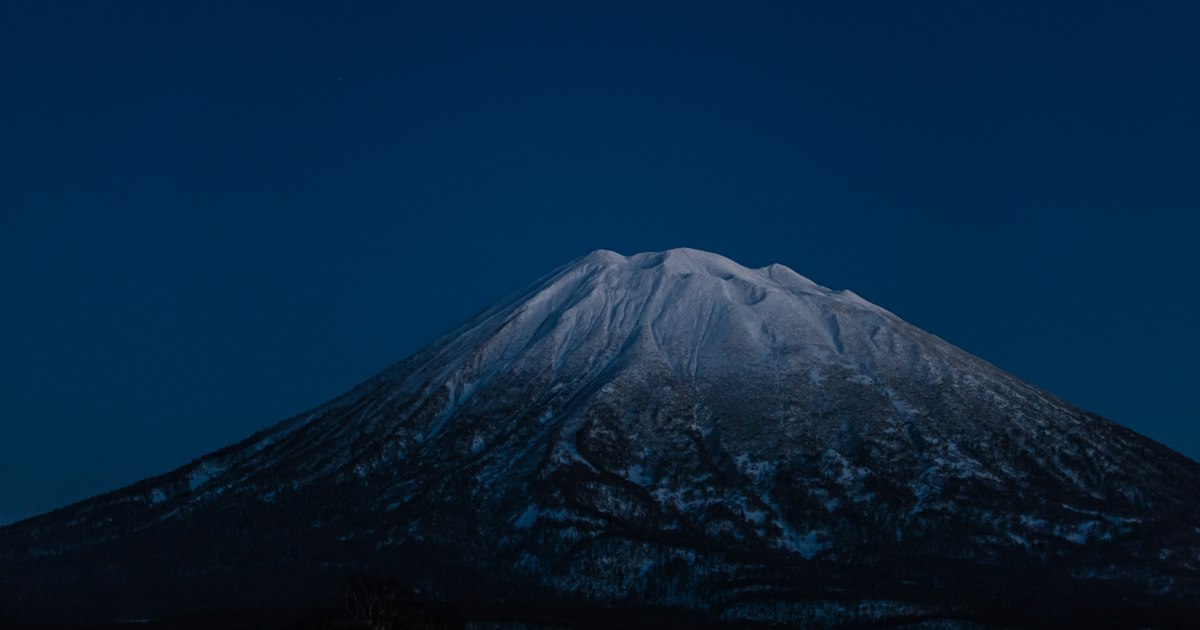
Photo by Marek Okon on Unsplash
Rising alone out of the farmland south of Niseko, Mount Yotei is hard to miss — a near-perfect volcanic cone that locals have nicknamed “Ezo Fuji” for its resemblance to its famous cousin on Honshu. At 1,898 meters, it’s a serious day hike rather than a casual walk, but it rewards climbers with a crater-rim summit, 360-degree views across Hokkaido’s Shiribeshi region, and a much smaller crowd than Mount Fuji ever sees. Here’s what to actually know before you go.
Why Hike Mount Yotei
Mount Yotei sits inside Shikotsu-Toya National Park, visible from almost everywhere in the Niseko ski area — it’s the mountain you’ve already been staring at from the gondola or your hotel window if you’ve visited in winter. In summer, the volcano itself becomes the destination: a long, steady climb through forest and alpine scrub to a wide volcanic crater you can walk around at the top. Unlike Mount Fuji, there’s no overnight hut culture, no vending machines partway up, and no crowds queuing for the sunrise — it’s a legitimate wilderness hike that happens to have a very recognizable silhouette.
Choosing Your Route
Four trailheads circle the mountain, each named after the town it starts from: Hirafu (closest to central Niseko), Makkari, Kyogoku, and Kimobetsu. The Makkari route is generally considered the most manageable and popular, with a slightly gentler grade and a mountain hut at the 4th station where you can duck out of bad weather. The Hirafu route is the most convenient if you’re already staying in the Niseko/Hirafu area, but it’s steeper in sections. Whichever trailhead you pick, plan for roughly 9–10 hours round trip, with around 1,400–1,500 meters of elevation gain from trailhead to summit. There is no technical climbing involved, but it is a long, sustained slog — closer in effort to a Daisetsuzan peak than a stroll. If you want a sense of what a serious Hokkaido wilderness day looks like before committing, our guide to Daisetsuzan National Park covers similar terrain and planning logic.
None of the four trailheads charge an entry fee, and no permit or reservation is needed to climb.
Getting There
Most visitors base themselves in Niseko or Kutchan, both reachable by JR train from Sapporo (around 2 hours) or by direct bus from New Chitose Airport in ski season (summer bus service is more limited, so check current schedules). From either town, the trailheads themselves are 20–30 minutes away by car and are not served by public buses, so a rental car is by far the easiest option — expect to pay roughly ¥6,000–10,000 per day for a compact car in summer, considerably less than winter ski-season rates. If you’re new to renting in Japan, it’s worth understanding the insurance add-ons before you sign, since the standard policy often leaves a deductible gap — our breakdown of the NOC insurance excess waiver explains what that extra ¥1,000–2,000/day actually buys you. Taxis from Kutchan Station to the trailheads exist but add up quickly over a return trip, so they’re best treated as a backup plan rather than the default.
If you’re tracking your route by train line on the way up from Sapporo and want a refresher on how Japan’s rail maps use color coding, our guide to reading train maps and line colors is a useful companion for the Hakodate Main Line leg.
Best Season and Timing
The realistic hiking window is late June through early October. Snow can linger in shaded gullies into June, and the mountain can see its first dustings of autumn snow by early-to-mid October, so shoulder-season climbers should check recent trail reports before committing. July and August offer the most reliable conditions but also the most unpredictable afternoon thunderstorms, which build fast over the exposed upper slopes — start early. Most climbers begin at or before 5:00–6:00 AM specifically to summit and start descending before early-afternoon weather rolls in. Fog and sudden wind are common near the crater rim even on clear-looking mornings in Niseko town, since the summit sits well above the valley weather.
What to Pack
There is no water source on the mountain above the trailhead, so carry everything you’ll drink — 2 to 3 liters per person is the standard recommendation for a full-day climb. Trekking poles help significantly on the loose volcanic scree near the top, and sturdy hiking boots (not sneakers) matter more here than on gentler trails, since footing gets unstable in the final stretch. Layers are essential: it can be comfortably warm at the trailhead and genuinely cold and windy at the crater rim. If you’re arriving in Japan without full gear or need to replace something at the last minute, Niseko and Kutchan both have access to Alpen and Sports Depo-style sporting goods stores where you can pick up boots, rain shells, or a headlamp without needing a dedicated outdoor specialty shop.
Hokkaido brown bears (higuma) are present in this region, and trailhead signboards sometimes post recent sighting notices. A bear bell is cheap insurance, and it’s worth checking the posted notices at the trailhead before you start rather than assuming the mountain is bear-free just because it’s a popular hike.
Common Mistakes
- Underestimating the length. This is an 8–10 hour day, not a half-day outing — climbers who start at 9 or 10 AM regularly get caught by dusk on the descent.
- Skipping the weather check. Niseko’s valley forecast and the Yotei summit forecast can diverge badly; afternoon storms are the main reason to start before sunrise.
- Assuming public transport will get you to the trailhead. It won’t — budget for a rental car or arrange a taxi both ways in advance.
- Treating the emergency huts as rest stops with amenities. The shelters along the route are unstaffed, with no food, bedding, or reliable water — useful for a weather emergency, not for a planned break.
Where to Stay and Refuel
Budget travelers can find hostel dorm beds in Kutchan or Niseko from roughly ¥3,000–5,000 a night in the summer off-season, far below winter ski rates. Mid-range travelers have plenty of options in the ¥15,000–25,000 range for a comfortable hotel or pension room, many with onsen baths that feel especially good after a 1,500-meter descent. For a splurge, several of Niseko’s ski-season luxury properties stay open through summer at a fraction of their winter rates, often ¥35,000–40,000+ per night but with far more availability than in January. After the hike, Kyogoku’s Fukidashi Park — a free natural spring fed by Mount Yotei’s own groundwater — is a short detour worth making to refill water bottles and cool off before the drive back.