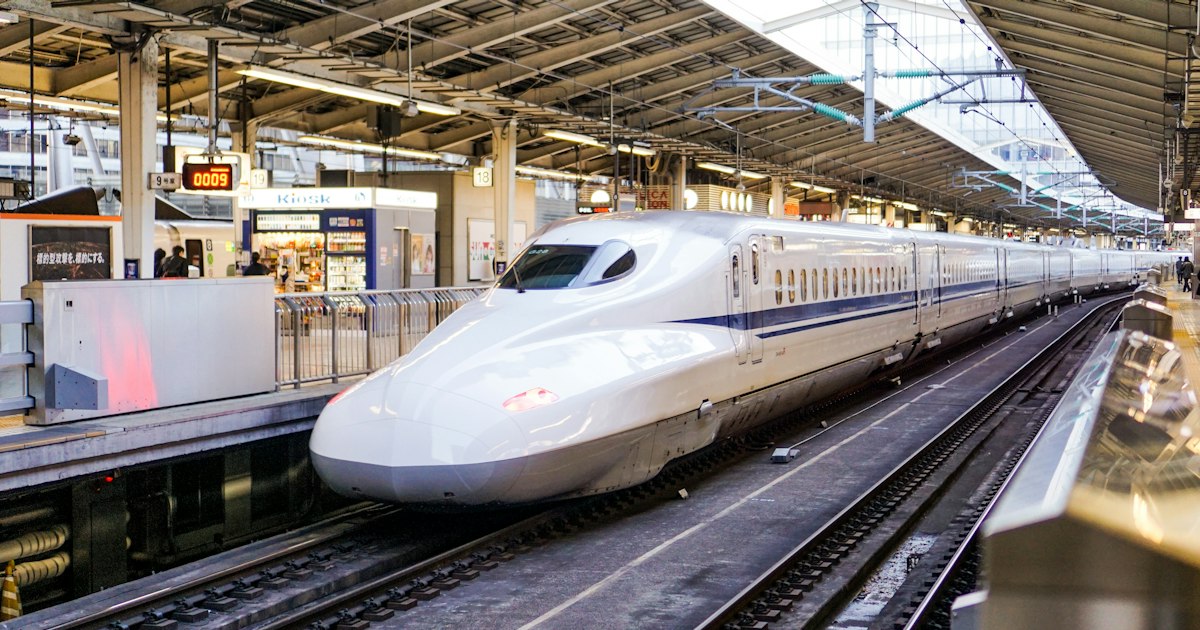
Photo by Fikri Rasyid on Unsplash
Most visitors to Japan ride the Shinkansen and call it a day, never realizing that a short subway ride from central Nagoya sits a completely different kind of train: one that never touches its rails. Linimo is Japan’s only commercial maglev line, a quiet, driverless train that glides a few millimeters above its guideway on magnetic fields. It isn’t a theme park ride and it isn’t trying to be the Shanghai airport maglev’s speed record — it’s a real, everyday commuter line that happens to be a genuinely fun 17-minute novelty for train enthusiasts and families, and it’s also how you reach Ghibli Park. Here’s how to actually ride it.
What Makes Linimo Different
Linimo is the nickname for the Tobu Kyuryo Line, operated by Aichi Rapid Transit (Aichi Kousoku Kotsu) in the hills east of Nagoya. It opened in March 2005 alongside Expo 2005 Aichi and uses a Japanese-developed technology called HSST (High Speed Surface Transport). The train levitates roughly 8mm above the guideway using electromagnets, has no onboard driver, and reaches a modest top speed of about 100 km/h — slower than a maglev built for raw speed, but that’s not really the point here. Because there’s no driver’s cab, you get an unobstructed view out the front window, and because there’s no wheel-on-rail contact, the ride is noticeably smoother and quieter than a normal train, with none of the clatter you’d expect.
The whole line is elevated, so you also get decent views over the wooded hills of Nagakute and Toyota-area suburbs as you go, which is a pleasant change from Nagoya’s denser urban rail.
The Route and What’s Along It
Linimo runs just 8.9 km with nine stations between Fujigaoka and Yakusa, and the full end-to-end trip takes about 17 minutes. The single most important stop for visitors is Aichi Kyuhaku Kinen Koen Station, which puts you at the gate of Aichi Expo Memorial Park (also called Moricoro Park) — and, since November 2022, at the entrance area for Ghibli Park. The park itself is free to enter and has walking trails, a Ferris wheel viewing platform, and seasonal flowers, but most visitors come specifically for two things: a full-size reproduction of Satsuki and Mei’s House from My Neighbor Totoro, and the Studio Ghibli theme areas spread through the park grounds.
Further down the line, Geidai-dori and Isekiko stations serve Aichi Prefectural University and a cluster of suburban residential areas — pleasant but not essential unless you have a specific reason to be there. Yakusa, the far terminus, connects to the Aichi Loop Line (Aichi Kanjo Tetsudo), which is useful if you’re continuing on toward Okazaki or Kozoji rather than doubling back to Nagoya.
Getting to Fujigaoka Station
From Nagoya Station, take the Higashiyama Line subway (orange line) directly to Fujigaoka, the last stop — about 30 minutes, no transfers, for a subway fare of roughly ¥320. Fujigaoka is a straightforward cross-platform-style transfer to Linimo; follow signs for the Tobu Kyuryo Line. If you’re coming from Chubu Centrair International Airport, take a Meitetsu limited express into Nagoya Station first, then switch to the subway — budget around 90 minutes door to door. There’s no need to buy separate tickets in advance; both the subway and Linimo use standard ticket machines and accept the same IC cards.
Fares, Hours and IC Cards
Linimo fares are distance-based, running from about ¥210 for a short hop up to roughly ¥360 for the full Fujigaoka–Yakusa ride. You can tap in and out with Manaca (the local IC card) or any of the nationally interoperable cards like Suica, ICOCA, or Toica — there’s no need to buy anything Linimo-specific. Trains run from roughly 5:30 AM to just after 11:00 PM, with departures every 10–15 minutes outside rush hour, which is noticeably less frequent than a big-city subway. If you’re planning a return trip, check the departure board when you arrive rather than assuming you can simply catch “the next one” in five minutes — a 15-minute wait on the platform is common off-peak.
Best Time to Visit and Common Mistakes
Spring (April) is lovely for the park’s flowers and generally comfortable weather; autumn (October–November) is similarly pleasant and less humid than summer. Weekends and Japanese holidays bring real crowds to the Ghibli Park gates and the Totoro house, so if your schedule allows it, go on a weekday morning.
The most common mistake is showing up at Aichi Kyuhaku Kinen Koen Station without a ticket to Satsuki and Mei’s House and assuming you can buy one at the door — entry is strictly timed and reservation-only, sold through Lawson Ticket (convenience store kiosks or their website), and weekend slots routinely sell out days in advance. Ghibli Park’s individual zone tickets work the same way: they’re timed-entry and need to be booked ahead, not purchased on arrival. The second common mistake is treating Linimo itself as the main event — it’s a short, pleasant ride, not a scenic journey, so build your day around the park and Ghibli Park, with the maglev ride as a fun bonus rather than the headline activity.
Budget, Mid-Range and Splurge Options
On a tight budget, just ride Linimo round-trip (around ¥720 total from Fujigaoka) for the novelty of a driverless maglev and get off to walk the free, open areas of Moricoro Park. For a mid-range day, add a timed ticket into Satsuki and Mei’s House, which is inexpensive (around ¥500) but needs that advance Lawson Ticket booking. For a splurge, book Ghibli Park itself — individual area tickets generally range from roughly ¥1,000 to ¥3,500 per person depending on which zones you choose, and a full visit covering multiple areas plus lunch and souvenirs can easily become a half-day outing worth planning your whole Nagoya stop around.
Pairing Linimo With Other Unusual Train Trips
If offbeat rail experiences are your thing, Linimo pairs well with a broader “unusual ways to get around Japan” itinerary. Travelers heading toward Kobe later in their trip might enjoy the cable car and ropeway combination up to Mount Rokko’s night-view terrace, and those near Tokyo or Ibaraki can find a similar cable-car-plus-ropeway day trip at Mount Tsukuba. Both make a nice contrast to Linimo — slower, scenery-driven rides rather than a quiet feat of magnetic engineering — but all three say a lot about how seriously Japan takes even its niche transportation.