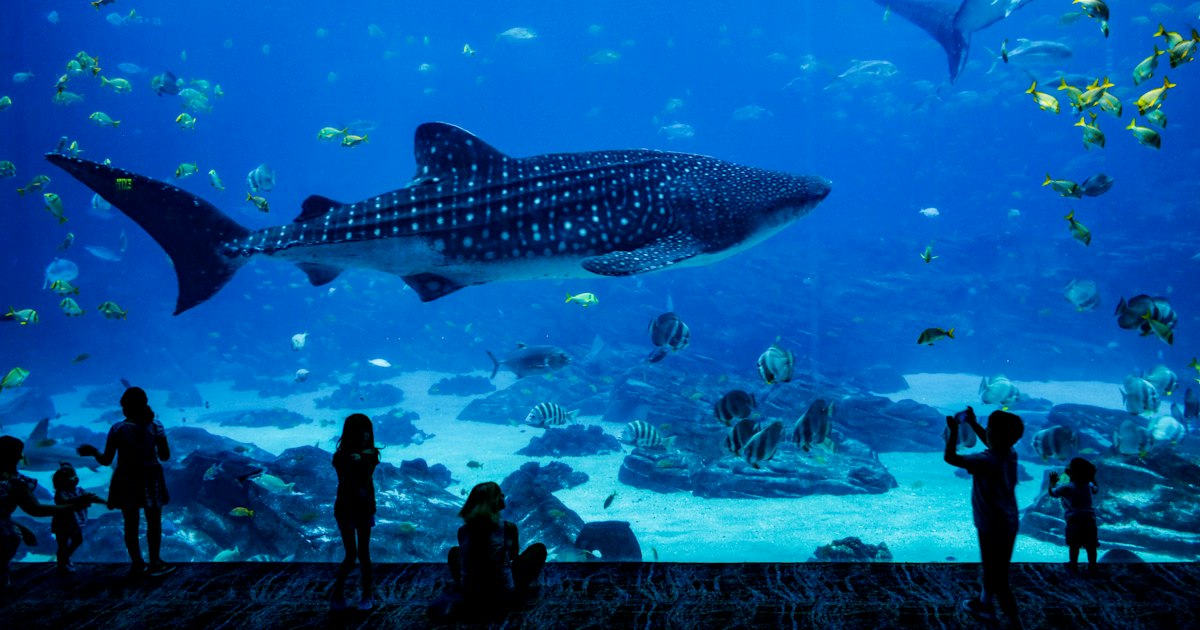
Photo by Pengxiao Xu on Unsplash
Japan takes aquariums seriously, and nowhere is that clearer than at the Okinawa Churaumi Aquarium, home to one of the largest viewing tanks on Earth and some of the only captive whale sharks in the country. But it’s far from the only reason to plan an aquarium day — from Tokyo Skytree’s penguin colony to Osaka’s ring-of-fire tour of the Pacific, Japan’s aquariums are genuinely worth building an itinerary around. Here’s what to know before you go, starting with the big one.
Why Churaumi Aquarium Is Worth the Trip North
Churaumi Aquarium sits inside Ocean Expo Park in Motobu, on the Motobu Peninsula in northern Okinawa (Yanbaru), a solid 90 minutes to two hours from Naha depending on traffic. The centerpiece is the Kuroshio Sea tank, a single acrylic panel over 8 meters tall and 22 meters wide holding 7,500 tons of water — big enough for whale sharks and manta rays to swim in slow, unhurried loops just a few feet from your face. It’s one of the few places in the world where you can reliably see a whale shark up close without diving. Beyond the headline tank, the aquarium walks you through a “Coral Reef” corridor, a touch pool, and a deep-sea zone with bioluminescent creatures, and the surrounding Ocean Expo Park has a free beach, manatee pool, and dolphin lagoon included in the same admission complex.
Getting There, Hours, and Tickets
There’s no train to this part of Okinawa — the Yui Rail monorail only covers central Naha, so you’ll need a rental car or a bus. By car, take the Okinawa Expressway north from Naha, exit at Kyoda IC, then follow Route 84 toward Motobu; budget 90 minutes without traffic. Without a car, the Yanbaru Express highway bus runs direct from Naha Bus Terminal to the aquarium in roughly 2–2.5 hours, with a one-way fare in the ¥2,000–2,500 range. If you’re flying in on a late arrival or catching an early departure bus, a manga kissa near Naha Airport is a cheap way to bridge the gap without booking a full hotel night.
Standard hours are 8:30 AM–6:30 PM (last entry 5:30 PM), extended to 8:00 PM (last entry 7:00 PM) during the peak summer stretch from mid-July through the end of August. The aquarium closes for maintenance on a set day in early December each year — check the official calendar before locking in a winter visit. Admission for adults runs ¥2,180, high school students ¥1,440, elementary and junior high ¥710, and under-6 is free; if you arrive after 4:00 PM, discounted evening tickets bring the adult price down to around ¥1,540. Buying combo or advance tickets online can shave a bit more off and, more importantly, skip the ticket-counter line.
Best Time to Visit and What Not to Miss
Go right at opening (8:30 AM) or in the last two hours before close — tour buses from Naha hotels tend to arrive mid-morning and cluster around the Kuroshio tank until early afternoon. Whale shark and manta feedings happen a few times daily at posted times (usually late morning and mid-afternoon); check the schedule board near the entrance the moment you arrive so you can time your visit to the tank for feeding. The upper-floor viewing deck over the main tank gives you a top-down view of the whale sharks that most visitors skip because they don’t realize it’s there — worth the extra few minutes. If you’re visiting between roughly December and April, the parking lot and surrounding park are a bonus: this is Japan’s earliest cherry blossom season, so a Motobu trip can double as a very early-hanami day out.
Common Mistakes to Avoid
- Underestimating the drive time. This isn’t a Naha city attraction — treat it as a full-day trip, not an afternoon add-on.
- Skipping the rest of Ocean Expo Park. Your aquarium ticket doesn’t cover everything in the park, but the Emerald Beach and tropical dream center are free and easy to combine with your visit — don’t rush straight back to the car.
- Visiting on a weekend or holiday without a plan. Weekends and Japanese national holidays bring heavy crowds and full parking lots; if your dates are flexible, go on a weekday.
- Assuming there’s a train. Double-check your bus or rental car logistics before you land in Okinawa — this is the single most common planning mistake for first-time visitors.
Japan’s Other Great Aquariums
If Churaumi isn’t on your route, or you want a second aquarium day elsewhere in Japan, a few stand out:
- Osaka Kaiyukan (Tempozan Harbor Village, Osaka): Also home to whale sharks, built around a “Ring of Fire” concept that tours Pacific ecosystems floor by floor. Adult admission is around ¥2,700–2,800; it’s a short walk from Osakako Station on the subway, making it far more accessible than Churaumi for anyone based in Kansai.
- Sumida Aquarium (Tokyo Skytree Town, Tokyo): Compact and central, best known for its open-air penguin pool with no glass barrier and a jellyfish tank set to changing light and music. Easy to fold into a Skytree/Asakusa day.
- Enoshima Aquarium (Kanagawa): An easy day trip from Tokyo via the Odakyu line or Enoden, famous for its sardine “tornado” show and jellyfish displays, with Enoshima Island and Kamakura’s temples both within walking or short-train distance for the rest of the day.
- Kyoto Aquarium: An inland aquarium a short walk from Kyoto Station, notable for its Japanese giant salamander tank — a species you won’t easily see elsewhere.
Rounding Out an Okinawa or Island Trip
Because getting to Churaumi already means committing to a full day (or an overnight stay in the north), it pairs naturally with other Yanbaru-area stops like Nakijin Castle ruins or the Kouri Bridge. If island travel and slower, nature-driven itineraries are what draw you to Okinawa in the first place, it’s worth knowing Japan has other distinctive island experiences too — from the gallery-hopping Setouchi Triennale in the Seto Inland Sea to the famously cat-populated Aoshima and Tashirojima further north. None of them require a passport stamp, but each rewards the kind of unhurried, one-region-at-a-time planning that a Churaumi day trip demands.
Budget Planning at a Glance
For a solo traveler, a realistic Churaumi day runs: ¥2,180 admission, ¥2,000–5,000 for transport depending on bus versus rental car, and lunch at the on-site food court (¥800–1,500 for a set meal, including Okinawan classics like taco rice). Splurge travelers can add a stay at one of the resort hotels along the Motobu or Nago coastline to turn it into an overnight beach trip rather than a there-and-back day; budget travelers can do the whole thing round-trip from Naha by bus for well under ¥10,000 total, aquarium ticket included.