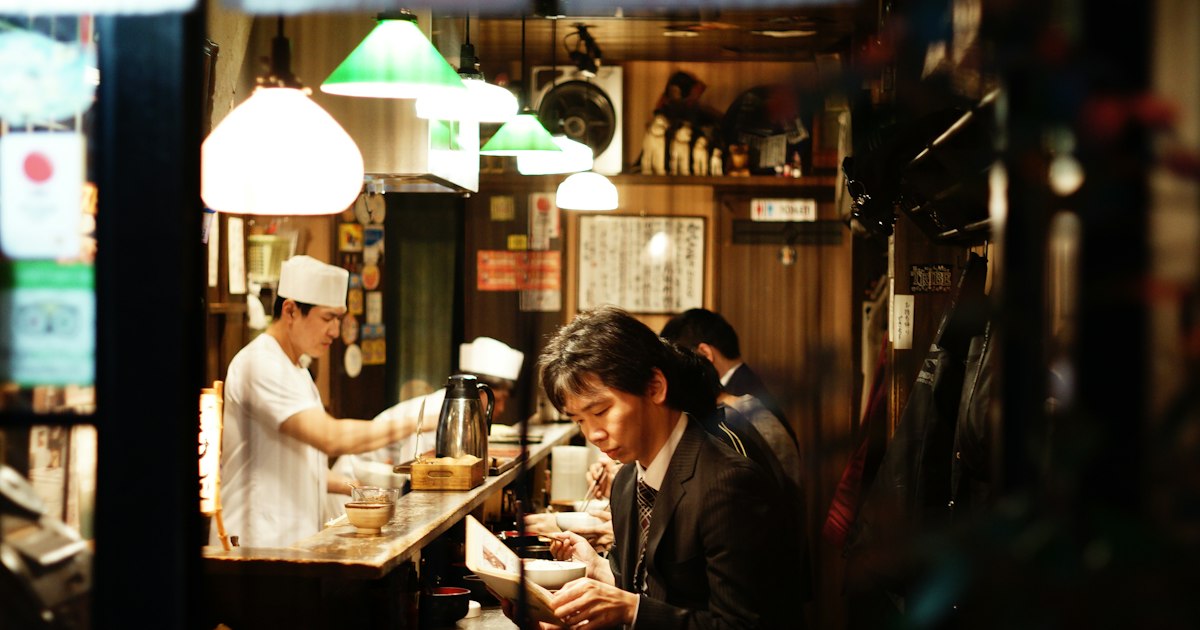
Photo by Alva Pratt on Unsplash
Duck under a red lantern near any major train station in Japan after 5pm and you’ll likely find a cluster of people drinking on their feet, elbows on a narrow counter, nursing a beer and a skewer between train connections. This is tachinomi (立ち飲み), literally “standing drinking,” and it’s one of the most useful drinking cultures for travelers to understand — it’s cheap, fast, unpretentious, and completely welcoming to solo visitors who don’t speak Japanese. Here’s how it works and how to do it right.
What Is Tachinomi, and Why Stand to Drink?
A tachinomiya is a bar with no seats — just a counter, sometimes just a shelf bolted to the wall. The lack of seating isn’t a quirk; it’s the business model. No chairs means faster turnover, lower rent, and no table charge (the seating fee, or otoshi, that adds 300–500 JPY to a bill at a regular izakaya). That savings gets passed to the customer: a glass of beer often runs 400–500 JPY, a cup of sake 300–500 JPY, and small plates of food 300–800 JPY. The unspoken rule is that you drink one or two rounds, eat a couple of small dishes, and move on — either home or to the next bar (a practice called hashigo-zake, “ladder drinking”). It’s a completely different rhythm from a sit-down izakaya where you settle in for the night.
Where to Find the Best Standing Bars
Tachinomi cluster wherever there’s heavy commuter foot traffic, especially under and around train tracks, since the cheap rent under elevated lines suits the low-margin, high-volume model.
- Tokyo — Yurakucho and Shinbashi: The arches under the Yamanote Line tracks between Yurakucho and Shimbashi stations are lined with tiny standing bars and yakitori counters — the classic after-work salaryman scene, and completely open to tourists.
- Tokyo — Tsukiji: A handful of standing bars near the old Tsukiji outer market pour sake from as early as 9–10am, aimed at market workers finishing their overnight shift. It’s a strange, memorable experience to drink chilled sake with fresh seafood at breakfast time.
- Osaka — Shinsekai and Umeda: Osaka arguably has the densest tachinomi culture in Japan, tied to its no-nonsense food-and-drink identity. Shinsekai’s bars pair well with a plate of kushikatsu (fried skewers).
- Kyoto — Fushimi: Kyoto’s sake-brewing district has small standing tasting counters attached to breweries, a good stop if you’re already exploring the area covered in our guide to Nada & Fushimi’s sake brewing districts.
If tachinomi feels too enclosed for your taste, the open-air yatai carts of Fukuoka’s Nakasu district scratch a similar itch — casual, cheap, and highly sociable — and we cover ordering etiquette there in our guide to Fukuoka’s yatai food stalls.
How to Order: A Step-by-Step Walkthrough
Systems vary slightly by shop, but the general flow is:
- Find a gap at the counter. There’s no host stand and no “table for one” — you just walk up to any open spot. If it’s full, people expect you to wait outside or come back later.
- Order your first drink at the counter, either by pointing at a menu, reading a laminated card, or telling staff directly. Common opening phrases: “Nama, hitotsu” (one draft beer) or “Reishu, hitotsu” (one cold sake).
- Pick a few small dishes (otsumami) from the menu board — often handwritten and Japanese-only, but staff are used to pointing and simple English words like “recommend?” working fine.
- Pay as you go or run a tab. Some tachinomi collect payment per item as it’s served (common at ticket-based or market-style bars); others keep a running tally and settle when you leave, similar to a regular bar. If unsure, ask “Barabara desu ka?” (pay separately?) or just wait to see if they hand you a bill after each order.
- Close out by saying “Okaikei onegaishimasu” (check, please) when you’re ready to go.
Cash is still king at older, traditional tachinomi — many are cash-only, so carry 1,000–3,000 JPY in small bills and coins. Newer or chain-style standing bars increasingly take IC transit cards (Suica, Pasmo) or credit cards, but don’t count on it.
What to Order (and What It Costs)
Menus lean toward things that are quick to prepare and pair with alcohol rather than full meals:
- Drinks: draft beer (nama biiru) 400–600 JPY, a glass of sake (300–600 JPY depending on grade), a highball (350–450 JPY), or shochu on the rocks (350–500 JPY).
- Food: yakitori skewers (120–250 JPY each), oden stewed in dashi broth (100–300 JPY per item, especially good in the colder months), sashimi plates (500–900 JPY), motsuni (simmered offal, 400–600 JPY), and pickles or edamame as a quick starter (200–400 JPY).
- A realistic budget: two drinks and two small plates typically lands around 1,500–2,500 JPY per person — a fraction of a sit-down izakaya tab.
For a splurge, seek out sake-focused tachinomi that stock rare regional brews by the glass — flights of three or four premium sakes can run 2,000–4,000 JPY but let you sample bottles that never leave Japan.
Etiquette and Common Mistakes
A few things trip up first-timers:
- Don’t look for a seat. There isn’t one. Leaning on the counter or a wall-mounted shelf is normal.
- Don’t overstay during peak hours (6–8pm). With no seating, turnover is the whole point; lingering for hours over one beer while people wait outside is considered rude.
- Don’t assume card payment. Always have cash as a backup.
- Don’t expect an English menu. Pointing at what your neighbor is eating and saying “Onaji mono” (same thing) works well in a pinch.
- Watch the last train. Tachinomi hop naturally into a long night, and Tokyo’s trains stop around midnight to 1am. If you’ve missed it, a manga kissa is a legitimate, cheap fallback — see our guide to manga kissa as a budget overnight stay rather than paying for a late-night taxi across town.
Best Time to Go
Most tachinomi open around 3–5pm and run until 11pm or midnight, though a few near fish markets open in the morning for early shift workers. Weekdays are best: many close on Sundays or public holidays, and the after-work rush from 6–8pm is the liveliest — but also the most crowded, so arriving right at opening time gets you counter space without the wait. Winter is prime season, since hot sake (atsukan) and simmered oden dishes are at their best in the cold, though tachinomi run year-round. If you’re in Osaka chasing seasonal seafood, a tachinomi is also a low-key way to try fugu outside of a formal restaurant setting — see our guide to fugu and where to eat it safely for which shops are licensed to prepare it.
Tachinomi reward curiosity over caution — walk in, point at the menu, and you’ll likely end up chatting with the stranger next to you before your first drink is even finished. It’s one of the few places in Japan where the language barrier barely slows you down.