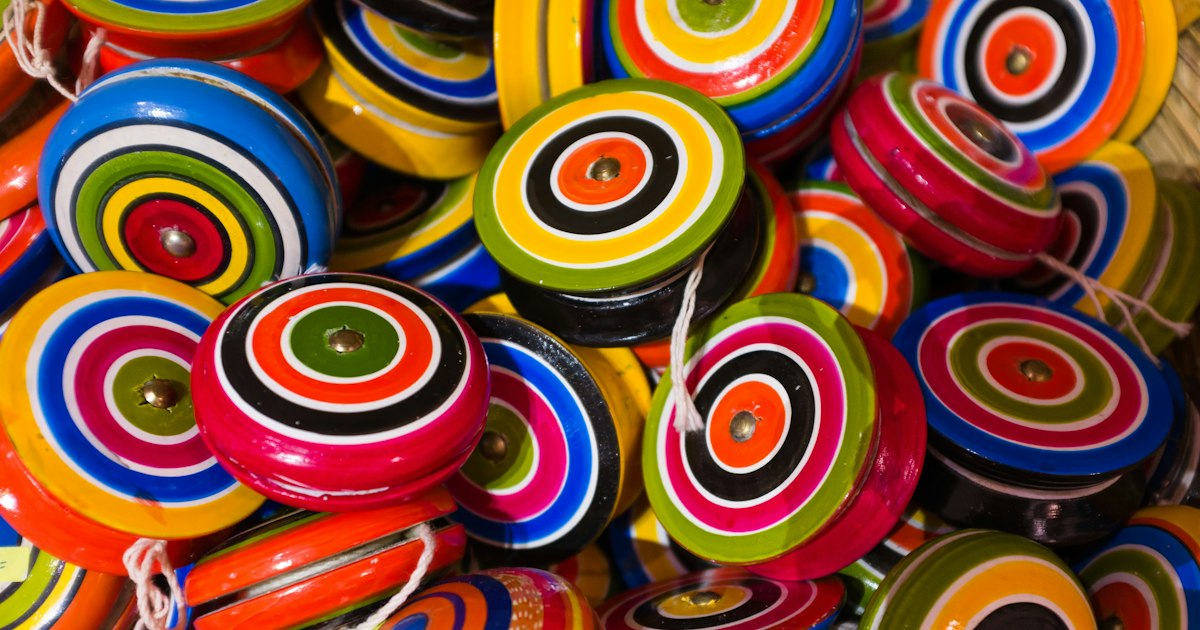
Photo by Eric Prouzet on Unsplash
Japan didn’t invent the yo-yo, but it took the toy more seriously than almost anywhere else. Bandai’s “Hyper Yoyo” craze in the late 1990s put ball-bearing yo-yos in every schoolkid’s pocket, and a generation of those kids grew up to become some of the most technically dominant competitive players in the world. If you’re a hobbyist — or just curious what a “competition-grade” yo-yo even looks like — Japan has specialty shops, collector stock, and an active contest calendar that’s genuinely worth building a day or two of your trip around.
Why Japan Takes Yo-Yo So Seriously
Competitive yo-yo play is organized around five recognized divisions — 1A (single string trick), 2A (two-handed looping), 3A (two-handed string trick), 4A (offstring), and 5A (counterweight) — and Japanese players have placed at or near the top of world rankings in several of them for decades. The best-known name is Shinji Saito, a Japanese player whose multiple World Yo-Yo Contest titles are still referenced as a benchmark for 1A and 2A technique; you’ll see his name on shop walls and in old contest footage shown at hobby events. That competitive pedigree is why Japan’s domestic contest scene and retail infrastructure are more developed than in most countries — this isn’t a toy aisle novelty here, it’s a hobby with its own federation, rulebook, and judged divisions.
Spin Gear and Osaka’s Den Den Town: The Specialty Shop Circuit
The single best-known specialty shop for yo-yos and spinning tops in Japan is Spin Gear, a small storefront in Osaka’s Nipponbashi district — better known to hobbyists as Den Den Town, the city’s answer to Akihabara. It stocks imported competition brands (Duncan, YoYoFactory, C3yoyodesign) alongside Japanese-made pieces, and the staff are used to foreign customers handling and testing yo-yos before buying, which matters because feel and spin stability vary a lot between models. Hobby shops in this district generally keep hours around 11:00–20:00 with occasional irregular closures, so check the shop’s social media the day before a special trip rather than assuming it’s open.
Den Den Town itself is worth a slow afternoon regardless — it’s Osaka’s electronics-and-hobby district, a short walk from Namba Station (Midosuji, Yotsubashi, or Sennichimae subway lines, or Nankai Namba). If you’re also into figures, doujinshi, or trading cards, this is the same general shopping ecosystem covered in our guide to buying from Melonbooks, Toranoana and Booth, since serious hobby shopping in Japan tends to cluster by district rather than by single big-box store.
Tokyo’s Hobby Districts: Akihabara and Mandarake for Vintage Finds
Tokyo doesn’t have a single yo-yo specialist on the scale of Spin Gear, but Akihabara’s hobby and toy shops regularly carry current competition models, and Mandarake’s multi-floor stores are a genuine source for vintage pieces — original Bandai Hyper Yoyo units from the 1997–1998 boom turn up there in varying condition, usually priced from around 500 to 3,000 JPY depending on rarity and packaging. If you’re building a small collection rather than chasing competition performance, this is where to look. Akihabara gets crowded fast on weekends and after work hours; if you’re coming from central Tokyo on a weekday, timing your trip outside the evening crush is worth it — see our breakdown of rush hour in Tokyo for which windows to avoid.
Budget, Mid-Range, and Splurge: What a Yo-Yo Actually Costs
- Budget (1,000–2,000 JPY): Fixed-axle plastic yo-yos from general toy stores or Don Quijote. Fine for casual play, not usable for competition-level string tricks since they can’t sustain long spin times.
- Mid-range (4,000–9,000 JPY): Ball-bearing aluminum yo-yos from Duncan, YoYoFactory, or C3yoyodesign — this is the actual entry point for competition-style play, and what most serious hobbyists buy at Spin Gear or Akihabara hobby shops.
- Splurge (20,000–45,000+ JPY): Limited-run models from YoYoRecreation (YYR), a premium Japanese maker based in Osaka known for small-batch, high-finish releases that frequently sell via lottery or raffle because demand outstrips supply. If you see one in stock in person, that’s a genuine stroke of luck worth acting on.
Also budget for string — competition players burn through it fast during practice, and a pack of ten replacement strings runs roughly 500–800 JPY. It’s a small cost but one first-time buyers consistently forget.
Watching or Entering the Japan National Yo-Yo Contest
The Japan Yo-Yo Federation (JYYF) organizes the Japan National Yo-Yo Contest annually, typically in autumn, with the venue rotating between cities (Tokyo and Osaka have both hosted in recent years). Spectating is usually free or very low-cost, and it’s genuinely entertaining even if you don’t know the trick names — the offstring (4A) and counterweight (5A) divisions in particular play well as a spectator sport since they involve the yo-yo leaving the player’s hand entirely. Entry for competitors is a separate matter: pre-registration is required, fees are generally in the low-thousands-of-yen range, and you’ll need your own yo-yo and strings — shops don’t rent equipment at the venue.
Because exact dates and host cities shift year to year and aren’t locked in far in advance, check JYYF’s official channels close to your travel dates rather than planning around a remembered date from a previous year. The separate World Yo-Yo Contest, run by the International Yo-Yo Federation, has historically been held outside Japan (most often in the United States), so don’t assume it overlaps with a Japan trip — the domestic JN contest is the one to plan a visit around if you’re already here.
Common Mistakes First-Time Yo-Yo Shoppers and Spectators Make
- Buying a toy-aisle fixed-axle yo-yo expecting competition performance. It physically can’t hold a long spin — you need a ball-bearing axle at minimum.
- Assuming Den Den Town shops keep department-store hours. Many are small, independently run, and close without much notice on slow days or holidays.
- Showing up to a contest without checking if spectator seating needs reservation. Smaller regional contests sometimes cap audience space; larger national events usually don’t.
- Not bringing spare string to a contest if competing. Strings fray and snap mid-session, and venues rarely sell them on-site.
Planning Your Visit: Season, Timing, and Getting There
Autumn is the most reliable season to catch the national contest, but regional and shop-run contests happen in smaller form throughout the year, so it’s worth asking staff at Spin Gear or any Akihabara hobby shop if anything’s scheduled during your stay — these smaller events are rarely advertised in English. For the shopping side, pair a Den Den Town afternoon with other Nipponbashi browsing, or an Akihabara stop with a Mandarake run through its toy floors; both districts reward unhurried wandering more than a single targeted errand. If you’re coordinating this alongside other niche-hobby stops on a longer Japan itinerary — the kind of thing covered in our guide to finding a cricket pitch or match in Japan — the same general approach applies: check community social media close to your dates, since niche-hobby scheduling in Japan tends to move fast and isn’t always captured by English-language event listings.