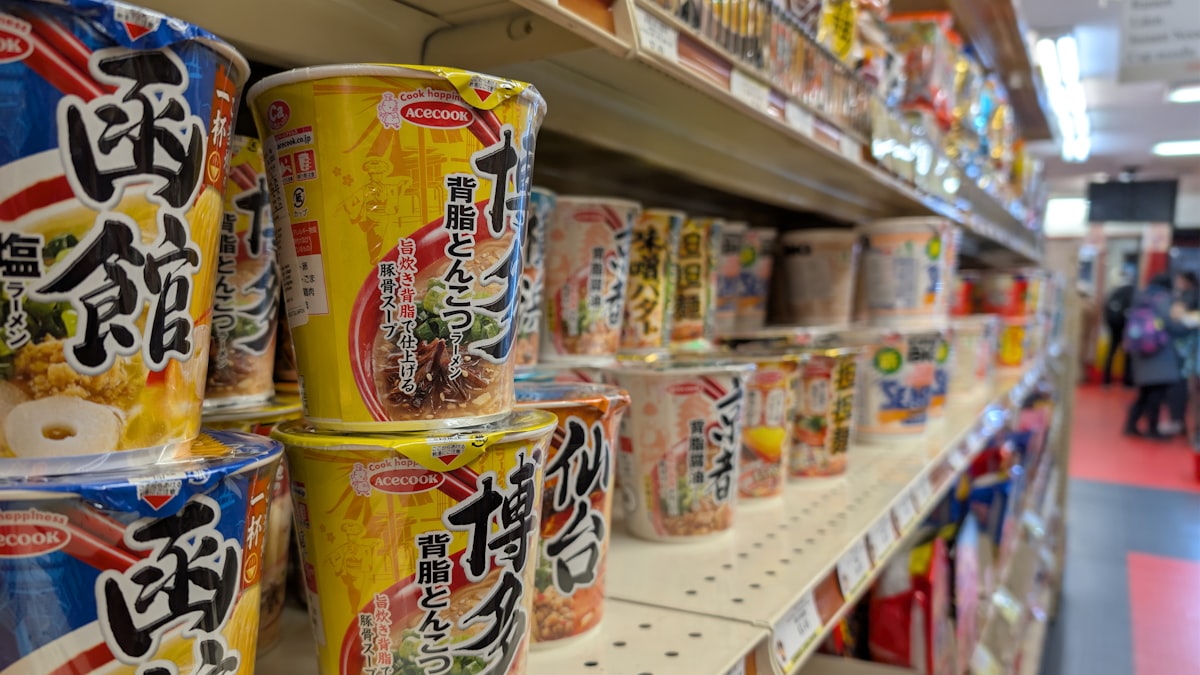
Japan’s 100-yen shops are souvenir gold mines — huge stores full of genuinely useful, cute, and clever goods for about a dollar each. Here’s how to shop them like a pro.
The big three
- Daiso — the largest chain; enormous range, mostly 100 yen.
- Seria — more design-forward and stylish; great for craft and kitchen.
- Can Do — solid all-rounder, often in malls and stations.
Note: not everything is 100 yen — some items are 200–500, always marked.
Best things to buy
- Kitchen tools — clever gadgets, bento accessories, onigiri molds.
- Stationery — cute pens, sticky notes, washi tape. See Japanese stationery.
- Beauty helpers — face masks, blotting papers, and beauty tools.
- Travel gear — packing cubes, bottles, and organizers (handy mid-trip).
- Souvenirs — chopsticks, furoshiki cloths, ceramic dishes, character goods.
Smart shopping tips
- Prices are before tax — 100 yen items ring up around 110 yen.
- Big flagship stores (Harajuku, Ginza) have the widest selection.
- Great for cheap gifts to bring home in bulk.
- Buy an extra foldable bag here to carry the rest of your Don Quijote haul.
Why travelers love them
Where else can you fill a basket with quirky, quality souvenirs for pocket change? 100-yen shops are a low-risk, high-fun stop — and a lifesaver for any travel odds and ends you forgot on your packing list.
What makes a great 100-yen souvenir
The best 100-yen finds are the ones that feel unmistakably Japanese for the price: patterned chopsticks and rests, small ceramic dishes, furoshiki-style cloths, folding fans, bento accessories, and character stationery. Buy a few of each — at roughly a dollar apiece they make easy, crowd-pleasing gifts to hand out back home.
A few watch-outs
- Quality varies. Most items are impressively good, but some are exactly what you’d expect for 100 yen — check anything mechanical before you buy.
- Not everything is 100 yen. Higher-priced items are marked; glance at the tag.
- Electricals are made for Japan’s 100V — don’t assume compatibility at home.
What things typically cost
- Standard items ring up at JPY 110 with tax, and a well-filled basket of 15-20 small souvenirs runs JPY 1,650-2,200 total — one of the most cost-efficient ways to cover a long gift list.
- Seria’s slightly more design-forward stock (better-looking kitchen and craft items) still prices at the standard JPY 110 in most cases, making it worth checking both Daiso and Seria if one is short on a specific style.
- Larger flagship branches in Harajuku or Ginza stock premium items priced JPY 220-550, clearly marked, which sometimes rival the quality of mid-range specialty shop goods at a fraction of the price.
Common mistakes to avoid
- Assuming a small neighborhood branch has full selection — stock varies significantly by store size; a flagship location is worth the extra travel time if you’re hunting for something specific rather than just general souvenirs.
- Buying electrical items without checking voltage — like other Japanese retailers, 100-yen shop electricals are built for 100V and may not be compatible with higher-voltage systems abroad without a converter.
- Skipping the seasonal aisles — Daiso and Seria rotate genuinely well-designed seasonal items (New Year decorations, summer festival goods, Halloween novelties) that disappear once the season passes and aren’t restocked.
Combining a 100-yen run with other shopping
Many travelers use a 100-yen shop stop as the last leg of a bigger shopping day — picking up small, flat, easy-to-pack items after already buying bulkier things elsewhere, since nothing here adds meaningful weight or breaks easily compared to ceramics or electronics bought earlier in the day.
Shipping bulkier finds home
If a 100-yen shop haul grows beyond what fits comfortably in your suitcase, most large branches sell affordable packing tape and boxes on-site, and a nearby post office or konbini can typically handle a simple parcel back home — a low-cost solution for a genuinely oversized souvenir run.