Some links below are affiliate links. If you book through them, Japan Trove may earn a small commission at no extra cost to you.
Mt. Fuji is Japan’s most iconic sight — but it’s famously shy, often hidden by cloud. Here’s how and where to actually see it (and whether to climb it).
Best time to see Fuji
- Clearest views: autumn and winter (roughly Nov–Feb), especially crisp mornings.
- Time of day: early morning and late afternoon beat hazy midday.
- Summer is climbing season but often too hazy for good distant views.
Best places to view it
- Hakone — hot springs with Fuji views; an easy day trip or overnight from Tokyo. See day trips from Tokyo.
- Kawaguchiko (Fuji Five Lakes) — postcard reflections of Fuji over the lake.
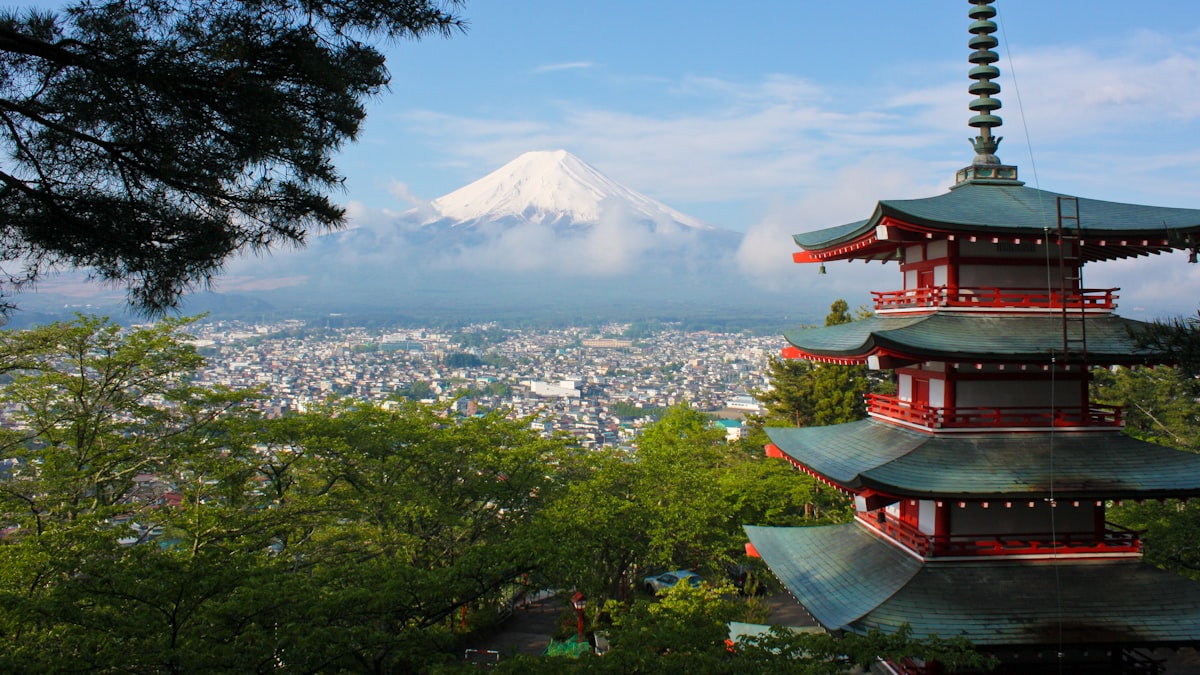
- Chureito Pagoda — the famous pagoda-with-Fuji shot near Fujiyoshida.
- From the shinkansen — sit on the right side Tokyo→Kyoto; see our bullet train guide.
- Gotemba / Oshino Hakkai — outlet shopping and spring-water village with mountain views.
Should you climb it?
- Season: official climbing is only early July to early September.
- Difficulty: no technical skill needed, but it’s a long, steep, cold slog — altitude and weather are the real challenges.
- Classic plan: climb in the afternoon, sleep in a mountain hut, summit for sunrise (goraiko).
- Rules: trails now have entry fees and daily limits — check the current-year rules before booking.
Getting there
Buses run from Tokyo (Shinjuku) to Kawaguchiko and the Fuji trailheads; trains reach Fujiyoshida/Kawaguchiko. Guided day tours bundle transport and the best viewpoints — browse Fuji day tours on Klook . Bring layers, and don’t forget an eSIM to check the forecast.
Reality check
Fuji hides behind clouds often — build in a flexible day or two, chase a clear morning, and you’ll get your shot. Fold it into our 7-day itinerary.
What a Fuji trip costs
- Buses from Shinjuku to Kawaguchiko run about JPY 2,000-2,200 one-way; a guided day tour bundling transport and 2-3 viewpoints typically runs JPY 8,000-15,000 per person.
- Climbing season trail fees now run around JPY 2,000-4,000 per climber (subject to change year to year), plus mountain hut costs of JPY 8,000-15,000 per person for the overnight stop most climbers use before a sunrise summit push.
- The Fuji Five Lakes ropeway and smaller viewpoint attractions each run JPY 500-1,000, modest costs that add up if you’re chasing several different viewing angles across a single trip.
Common mistakes to avoid
- Booking a single-day trip with no weather flexibility — Fuji’s visibility is genuinely unpredictable; a rigid one-day plan has a real chance of a completely obscured mountain, while a 2-3 day window in the area meaningfully improves your odds of at least one clear sighting.
- Attempting to climb without acclimatization or proper gear — altitude sickness is a real risk on a fast ascent, and temperatures near the summit can drop below freezing even in August; layers and a slower pace matter more than fitness alone.
- Assuming outside climbing season (September-June) means no options — the mountain itself remains visible and photogenic year-round; only the summit trails close, so viewing trips work in any season, just not the climb itself.
Choosing your Fuji base
Hakone suits travelers who want onsen and art alongside their Fuji views, Kawaguchiko suits those chasing the classic lake-reflection photo and a quieter, more nature-focused stay, and a shinkansen-window sighting suits anyone with very limited time who still wants a chance at seeing the mountain without dedicating a full extra day to the area.
What sunrise from the summit is actually like
Goraiko (the sunrise seen from Fuji’s summit) is the traditional reward for an overnight climb, but reaching the top in time requires a genuinely early pre-dawn push from the mountain hut in cold, dark conditions — climbers who’ve done it consistently describe it as exhausting but worth it, and recommend against underestimating how physically demanding the final stretch feels after a short, broken night’s sleep at altitude.