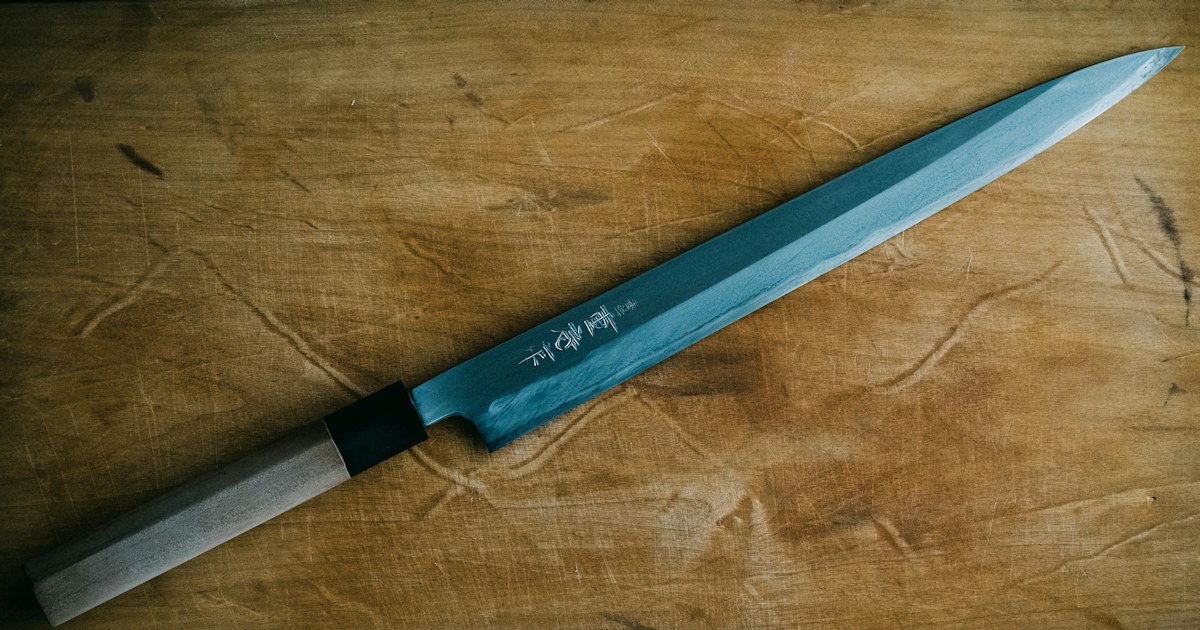
Photo by Richard Iwaki on Unsplash
A Japanese kitchen knife is one of the few souvenirs that actually gets better with a little extra effort before you leave the country. Most knives sold to tourists come with a decent factory edge, but a proper polish from a whetstone specialist is cheap, fast in the right neighborhoods, and turns a good knife into a genuinely excellent one. Here’s how to plan the sharpening into your itinerary instead of realizing on your last afternoon that there’s no time left.
Why Bother Sharpening a Brand-New Knife?
Factory edges on even premium Japanese knives (Tojiro, Sukenari, Masamoto, Kai) are ground quickly on a machine and finished to a generic angle, usually somewhere between 15 and 20 degrees per side. A hand sharpener working on a whetstone can refine that to the specific geometry suited to your knife’s steel and your cutting style, remove any micro-burrs left from manufacturing, and polish the bevel so it glides through food instead of dragging. It’s also simply good practice: many shops will sharpen any knife you bring in, including one you just bought from a competitor down the street, so there’s no reason not to start your knife’s life with its best possible edge.
Where to Go: Kappabashi (Tokyo) vs. Sakai (Osaka)
Kappabashi Dougu Gai in Asakusa, Tokyo, is the easiest option for most visitors. It’s a roughly 800-meter strip of kitchenware shops, a 5-minute walk from Tawaramachi Station (Ginza Line) or 10 minutes from Asakusa Station. Shops worth knowing:
- Tsubaya Hamono Ten — a long-running specialist knife shop that sharpens knives bought elsewhere; open roughly 10:00–17:30, closed Sundays.
- Kama-asa Shoten — sells and sharpens, with English-speaking staff used to tourists; open daily, roughly 10:00–18:00.
- Kiya in Nihonbashi (not Kappabashi, but worth the detour) — in business since 1792, with an in-house sharpening service for customers.
If your trip includes Osaka, Sakai is Japan’s historic cutlery town, producing roughly 90% of the professional knives used by Japanese chefs nationwide. The Sakai Tenko brand and workshops around Sakai Station (about 30 minutes from central Osaka on the Nankai Line) offer sharpening alongside sales, and the pace is less tourist-driven than Kappabashi, so service can be more thorough — but English support is spottier, so bring a translation app.
What It Costs and How Long It Takes
Pricing is modest compared to what sharpening costs in most Western countries:
- Basic touch-up / honing: ¥500–¥1,000 per knife, often done while you wait (20–40 minutes) or even on the spot.
- Full whetstone sharpening: ¥1,500–¥3,000 per knife, typically same-day if dropped off in the morning, but some shops ask for next-day pickup during busy periods.
- Re-profiling, chip repair, or thinning (kasumi/honyaki work): ¥3,000–¥8,000+, and can take 2–5 days since it involves more aggressive stone work and sometimes re-finishing the bevel.
Prices are almost always per knife, not per set, and most shops will quote you before starting. Cash is still safer than cards at smaller family-run counters, though more Kappabashi shops now take IC cards and credit cards than a few years ago.
Timing It Right in Your Itinerary
The single biggest planning mistake is treating this as a last-day errand. If you want same-day service, go on a weekday morning — Saturdays get busy with local chefs and hobbyist cooks doing their own knife runs, and Sundays many shops are closed outright. Build in your knife shopping and sharpening request for day 2 or 3 of a Tokyo stay, not the day before your flight, so you have a buffer if a shop says “come back tomorrow.” If you’re also squeezing in other errands that week, it’s worth checking how bad Tokyo rush hour actually is so you don’t plan a 9am dash to Kappabashi during the worst of the morning commute — late morning, after the crush clears, is a better window anyway since shops open around 10:00.
Packing a Freshly Sharpened Knife for the Flight
A sharpened kitchen knife must go in checked luggage — it will be confiscated at security if you try to carry it onboard, no exceptions for “it’s a souvenir.” A few practical points:
- Ask the shop for a saya (wooden sheath) or thick cardboard edge guard; most sharpening counters sell one for ¥300–¥800 if your knife didn’t come with one.
- Wrap the sheathed knife in clothing inside your checked bag, both to cushion it and to keep the freshly honed edge from nicking against zippers or other hard items.
- Declare it if your home country requires declaring sharp goods on customs forms — rules vary, so check your destination’s customs guidance rather than assuming Japan’s export rules apply on arrival.
- Dry the blade completely before packing if the shop rinsed it after sharpening; carbon-steel knives (as opposed to stainless) can spot with rust within a day if sealed away damp.
Common Mistakes to Avoid
- Buying the knife on your last day. Without at least one spare day, you’re stuck with the factory edge or a rushed job.
- Assuming any shop sharpens any steel. Some specialty shops decline carbon-steel or oddly shaped knives (e.g., left-handed deba) if they don’t stock the right stones — call ahead or ask when you buy.
- Skipping the sheath. A bare sharpened blade loose in luggage is how you end up with a nicked edge or a hole in your suitcase.
- Not asking about the edge angle. If you want a specific angle for a particular cutting style (e.g., a thinner angle for sashimi versus a tougher angle for general use), say so — sharpeners default to a standard angle otherwise.
Budget, Mid-Range, and Splurge Options
For a quick, functional edge, the ¥500–¥1,000 touch-up at a Kappabashi general kitchenware shop is fine for a stainless, everyday knife. For a knife you’ll actually cook with for years, the ¥1,500–¥3,000 full whetstone sharpening is the sweet spot most visitors choose. If you bought a high-end honyaki or damascus-pattern knife and want it properly profiled by a veteran craftsman — sometimes the same person who ground the blade originally — expect to pay ¥5,000–¥15,000 and to leave the knife for several days, occasionally requiring a return visit or a mailed delivery to your hotel before checkout. Either way, the investment is small next to what the same hand-finishing would cost outside Japan, and it’s one of the more satisfying souvenir errands you can build into a trip.