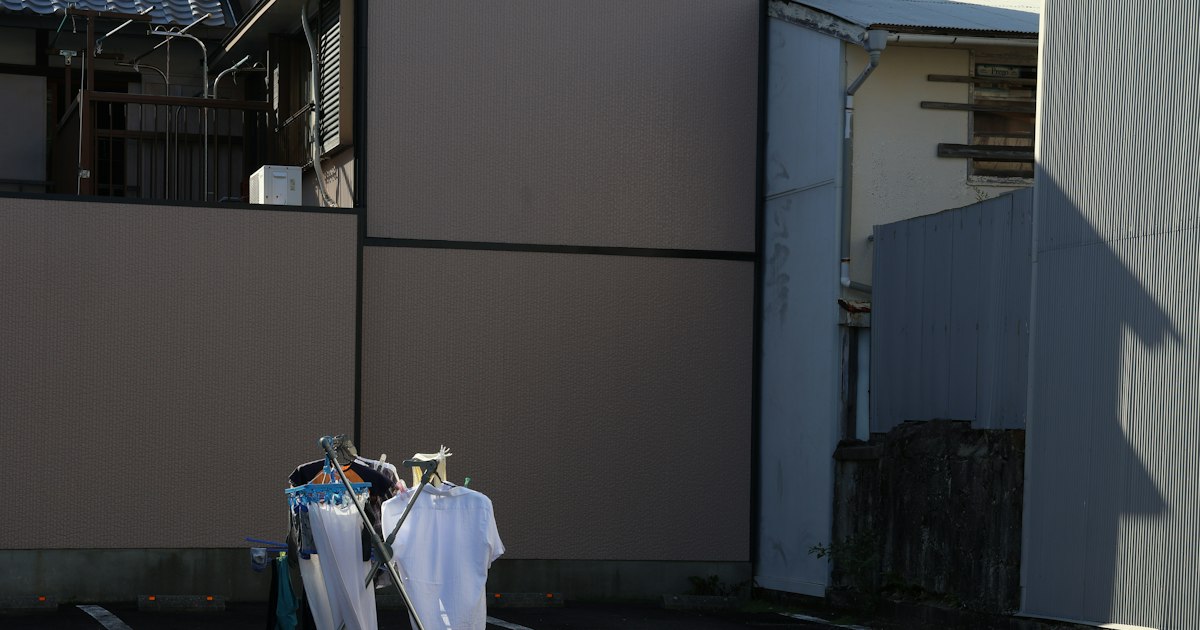
Photo by Yanhao Fang on Unsplash
Walk into almost any Japanese apartment and you’ll find a rack of clothes drying in the living room, often with a boxy little machine humming beside it. That’s a dehumidifier (除湿機, josshitsuki), and for renters in Japan it’s less of a luxury appliance and more of a basic survival tool. If you’re staying in a monthly apartment, a share house, or just curious why your Airbnb has one parked in the corner, here’s what it actually does, what it costs, and how to pick the right one.
Why Japanese Homes Rely on Indoor Drying in the First Place
Japan’s climate makes outdoor drying unreliable for a good chunk of the year. The rainy season (tsuyu) runs roughly early June through mid-July in most of Honshu, and humidity stays high well into September thanks to typhoons. Winters are dry but cold, and many apartments lack central heating, so clothes hung outside simply don’t dry fast enough before they start to smell musty — a problem common enough to have its own name, heya-boshi shuu (room-drying odor).
On top of that, most rental units — especially the compact ones in Tokyo and Osaka — don’t have a clothes dryer, and balconies are often too small or shared, with building rules against hanging laundry where neighbors can see it. Tumble dryers exist but are rare and expensive to run, so the standard local solution is: wash, hang indoors on a rack, and run a dehumidifier nearby to pull the moisture out of the air before mold sets in. This is also why so many weekly mansions and monthly apartments marketed to foreign residents advertise a dehumidifier as a selling point rather than an afterthought — see our guide to weekly mansions and monthly apartments if you’re comparing mid-term housing options.
Desiccant vs Compressor vs Hybrid: Which Type to Buy
There are three basic mechanisms, and picking the wrong one for the season is the single biggest mistake buyers make.
- Compressor type — works like a mini air conditioner, cooling air to condense moisture. Efficient and cheap to run, but performance drops in cold rooms (under roughly 10°C), so it’s a summer-and-rainy-season tool.
- Desiccant type — uses a heated absorbent wheel, so it keeps working fine in winter, but it runs hotter and uses more electricity, and it adds a bit of warmth to the room (fine in winter, unwelcome in August).
- Hybrid type — switches between the two depending on room temperature, giving decent performance year-round. Costs more upfront but is what most long-term residents eventually buy if they’re staying more than one season.
If you only need something for a few rainy-season weeks, a compressor model is cheaper to buy and run. If you’ll be here through winter too, a hybrid is worth the extra cost.
Where to Buy One (and What You’ll Pay)
Big electronics chains — Yodobashi Camera, Bic Camera, Yamada Denki — carry the full range, with staff who can point you to a “laundry-drying mode” (衣類乾燥モード) model, which is the feature you actually want; it directs airflow at the rack instead of just dehumidifying the whole room. Don Quijote and home centers like Nitori or Cainz stock cheaper basic units. Most stores offer tax-free purchase for tourists with a passport on items over 5,000 yen before tax, though a dehumidifier only makes sense to buy tax-free if you’re taking it home — for in-country use during your stay, tax-free status doesn’t matter.
Expect to pay:
- Budget (desiccant, small room): roughly 8,000–13,000 yen for compact Iris Ohyama or generic brands, enough for a one-room apartment.
- Mid-range (compressor or hybrid, laundry mode): 18,000–30,000 yen for Panasonic, Sharp, or Corona models with a timer and clothes-drying setting.
- Splurge (hybrid with Plasma Cluster/ion deodorizing, app control): 40,000–65,000 yen for Sharp or Panasonic flagship units that also handle odor and light air purification.
Checkout and setup are straightforward, but if a unit turns out to be faulty, the return process for tourists isn’t always obvious — our guide on returning a defective product bought at a Japanese electronics store covers what receipt and ID you’ll need.
Best Timing: When to Buy and When You’ll Need It Most
Demand — and prices — spike right before and during tsuyu (early June), so if you’re moving in during spring, buy in April or early May while stock and prices are normal. Stores often discount dehumidifiers in late summer (August–September) as they clear stock for autumn, which is a good window if you’re settling in for a longer stay starting in fall. Running one every day during the humid months (June–September) and on wash days through winter is typical; outside of that, many households just store it in a closet.
Common Mistakes Renters Make
- Buying a desiccant-only unit for summer use. It works but burns more electricity and makes the room warmer when you least want that.
- Undersizing for the room. Japanese listings size units by tatami-mat count (量); a machine rated for 6 tatami won’t keep up in a 10-tatami living room with a full drying rack.
- Running it sealed in a tiny room without any airflow path to the laundry rack. Point the outlet at the clothes, not just into open air — units with a dedicated laundry mode do this automatically.
- Ignoring the water tank. Most units hold 2–4 liters and shut off automatically when full; in peak humidity this can fill in under a day, so check it rather than assuming it’s running.
If You’re Only Staying a Few Weeks
For short stays, buying a dehumidifier usually isn’t worth it. Coin laundries (コインランドリー) with tumble dryers are common even in residential neighborhoods and cost around 100–300 yen per 20–30 minutes of drying — far simpler than managing a machine you’ll have to dispose of later. Many monthly apartments and weekly mansions aimed at foreign residents already include a dehumidifier as standard equipment, so it’s worth confirming that before you pack or buy anything. If you do buy one for a multi-month stay, note that large-appliance disposal in Japan isn’t as simple as leaving it on the curb — ask your building manager or landlord about local sodai gomi (bulky waste) rules before you check out, or consider reselling it secondhand through a recycle shop near your station.