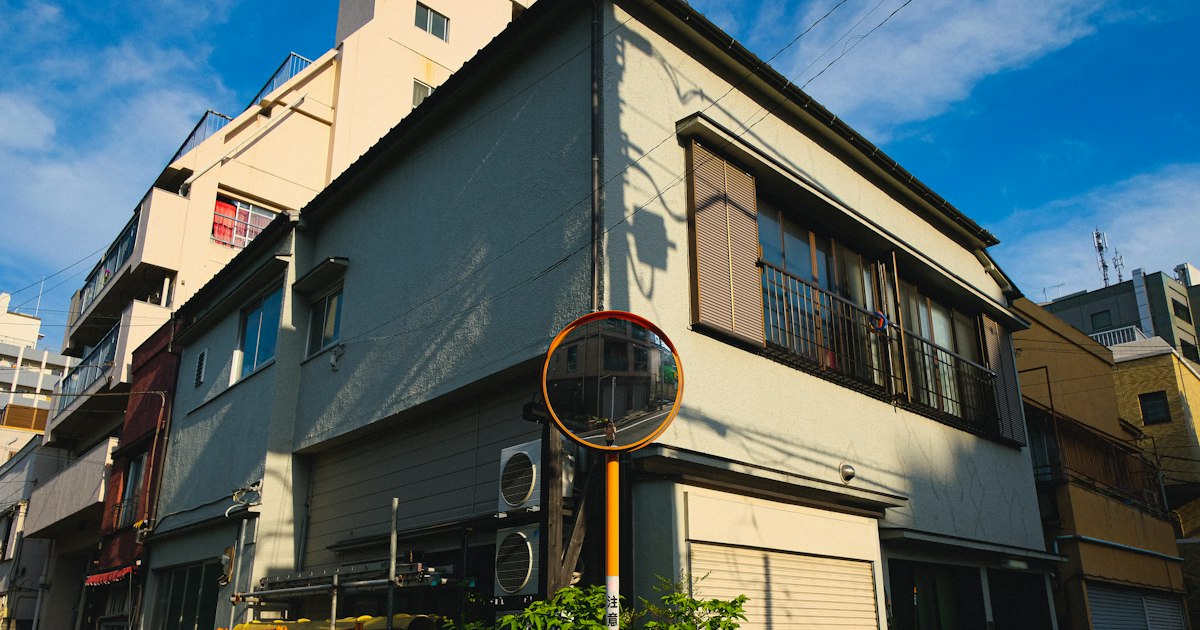
Photo by Mylène Larnaud on Unsplash
If you’re staying in Japan for more than two or three weeks, hotels get expensive fast and standard apartment leases are nearly impossible to sign as a foreigner without a guarantor, a Japanese bank account, and a hefty upfront payment. The middle ground — used by digital nomads, visiting researchers, relocating families, and anyone doing a long work assignment — is the “weekly mansion” (ウィークリーマンション) or “monthly mansion” (マンスリーマンション). Despite the name, these are ordinary furnished apartments, not luxury condos. Here’s how the system actually works, what it costs, and how to avoid the mistakes that trip up first-time renters.
Weekly Mansion vs. Monthly Apartment: What’s the Difference?
Both are furnished rental units aimed at short-to-mid-term tenants, but they’re priced and marketed differently:
- Weekly mansions are billed by the night or week, like a long-stay hotel. Minimum stays are often as short as 2-3 nights, though pricing improves sharply after 7 nights. These suit a 1-4 week stay.
- Monthly apartments (often called “monthly mansions” or marketed by companies as “furnished apartments”) are billed per 30-day period, with minimum contracts usually starting at one month and discounts for 3, 6, or 12-month commitments. These suit relocations, long work postings, or anyone waiting to sign a standard lease.
Both skip the traditional Japanese rental system’s biggest barriers: no reikin (key money, historically 1-2 months’ rent as a non-refundable “thank you” to the landlord), no large shikikin deposit, and usually no hoshounin (guarantor) requirement. You pay rent, a modest cleaning fee, and sometimes a small refundable deposit — that’s it.
What’s Actually Included
Expect a fully furnished studio or 1-bedroom unit with a bed, small kitchenette (microwave, 2-burner stove, mini-fridge), washing machine, air conditioning, basic cookware and linens, and Wi-Fi. Utilities (electricity, gas, water) are usually bundled into the rent or charged as a flat monthly fee rather than metered separately — check which, since metered gas in winter can run ¥8,000-15,000/month on its own if it’s not included. Furniture quality varies a lot between operators, so look at actual unit photos rather than lobby photos on booking sites.
Realistic Prices by City
Prices below are for a single-occupancy studio; expect 20-40% more for a 1-bedroom suitable for a couple or small family.
- Budget (regional cities — Fukuoka, Sendai, Hiroshima, Okayama): ¥50,000-80,000/month for a monthly apartment; weekly rates around ¥25,000-35,000/week.
- Mid-range (Osaka, Nagoya, Kyoto, Tokyo suburbs like Kawasaki or Saitama): ¥80,000-130,000/month; weekly ¥35,000-50,000/week.
- Splurge (central Tokyo — Shibuya, Minato, Shinjuku wards): ¥150,000-280,000/month for a modern studio with a real separate bathroom (not a bathroom-toilet combo unit, called a “unit bath”); weekly rates from ¥60,000/week.
On top of rent, budget ¥10,000-30,000 for a one-time cleaning fee charged at move-out, and sometimes a refundable deposit of ¥20,000-50,000 for monthly contracts. For anything under a month, a weekly mansion is almost always cheaper than a business hotel on a per-night basis once you pass the one-week mark.
How to Book
Major operators with English-language sites and foreigner-friendly booking include Sakura House, Oakhouse, and Leopalace21, which operate nationwide inventories searchable by city and ward. Smaller regional operators exist too, but many only have Japanese-language sites — a local friend or a relocation agent can help if you want access to that wider, often cheaper, pool.
Typical booking steps:
- Search by city/ward and move-in date on the operator’s site; inventory for popular Tokyo wards disappears quickly for near-term dates.
- Submit a booking request with passport details; you generally don’t need a residence card for stays under 90 days, but longer contracts may ask for your visa/residence status.
- Pay the first period’s rent plus cleaning fee by credit card or bank transfer before move-in — most operators require full or partial payment upfront rather than a security deposit alone.
- Pick up keys at the property or a nearby office; some buildings use keyless entry codes sent by email, useful if you’re arriving late or jet-lagged.
If you’re also planning to drive during an extended stay — common for families settling into a suburb or researchers posted outside major cities — note that renting a car long-term or converting to a Japanese license follows separate rules; see our guide to converting a foreign driver’s license for long-term residents, and if you’ll be moving kids around by taxi or rental car, check the child car seat rules for taxis and rental cars before you arrive.
Best Timing to Book
Avoid booking a move-in for late March through early April if you can help it — this is Japan’s fiscal and school year changeover, when local transfers, new hires, and students all move at once. Inventory shrinks and short-term listings get pulled in favor of year-long tenants during this window. The cheapest and most available stretch is typically June-August and November-January, outside the September transfer bump some companies also see. Book at least 2-3 weeks ahead for central Tokyo; regional cities have more slack and can often be booked within a week.
Common Mistakes to Avoid
- Assuming you can cancel anytime. Many monthly contracts require 30 days’ written notice before move-out, even if you’re leaving early — read the cancellation clause before signing.
- Not confirming internet speed. “Wi-Fi included” sometimes means a pocket Wi-Fi router with capped data, not fixed fiber — a problem if you’re working remotely and need stable video calls.
- Booking based on lobby photos. Ask for photos of the exact unit number, not the building’s showcase room.
- Forgetting the paperwork trail. Longer stays sometimes still require faxed documents for utility transfers or city hall registration — a quirk of Japanese administration covered in our piece on why fax machines still run Japan’s offices, clinics, and city halls.
- Ignoring location trade-offs. A unit that looks cheap can be a 20-minute walk from the nearest station with no bus — always check the actual walking distance on a map, not just the stated “nearest station.”
Weekly mansions and monthly apartments aren’t glamorous, but they solve a real problem: a flexible, no-guarantor way to live like a resident rather than a tourist for anywhere from a week to half a year. Compare at least two operators before booking, read the cancellation terms closely, and you’ll land a base that’s far more livable — and often cheaper — than stringing together hotel nights.