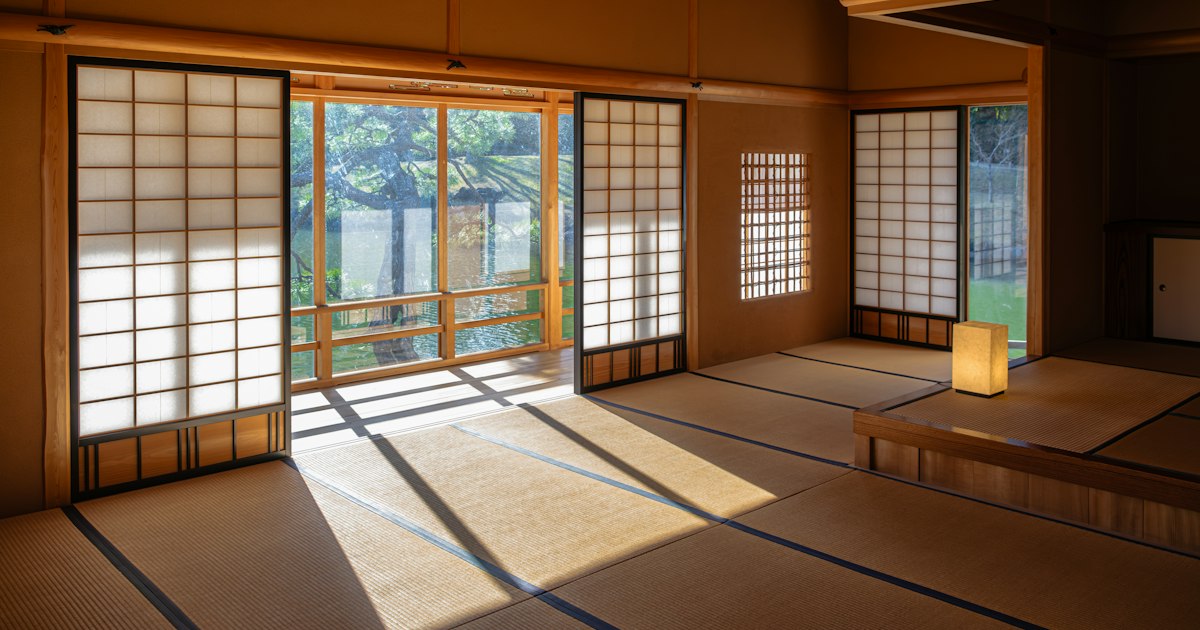
Photo by Viviana Nysaether on Unsplash
If you’ve booked a night at a ryokan or minshuku and started wondering why the futon feels either too thin or too heavy for the season, you’ve stumbled onto a detail most guests never think about until they’re lying awake at 2am. Japanese inns generally keep two different futon weights in rotation — a lightweight summer version called natsubuton and a thicker winter version called fuyubuton — and which one lands on your tatami mat depends on the calendar, the region, and sometimes just the housekeeping staff’s best guess about that week’s weather. Here’s how the system actually works and how to get a comfortable night’s sleep regardless of what you’re handed.
What natsubuton and fuyubuton actually are
Natsubuton (夏布団, “summer futon”) is a lightweight quilted cover, often filled with thin cotton, synthetic fiber, or sometimes a gauze-like kakefuton layer, designed to let heat escape overnight. Fuyubuton (冬布団, “winter futon”) is noticeably thicker and heavier, typically stuffed with more cotton wadding or a wool/synthetic blend, sometimes paired with an added fleece or wool blanket (moofu) folded at the foot of the bed. The shikibuton (bottom mattress-style futon) usually stays the same year-round — it’s the kakebuton (top cover) that gets swapped. At traditional ryokan, housekeeping staff physically change out the futon stock in storage closets (oshiire) between seasons, generally sometime in May–June for the summer switch and October–November for the winter switch, mirroring when hotels and homes across Japan swap curtains and bedding.
Why the “wrong” futon shows up more often than you’d expect
Japan’s shoulder seasons are genuinely confusing for inns to plan around. An inn in the mountains of Nagano might still need fuyubuton in late April, while a coastal property in Kyushu may have already switched to natsubuton by early May. Smaller family-run minshuku often don’t have separate seasonal stock at all — they just add or remove a blanket depending on the forecast. If you’re traveling in the transition months (late April to early June, or late September to early November), don’t assume the inn has correctly anticipated a cold snap or heat wave; pack as if you might need to ask for an adjustment.
A related issue: many older ryokan rooms don’t have central heating or cooling vents at floor level, relying instead on a wall-mounted air conditioner unit that also handles heating. If the room runs hot or cold regardless of futon weight, the fix is the AC remote, not the bedding — worth checking before you call the front desk about futon temperature.
How to ask for a swap without fumbling the Japanese
Most ryokan staff are used to this request, especially at properties that cater to international guests. Simple phrases that work at the front desk or via the in-room phone:
- Too hot / want a lighter futon: “Natsubuton o onegai shimasu” (夏布団をお願いします) — “A summer futon, please.”
- Too cold / want a heavier futon: “Fuyubuton o onegai shimasu” (冬布団をお願いします), or more simply, “Moofu o ippai onegai shimasu” (毛布をもう一枚お願いします) — “One more blanket, please.”
- Pointing and gesturing (shivering or fanning yourself) works surprisingly well too — staff at ryokan are generally quick to bring an extra blanket or swap a cover even without perfect language.
Request this at check-in if you already suspect a mismatch, rather than waiting until after the room has been made up for the night — many ryokan prepare the futon while you’re at dinner, so an early heads-up avoids a late-evening scramble. This is the same logic as timing other requests around an inn’s routines — see our guide on quiet hours in Japan for how ryokan schedule evening room service and when it’s appropriate to make requests.
Budget, mid-range, and splurge: what to expect at each tier
Futon quality and seasonal attentiveness tend to track directly with room rate:
- Budget minshuku (¥6,000–¥10,000/night per person with breakfast): One futon weight year-round is common, topped with an extra blanket on request. Don’t expect a dedicated natsubuton/fuyubuton rotation — pack a thin travel liner or just ask for more/fewer blankets.
- Mid-range ryokan (¥15,000–¥30,000/night per person with two meals): Most properties in this bracket do rotate seasonal bedding and will swap on request without hesitation. This is the sweet spot where the system described above works as intended.
- High-end ryokan and onsen inns (¥40,000+/night): Staff typically anticipate the season correctly and may even ask your preference at check-in. Some properties offer feather-light “cool” bedding in peak summer (July–August) as a premium touch, especially in humid regions.
Common mistakes foreign visitors make
- Assuming the futon weight is fixed for your whole trip. If you’re moving between regions — say, Hokkaido to Okinawa — expect the “correct” futon weight to differ by hundreds of kilometers, not just by date.
- Not checking the AC before blaming the futon. A fuyubuton in a room with the air conditioner stuck on “cool” will still feel wrong; adjust the unit first.
- Over-packing sleepwear for buffer. Most ryokan provide a yukata (cotton robe) that doubles as sleepwear, and many also stock an extra inner layer in winter. You rarely need to bring your own thermal layers for sleeping — ask if a thicker yukata or innerwear is available before packing extra from home.
- Waiting until midnight to ask for a change. Front desks are staffed late at most ryokan, but it’s far smoother to resolve this before the futon is laid out for the night.
Best timing if you’re sensitive to temperature
If you run hot or cold easily, the safest windows to avoid any seasonal bedding mismatch are deep summer (July–August, natsubuton reliably in place almost everywhere) and deep winter (December–February, fuyubuton reliably in place). The riskiest stretches are the shoulder months — April–May and October–November — when regional and even inn-by-inn variation is highest. If your itinerary includes a rural stay during these months, such as a riverside inn near Nagatoro’s gorge, it’s worth messaging the property ahead of arrival to ask what bedding they currently have in rotation, particularly for mountain or valley locations where nighttime temperatures swing more than city forecasts suggest.
Bringing your own bedding accessories
If you’re a particularly light or restless sleeper, some travelers pack a compact silk or cotton sleeping bag liner, which adds warmth without needing to negotiate with the inn, or a small portable fan for humid summer nights where even natsubuton feels too warm. These are inexpensive and widely available on secondhand marketplaces before your trip if you’d rather not buy new — our guide to Rakuma vs. Mercari covers where to find lightly used travel gear like this at a discount while you’re already in Japan.
Ultimately, the natsubuton/fuyubuton system is a small but telling example of how much seasonal attentiveness is baked into Japanese hospitality — and also where that attentiveness can lag at smaller or budget properties. Knowing the two terms and how to ask for a swap turns what could be an uncomfortable, confusing night into a thirty-second fix at the front desk.