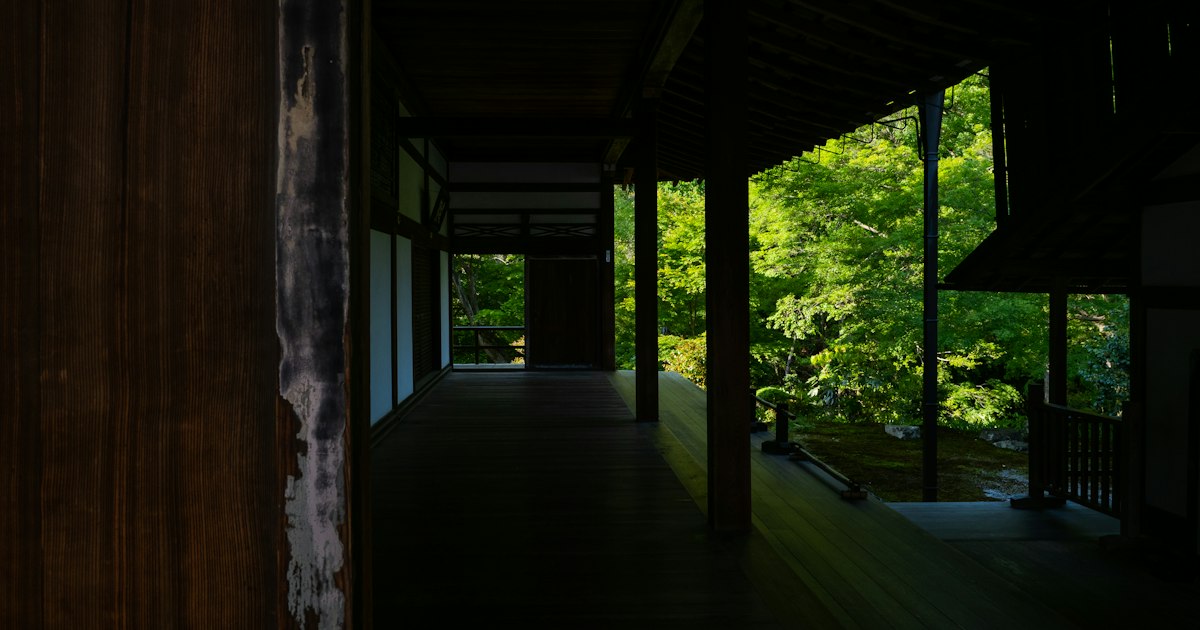
Photo by YANGHONG YU on Unsplash
Walk the corridors of Ninomaru Palace at Nijo Castle in Kyoto and every step produces a high, birdlike chirp — even if you’re trying hard to be quiet. Guides will tell you it was deliberate: a 17th-century alarm system designed so no assassin could cross a room undetected. The real story is a little messier and a lot more interesting, and knowing it will change how you walk through the palace.
What’s Actually Making That Sound
The “nightingale floor” effect (uguisubari, 鶯張り) comes from the floor’s construction, not from the boards themselves being specially designed to squeak. Nails driven up through the floorboards rest against L-shaped metal clamps fixed to the joists below. When a board flexes under footstep pressure, the nail shifts slightly inside the clamp and rubs against it, producing a friction squeal that’s been likened to the call of the uguisu, Japan’s bush warbler — hence the name. Walk slowly or quickly, on tiptoe or flat-footed, and the floor still sings. It’s genuinely difficult to cross silently, which is the whole appeal for visitors.
You’ll find this flooring throughout Ninomaru Palace, especially along the outer corridors connecting the six main buildings, where the sound is loudest because the boards are long and thin.
The Ninja Theory vs. What Historians Actually Think
The popular version: Tokugawa Ieyasu, founder of the shogunate that built Nijo Castle in 1603 as his Kyoto residence, feared assassination and had the floors rigged as an early-warning system against ninja and spies creeping toward his sleeping quarters. It’s a great story, and it’s the one you’ll hear from most tour guides and signage.
Architectural historians are more cautious. Many argue the squeak is more plausibly a side effect of 400 years of wood movement, humidity cycles, and metal fatigue in a construction method that was common for the period — not a feature engineers specifically set out to build. Whether the Tokugawa shogunate’s carpenters intentionally tuned the clamps for sound, or simply built floors that happened to develop this trait over the centuries, is genuinely debated. Either way, the palace’s layout does show real anti-assassination thinking elsewhere — hidden rooms for bodyguards, sightlines designed to spot intruders, and chambers positioned so visitors of lower rank couldn’t easily approach the shogun. The nightingale floor fits that defensive mindset even if its origin story has been simplified for tourists.
Visiting Hours, Tickets, and Getting There
Nijo Castle’s grounds are open 8:45 am to 5:00 pm, with last entry at 4:00 pm. Ninomaru Palace itself (where the nightingale floors are) keeps shorter hours, generally 9:00 am to 4:00 pm last entry, and in recent years the palace has moved to a timed-entry ticketing system during busy periods — check the official Nijo Castle website before you go, since entry slots can sell out on weekends and during cherry blossom or autumn foliage season. The castle closes on certain Tuesdays in January, July, August, and December, plus December 29–31, so don’t build a tight itinerary around a Tuesday visit without checking the calendar first.
Admission to the castle grounds runs around ¥800 for adults, with an additional ¥400 required to enter Ninomaru Palace itself — skip the palace ticket and you’ll see the gardens and gates but miss the nightingale floors entirely, which is the whole point of the visit for most people reading this.
Getting there is easy: take the Tozai subway line to Nijojo-mae Station, which lets out right at the East Gate. From Kyoto Station, city buses 9, 50, or 101 reach the Nijojo-mae stop in about 20 minutes. If your IC card won’t scan cleanly at the subway gate — a surprisingly common hiccup with older cards or cards loaded overseas — here’s what to do when your IC card or ticket won’t open a Japanese train gate so you’re not stuck fumbling at the barrier with a line forming behind you.
Best Time to Visit
Early morning, right at the 8:45 am opening, is your best shot at hearing the floors without thirty other people’s footsteps drowning them out — the effect is far more noticeable in a quiet corridor than a crowded one. Spring (late March through mid-April) brings cherry blossoms across the castle grounds, including several varieties that bloom later than the famous Arashiyama and Maruyama Park trees, which makes Nijo Castle a decent option if you’ve arrived in Kyoto after peak bloom elsewhere. Autumn, especially mid-to-late November, brings strong color in the Seiryu-en garden area. Summer visits are workable but hot and humid — if you’re already dealing with Kyoto’s notorious summer soundtrack, our piece on Japan’s cicada season explains why the outdoor noise competes with the indoor chirping almost as loudly.
Common Mistakes Visitors Make
- Not budgeting enough time. Between the palace interior, Ninomaru Garden, and the castle keep ruins, plan for 1.5–2 hours minimum, longer if you want to read the exhibit panels inside the palace rooms.
- Carrying shoes awkwardly. You remove your shoes before entering Ninomaru Palace and carry them in a provided plastic bag for the entire walk-through — bring a tote or daypack that can hold a bag of shoes comfortably, since there’s nowhere to leave them at the entrance.
- Trying to photograph the interior. Photography is not allowed inside Ninomaru Palace, including the rooms with the famous gold-leaf screen paintings, so don’t plan your visit around getting interior shots — save the camera for the gardens and exterior gates.
- Walking too fast through the corridors. It’s tempting to rush toward the next room, but slowing down is actually what lets you hear the floor clearly and notice how the sound changes depending on where you step.
- Skipping the palace ticket to save ¥400. Some visitors buy only grounds admission, not realizing the nightingale floors are exclusively inside Ninomaru Palace — if that’s your reason for visiting, don’t shortchange yourself on the one ticket that matters.
Budget, Mid-Range, and Splurge Ways to See It
Budget: Self-guided visit with just the grounds + palace tickets (roughly ¥1,200 total) and the free English audio pamphlet available near the entrance, which explains the nightingale floor and major rooms room by room.
Mid-range: Rent the official multilingual audio guide device (a small additional fee, typically under ¥700) for more detail on each room’s history and the palace’s defensive design, or join a small-group walking tour that includes Nijo Castle alongside Kinkaku-ji or Nishiki Market for a half-day of Kyoto sightseeing.
Splurge: Book a private licensed guide for a half-day Kyoto castle-and-garden tour — useful if you’re traveling with family or a larger group, since a guide can navigate timed-entry tickets and pacing for everyone. If you’re coordinating a bigger group, it’s worth checking discounts available for large groups traveling in Japan before you book individual tickets separately.
Beyond the Nightingale Floors
If the idea of trick architecture appeals to you, Nijo Castle isn’t Kyoto’s only example — Ninomaru Palace also hides bodyguard rooms behind sliding panels and uses deliberately narrow, winding approach paths to slow down any unwelcome visitor. It’s a useful reminder that a lot of traditional Japanese building design quietly prioritizes control over sound and movement, something you’ll notice again if you’re staying in a ryokan or older apartment during your trip — our guide to Japan’s noise rules for apartments, hotels, and ryokan covers how seriously that same sound-consciousness carries into everyday accommodation etiquette today.