Photo by Derin Cag on Unsplash
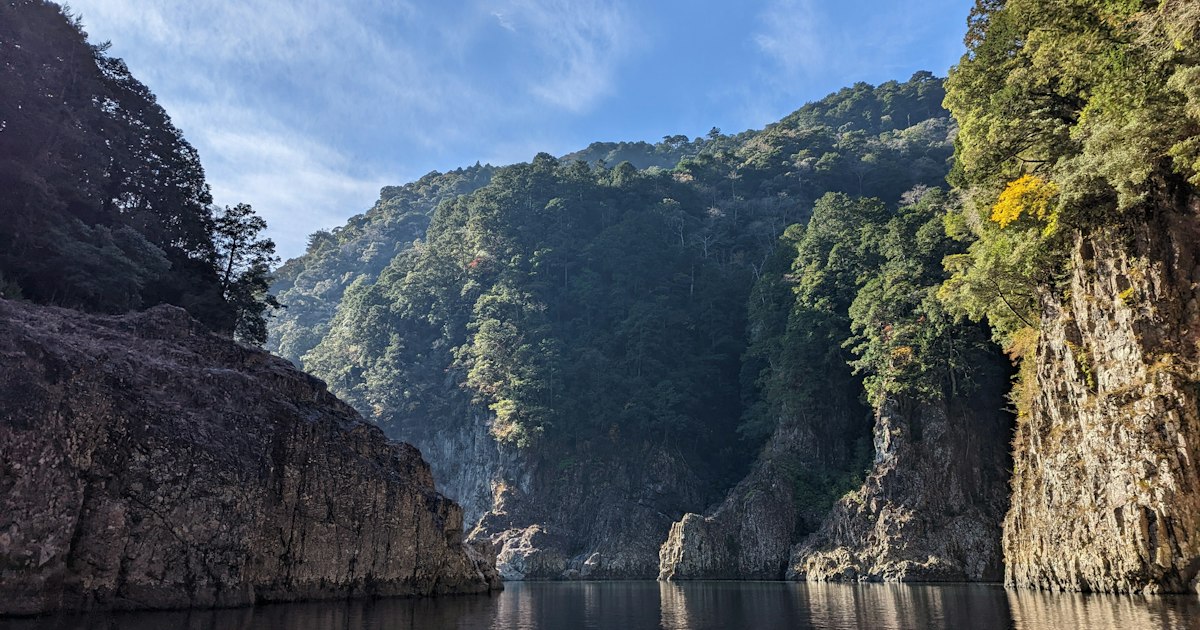
Less than two hours from central Tokyo, the Arakawa River cuts through a narrow gorge of pale, crystalline rock in the small Saitama town of Nagatoro. It’s one of the easiest “nature day trips” to pull off without a car: you ride a wooden boat through a set of mild rapids, walk across a flat shelf of ancient rock that looks almost man-made, and ride a ropeway up a small mountain for a view over the whole valley. None of it requires booking weeks ahead, and most of it costs less than a Tokyo dinner. Here’s how to actually plan the day.
Getting to Nagatoro from Tokyo
Nagatoro Station, on the Chichibu Railway, is the hub for everything in this guide. There are two practical routes from central Tokyo:
- Via Ikebukuro (Tobu Tojo Line): Take the Tobu Tojo Line to Yorii Station (roughly 70-80 minutes on a rapid or limited express service), then transfer to the Chichibu Railway for the short ride to Nagatoro (about 15 minutes). Total one-way fare is typically in the ¥1,300-1,600 range.
- Via Seibu-Chichibu: Take the Seibu Ikebukuro Line’s “Red Arrow” limited express to Seibu-Chichibu Station (about 80 minutes, plus a limited express surcharge), then backtrack a few stops on the Chichibu Railway to Nagatoro.
The Chichibu Railway itself is not fully IC-card compatible on every fare type, so it’s worth having cash or a ticket ready rather than assuming you can tap through — if your card or ticket doesn’t open the gate, here’s what to do when an IC card or ticket won’t open a Japanese train gate. Since you’re only carrying day-trip gear, there’s no need to lug a suitcase along — if you’re based in Tokyo for a longer stay, it’s worth reading up on stashing bags at the station before a luggage-free day trip.
The Line-Boat Ride (Kawakudari)
The signature activity is kawakudari — a traditional wooden boat guided by two boatmen through a stretch of gentle rapids. Boats depart from a dock a short walk or taxi ride from Nagatoro Station, with two main course lengths:
- Short course — about 3km and 20 minutes through the main rapids, roughly ¥2,500-2,700 for adults.
- Long course — about 6km and closer to an hour, passing more scenery at a gentler pace, roughly ¥3,300-3,500 for adults.
Boats generally run from spring through autumn; most operators suspend service in the coldest winter months (roughly December to early March) when water levels and conditions make it impractical. Departures are usually walk-up during the day rather than pre-booked online, but on weekends in peak autumn you may wait 30-60 minutes for a seat. Prices and schedules shift year to year, so treat these as planning estimates and confirm at the ticket counter the day of. If you’re traveling as a family or a larger group, ask about group rates at the counter — the logic is similar to the group discounts covered in this guide to traveling to Japan as a large group.
Practical notes: you will get a little splashed, so don’t wear your only good shoes; lockers and bag drop are available near the dock for the ride itself; and children under a certain height (checked on-site) may not be permitted on some courses for safety reasons.
Walking the Iwadatami Rock Formations
Right along the riverbank near Nagatoro Station is Iwadatami — a flat shelf of pale, layered crystalline schist that stretches for several hundred meters along the water. It’s a designated national natural monument, and it’s free to walk across at any time, which makes it the easiest “second activity” to pair with the boat ride. Wear shoes with grip, as the rock surface is uneven and can be slick near the water’s edge. Along the path you’ll find a strip of small shops selling grilled rice crackers, kakigori-style shaved ice in summer, and river-fish snacks, plus a few spots offering short tub-boat (tarai-bune) paddles for a few hundred yen if you want to get out on the calm water without the full kawakudari commitment. Give this area 45-90 minutes if you’re taking photos and stopping for snacks.
Hodosan Ropeway and the Mountain View
A short walk from Nagatoro Station is the base of the Hodosan Ropeway, a small cable car that climbs Mt. Hodo (497m) in a few minutes. At the top there’s Hodosan Shrine, a small zoo/garden area, and an observation point with a clear view down over the gorge and the Iwadatami rock shelf you just walked. Round-trip ropeway fare is roughly ¥1,200 for adults — worth checking current pricing locally, since it’s adjusted periodically. Plum blossoms (ume) bloom here in late winter/early spring, drawing a smaller, more local crowd than the cherry blossom spots elsewhere in the Kanto region. Budget about an hour round trip including the ropeway ride and a short walk at the summit.
Best Season and Timing
Nagatoro has a genuine case for visiting in almost any season, but the trade-offs differ:
- Autumn (mid-to-late November): The highlight season — maple foliage along the gorge, sometimes with evening illumination events at riverside temples. Expect the heaviest crowds and longer boat-ride waits.
- Spring (late March-April): Cherry blossoms along the river and plum blossoms up at Hodosan; comfortable walking weather.
- Summer (June-August): Lush green gorge walls and the cicada chorus that defines a Japanese summer — if you haven’t experienced it, this guide to Japan’s cicada season explains what you’re hearing. It’s also genuinely hot and humid on the exposed rock shelf, so bring water and sun protection.
- Winter: Quiet and cold, with the boat rides often paused — a scenic but limited-activity visit.
Weekday visits in any season meaningfully cut down on boat-dock waits and crowds on the rock shelf.
Budget, Mid-Range, and Common Mistakes
A no-frills visit — short boat course, walking Iwadatami, snacks, train — runs comfortably under ¥6,000 per person including round-trip transport from Tokyo. Add the long boat course and the Hodosan Ropeway for a fuller mid-range day closer to ¥9,000-10,000. A splurge version might include a riverside lunch set at one of the ryokan-style restaurants near the station and the tarai-bune paddle.
The most common mistakes are treating this as a rushed half-day (the train journey alone eats real time, so budget a full day), skipping cash (small shops and some boat ticket counters are cash-only or cash-preferred), and showing up on a November weekend without a backup plan for a long boat-ride queue — the rock walk and ropeway make a fine way to fill that wait. If you’re exploring beyond the immediate station area, renting a bicycle is a good way to cover more of the riverside without a car; the general approach is similar to what’s described in this guide to renting an e-bike in Japan’s countryside, though availability in Nagatoro specifically should be confirmed locally.