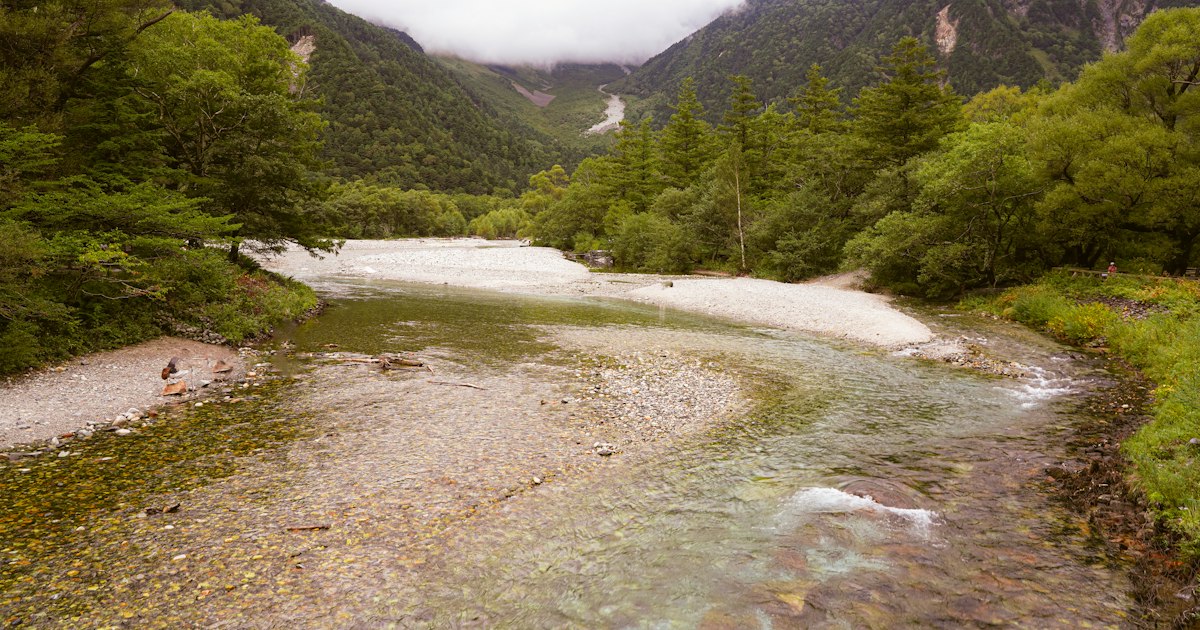
No reel, no tackle box, no fly selection headache — just a telescoping rod, a length of line tied straight to the tip, and one simple fly. Tenkara is the fixed-line fly-fishing method Japanese mountain-stream fishermen developed generations ago to catch char and trout in cold, narrow rivers, and it has quietly become one of the most approachable outdoor souvenirs a visitor can bring home: a rod that collapses to the size of a water bottle and costs less than a nice dinner. Here’s how it works, where it came from, and where to actually buy one.
What Makes Tenkara Different From Western Fly Fishing
Standard fly fishing relies on a reel to manage slack line and fight fish over distance. Tenkara strips that out entirely. The line — usually a thin, colored level line made of fluorocarbon, or a tapered furled line — is tied directly to a small thread loop at the rod tip called the lillian, with a short tippet and a single fly on the end. There’s no casting a weighted line for distance; instead you flick the rod to drop the fly precisely into a pocket of current a few meters away, exactly how mountain-stream fishing actually works. Fewer moving parts means less to go wrong, and far less to pack: a rod, a spool of line, and a handful of flies fit in a jacket pocket.
A Tradition Born on Working Rivers
Tenkara wasn’t originally a hobby — it was how professional and subsistence fishermen in Japan’s central mountains (areas of Nagano, Gifu, Toyama, Fukui, and the Kii Peninsula around Wakayama) caught iwana (white-spotted char), yamame, and amago to sell or eat. The technique only reached recreational anglers, and then the wider world, in the 1990s–2000s, championed by figures like retired professor Dr. Hisao Ishigaki and Masami Sakakibara, known as “Tenkara no Oni” (“tenkara demon”), who still teaches and guides out of Itoshiro, a mountain village in Gifu Prefecture near Gujo-Hachiman. If you want to learn from someone with a direct lineage to the old working method rather than a modern reinterpretation of it, a guided session in Itoshiro is the place to start — book ahead, as it’s a small, remote operation.
What You Actually Need: Rod, Line, and Kebari
A tenkara rod is telescopic (“zoom”) carbon fiber, typically 3.3–3.6m extended and collapsing to around 50–60cm. Most travelers buy a 3.6m rod as an all-purpose length. You’ll also need:
- Line — a level fluorocarbon line roughly the same length as the rod, plus a meter or so of tippet.
- Flies (kebari) — traditional tenkara flies are deliberately simple soft-hackle patterns, often tied with the hackle swept forward (sakasa kebari). Purists fish with just one or two patterns for an entire trip; this isn’t a sport that rewards a 100-fly box.
- Wading shoes or tabi with a gripping sole — river rocks in Japan’s mountain streams are slick, and this is the gear beginners skip and regret.
If collecting Japanese-made outdoor and fishing craft appeals to you beyond the rod itself, it’s worth knowing collectors also hunt vintage glass fishing floats, ukidama, at coastal flea markets — a different corner of the same fishing culture.
Best Season and Where to Go
Trout and char seasons in Japan are set by each prefecture’s fishery cooperative and generally run from around March 1 to September, with many rivers closing earlier in September once fish start spawning. May and June, before the rainy season swells the rivers, and September, when water runs low and clear again, are the most reliable windows; late June into July (tsuyu, the rainy season) often means high, muddy water that’s both harder to fish and more dangerous to wade.
For a day trip from Tokyo, Okutama — reachable in about 90 minutes via the JR Ome Line to Okutama Station — has accessible mountain stream fishing with permits sold at local tackle shops near the river. Nikko in Tochigi, about two hours from Tokyo by Tobu Nikko Line, is another classic option with cold, clear streams inside Nikko National Park. If you’re spending time in Shizuoka, the upper Oi River valley is traditional tenkara territory, and you can turn the trip into a full day out by riding the Oigawa Railway’s steam train through tea country before or after fishing.
Where to Buy a Tenkara Rod in Japan
Budget (around ¥3,000–6,000): Major tackle makers Daiwa and Shimano both sell entry-level telescopic tenkara rods under this price, stocked at large national fishing-tackle chains and sporting goods stores. These are perfectly functional for a first try and light enough to not worry about on a trip home.
Mid-range (around ¥8,000–25,000): Specialist tenkara makers — Nissin, Suntech, and Oni (the brand associated with Sakakibara) — build rods with better taper and action specifically for fixed-line casting. Look for the tenkara section at large fishing chains, or order directly from the makers’ own Japanese websites, which ship nationwide. This is the range most serious hobbyists land in.
Splurge (¥30,000 and up): Signature rods from recognized tenkara masters, and handcrafted bamboo tenkara rods from traditional rod makers, run well into this range and function as much as collector pieces as fishing tools — closer in spirit to the handmade Japanese craft goods travelers hunt down for their own sake.
Permits, Etiquette, and Common Mistakes
Almost every fishable river in Japan is managed by a local fishery cooperative, and you need a day permit (yugyoken) before you cast a line — usually ¥1,000–3,000, sold at riverside vending boxes, local tackle shops, or convenience stores near the water. Fishing without one, or fishing a closed season, can result in fines, so check locally before you go; shop staff are generally happy to explain the rules if you ask.
The most common beginner mistakes: buying a line that’s much longer than the rod (fixed-line casting works best when line and rod are close in length), overpacking flies when the whole point of tenkara is simplicity, closing a wet telescopic rod by force instead of drying each section first (this cracks them), and underestimating how slippery river rocks are without proper footwear.
Not Ready to Buy? Try It First
Guided half-day tenkara experiences, which typically include rod rental and a permit, are a low-commitment way to decide if it’s worth packing a rod home. Beyond Itoshiro, several outdoor tour operators in Nagano and Gifu run English-friendly sessions for visitors. And if rivers aren’t quite your scene but Japan’s outdoor and rental-shop culture is, our guide to surfing in Japan covers the same kind of gear-rental logistics for the coast. Either way, it’s worth remembering that Japan’s enduring fascination with a line and a hook shows up everywhere, down to the goldfish-scooping stalls at summer festival game booths — tenkara is just the serious, beautifully minimal end of that same spectrum.