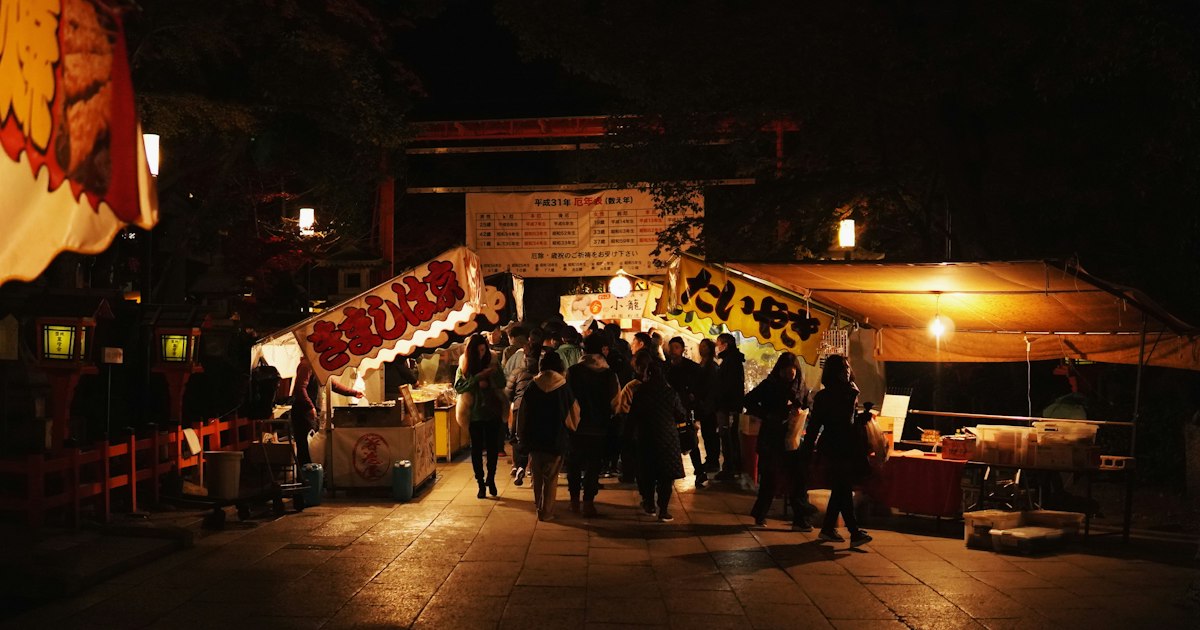
Walk through any Japanese shrine festival or Bon odori gathering between July and late August and you’ll find two stalls that outlast every trend: a shallow pool crowded with goldfish and a plastic tub bobbing with water-filled balloons. Kingyo-sukui (goldfish scooping) and mizu yo-yo tsuri (water yo-yo fishing) have been staples of natsumatsuri — summer festivals — for generations, and they’re far more skill-based than they look. Most first-time visitors lose their paper scoop in under ten seconds and walk away confused about what just happened. This guide explains the rules, the real cost, and the technique that separates a one-fish haul from an empty-handed walk back to the yakitori stand.
What Kingyo-sukui Actually Is
Kingyo-sukui is a scooping game: a shallow tank or inflatable pool holds dozens of small goldfish (and sometimes a few prized larger ones, called “dekakin”), and players try to lift fish out using a poi — a thin wire or bamboo ring with a sheet of tissue-like paper called gyorigami stretched across it. The paper is rated by thickness, usually numbered from around #4 (thickest, most durable) down to #7 or #8 (tissue-thin, used in competitions). Festival stalls almost always hand out a mid-range paper, somewhere around #5, which gives a casual player a realistic shot at one or two fish.
The catch: wet paper weakens fast. The moment you submerge the poi, a countdown starts. Most stalls charge around ¥300–500 for either a fixed number of poi (often one, sometimes three) or a timed round of two to three minutes. When your paper tears through, your turn ends — whatever is still in your paper net (or that you’ve transferred into the holding bowl) is yours to keep, usually capped at two or three fish per stall policy.
How to Actually Catch One
The biggest mistake visitors make is chasing the fish like they’re using a net. The poi is not a net — once the paper tears, it’s a net with a hole, which catches nothing. Instead:
- Enter the water at an angle. Dip the poi edge-first, tilted roughly 45 degrees, so water slides off the paper instead of pushing straight through it.
- Let the fish come to the paper, don’t scoop at the fish. Hold the poi still just under the surface and guide a goldfish over it with your other hand or a second poi, then lift straight up and fast.
- Go for small fish first. The bigger “prize” goldfish put more pressure on wet paper and tear it almost immediately — tempting, but a bad bet for beginners.
- Minimize dips. Every re-entry into the water adds stress to the paper even if you don’t catch anything. Decide where you’re aiming before the poi touches the surface.
- Don’t press down on the rim. Weight should stay centered on the paper, not the frame edge, or it tears at the seam instantly.
If you want to see what expert-level kingyo-sukui looks like, Nara Prefecture’s Yamatokoriyama City — a town with a goldfish-farming history going back to the Edo period — hosts the All Japan Goldfish Scooping Championship most years in August. It’s held indoors at a city gymnasium near Kintetsu Yamatokoriyama Station on the Kintetsu Kashihara Line, a short hop from Yamato-Saidaiji Station and roughly 30–40 minutes from Kintetsu Nara or Osaka’s Namba area. Competitors there use ultra-thin tissue paper and routinely scoop dozens of fish in three minutes — a useful reality check before you judge your own two-fish festival haul too harshly.
Water Yo-Yo Fishing (Mizu Yo-Yo Tsuri)
The second classic stall uses balloon-like water yo-yos: small latex balloons filled with colored water, each with a tiny plastic ring looped through a rubber band at the top. They float in a tub, and players use a hook — a bent wire tipped with thin paper or vinyl coating, tied to a short string with a small weight — to snag the ring and lift the balloon out before the hook’s coating dissolves or tears in the water. Like kingyo-sukui, the hook is the fragile, timed part of the game, not the balloon.
Technique here is gentler than it looks: lower the weighted string straight down through the loop rather than trying to “fish” sideways, and lift smoothly the instant the hook catches — jerking it snaps thin hooks instantly. Pricing runs similar to goldfish scooping, typically ¥300–500 per hook or per attempt. A successful catch is yours to keep and bounce around for the rest of the festival (the rubber band loop lets you flick it like a yo-yo), though it’s a water balloon at heart — treat it gently or it will eventually burst.
Budget, Mid-Range, and Splurge
For a casual evening at any neighborhood shrine festival, budget around ¥1,000–1,500 per person to try both games two or three times each, alongside a snack like ikayaki or soft-serve from a yatai (food stall). Mid-range festival-goers often spend ¥2,000–3,000 chasing a second or third goldfish after the first poi tears — it’s genuinely addictive once you get the angle right. For a splurge-level experience, attending a major festival such as a city’s largest Tanabata or hanabi (fireworks) festival means paying the same ¥300–500 per stall game, but you’ll find more stalls, better-maintained tanks, and often slightly thicker paper for tourists, making a successful catch more likely.
Best Season and Timing
Natsumatsuri season runs roughly from early July through the end of August, peaking around Obon (mid-August) and major fireworks weekends. Stalls typically set up in the late afternoon and run from around 5pm to 9 or 10pm, lit by paper lanterns once it gets dark — arrive by 6pm if you want shorter lines and goldfish that haven’t been “worked over” by a full evening of attempts. Because these are evening events timed around sunset and fireworks, it’s worth checking last train times before you go, especially at festivals outside central Tokyo or Osaka where the shuden (last train) can arrive earlier than you’d expect.
Taking Your Goldfish Home
This is the part most foreign visitors overlook: if you win, you’re handed live goldfish in a knotted plastic bag of water, not a souvenir you can pack. Airlines and most hotels won’t accommodate live fish, so this game is realistically for visitors staying with Japanese friends or family, or simply for the fun of trying — stall staff are used to tourists releasing their catch back into the tank or giving it to a local child nearby, and nobody will think it’s odd to ask. If you’re more interested in a portable festival souvenir, the water yo-yo balloon is the better bet, or look for festival vendors selling goldfish-patterned goods, which pop up seasonally near the same shrine grounds as a nod to the game itself.
Both games are also a good entry point into the wider festival atmosphere — the same evenings usually feature taiko drumming, Bon odori dancing circles, and crews of festival carriers in traditional jika-tabi split-toe boots hauling the mikoshi shrine palanquin through the crowd. Budget an entire evening rather than a quick stop; the stalls are a small, satisfying piece of a much bigger scene.