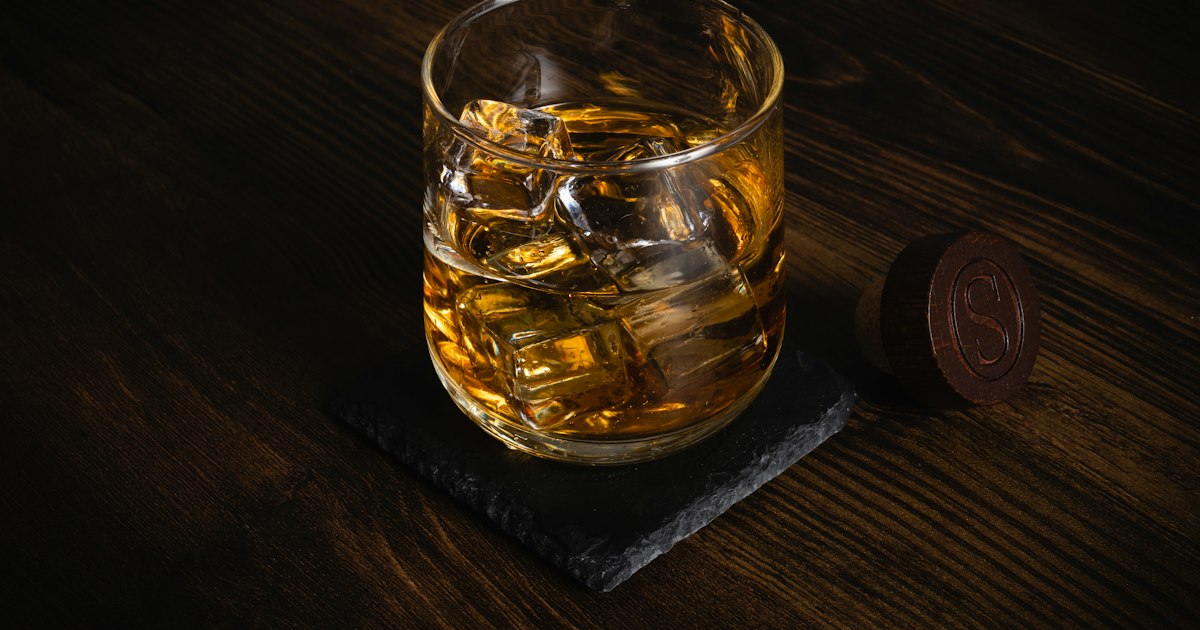
Photo by Timothy James on Unsplash
Walk into any izakaya or neighborhood bar in Japan and you’ll see glasses of pale amber liquid that look nothing like a Western whisky-on-the-rocks. Ask the regular next to you what they’re drinking and you’ll often hear one of two words: mizuwari or oyuwari. Both are dilution techniques — one with cold water, one with hot — built around the idea that spirits like whisky and shochu are meant to be stretched out and sipped slowly over a long evening, not knocked back in a single shot. Once you understand the logic behind them, you’ll order with confidence anywhere from a Tokyo standing bar to a rural onsen-town izakaya.
What Mizuwari and Oyuwari Actually Are
Mizuwari (水割り, literally “water-divided”) means spirit cut with cold water, almost always over ice. It’s the default way whisky is consumed in Japan, and it’s also common with shochu, the distilled spirit made from barley, sweet potato, or rice. Oyuwari (お湯割り) is the same idea with hot water instead — rarely used for whisky, but extremely common for shochu and awamori, especially from autumn through early spring.
The standard ratio bartenders use is 1 part spirit to 2 parts water, though it flexes depending on proof and personal taste — some shochu drinkers prefer 6:4 (shochu-heavy) or 4:6 (water-heavy). If you don’t specify, staff will usually make a safe middle-of-the-road pour and ask if you’d like it stronger or weaker on the next round.
Mizuwari: The Cold Version
Mizuwari is built in a tall glass: ice first, filled about a third to halfway, then the spirit poured over, stirred a few times (never shaken), and topped with still water — ideally soft, mineral-light water, which is part of why Japanese whisky distillers talk so much about their water sources. The stirring matters: too much agitation dilutes the drink faster and melts the ice, throwing off the ratio you asked for.
At a proper bar, a glass of Suntory Kakubin or Nikka mizuwari runs roughly ¥600–900. At an izakaya it’s often cheaper, especially as part of a set drink menu — if you’re also working through food and drink deals, it’s worth knowing how otoshi charges and nomihodai (all-you-can-drink) deals work before your tab arrives, since mizuwari is almost always included in nomihodai courses.
Oyuwari: The Hot Version
Oyuwari flips the order for a reason: hot water goes into the glass first, then the shochu is added on top. Pouring spirit into water releases more aroma than water into spirit, and starting with hot water also means you’re not pouring boiling water directly onto a spirit glass that might crack. The ideal water temperature is around 70–80°C, not a full boil — many shochu bars keep a dedicated hot water pot (yutanpo-style kettles, though not literally the same device used for bed warming — see our piece on yutanpo hot water bottles if you’re curious about that unrelated but equally hot-water-obsessed Japanese tradition) just for this purpose.
Oyuwari is a cold-season drink almost by definition — it shows up on menus from October through March and often disappears entirely in summer, replaced by mizuwari or shochu on the rocks. If you’re traveling in winter and want to warm up after a day outdoors, oyuwari at a countryside izakaya is one of the most satisfying ¥400–700 drinks in Japan.
Where and How to Order
You don’t need much Japanese to order correctly. A few phrases that work almost everywhere:
- “Mizuwari kudasai” — “Water-diluted, please” (cold)
- “Oyuwari kudasai” — “Hot-water-diluted, please”
- “Koime de” — “Stronger, please” (literally “deep/thick”)
- “Usume de” — “Weaker, please”
Most izakaya menus list the spirit first and let you choose the dilution style as a suffix — for example a shochu brand name followed by both “mizuwari” and “oyuwari” as options, each priced the same (typically ¥450–650). High-end whisky bars in Ginza or Shinjuku’s Golden Gai will make mizuwari with large hand-cut ice and filtered water for ¥1,200–2,500 a glass, which is the splurge end of the spectrum; a standing bar (tachinomi) near a train station will do a perfectly respectable version for under ¥500. If you’re new to ordering food and drink together in a set format, our teishoku ordering guide covers the broader etiquette of set meals, though izakaya drink ordering is more casual and conversational than lunch teishoku counters.
Common Mistakes Visitors Make
The most frequent error is treating mizuwari or oyuwari like a mixed cocktail you can request “extra strong” without consequence — Japanese drinking culture around these styles assumes a long, paced session, often across multiple rounds (ikkai, nikai, sankai), and ordering one very strong drink and nursing it for an hour reads oddly compared to ordering several balanced ones. The second mistake is stirring oyuwari too aggressively or too early; let it sit a few seconds after the shochu goes in so the aromas open up before mixing. The third is assuming all shochu is diluted the same way — honkaku (authentic, single-distilled) shochu is almost always drunk mizuwari, oyuwari, or on the rocks, while cheaper multi-distilled shochu is sometimes used in cocktails (chuhai) instead, which is a different category entirely and usually comes pre-mixed in a can or from a tap.
Pairing and Timing Tips
Mizuwari’s clean, light profile pairs well with grilled skewers (yakitori) and sashimi, since it doesn’t compete with delicate flavors the way a stronger pour would. Oyuwari’s warmth pairs naturally with hot pot dishes and oden in winter — if you’ve ever had Nagasaki’s guzoni hot pot while visiting Shimabara’s castle town, a glass of oyuwari alongside it is a very regionally appropriate match. Seasonally, expect oyuwari to vanish from many menus by late spring, and mizuwari to take over as the go-to year-round option once the weather warms.
One practical note for travelers: these drinks are usually ordered by the glass and refilled individually rather than served from a shared pitcher, so there’s no awkwardness in ordering just one and nursing it while your companions order food — a normal pace at any izakaya, whether you’re deciding between courses after a long day of sightseeing or settling in after checking into a capsule hotel for the night.