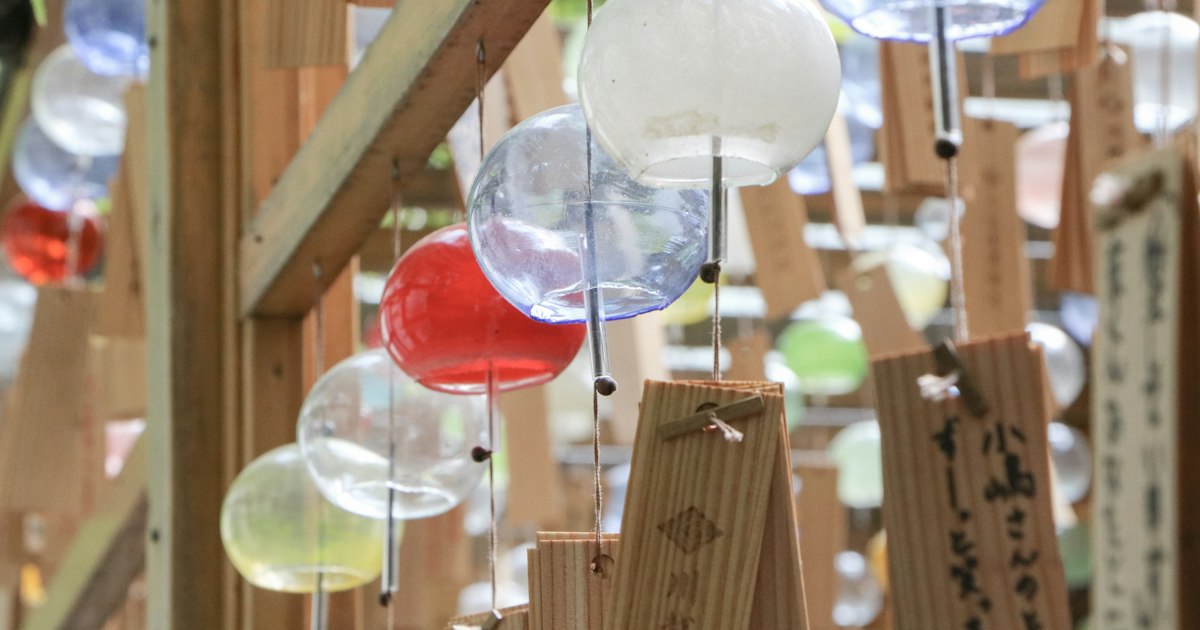
Long before styrofoam and plastic took over Japan’s fishing fleets, nets were kept afloat by hand-blown glass spheres called ukidama (浮き玉) or garasu-dama. Cracked, bubbled, and sea-worn, these orbs have become one of Japan’s most satisfying small collectibles — cheap enough to buy on impulse, heavy enough to feel like a real souvenir, and tied to a fishing culture that’s quietly disappearing. Here’s where to actually find them, what they should cost, and how to avoid paying vintage prices for a decoration made last year.
What Exactly Is an Ukidama?
From roughly the late 1800s until plastic and foam floats took over in the 1960s–70s, Japanese fishing communities used mouth-blown glass balls, usually 5–25cm in diameter, wrapped in hand-knotted hemp or synthetic net, to keep longlines and nets near the surface. Glassworks near fishing ports — Hokkaido, the Sanriku coast, the Sea of Japan side (Noto, Sado, Shimane) — produced them in huge numbers, which is also why so many eventually washed loose and drifted across the Pacific; beachcombers on the US and Canadian coast still prize “Japanese glass floats” for the same reason collectors here do.
What makes a genuine piece interesting isn’t polish — it’s the flaws. Look for an irregular sealing scar (the pontil mark) where the glassblower closed the sphere, trapped air bubbles inside the glass, mold seam lines, and uneven color caused by recycled glass (old sake and medicine bottles were often melted down for this purpose, which is why you’ll see everything from pale green and amber to the much rarer cobalt blue and purple).
Where to Hunt: Tokyo Antique Markets vs. Coastal Fishing Towns
You have two realistic strategies, and they produce different results.
Tokyo and other big-city antique markets are the easiest entry point. Outdoor antique fairs — the kind held periodically at Tokyo International Forum, Yoyogi Park, and the larger Heiwajima Antique Fair — regularly include one or two dealers specializing in old glasswork, and floats show up mixed in with fishing tackle, bottles, and household antiques. These markets typically run from around 9:00/10:00am to 4:00pm on fair days, which vary month to month, so check the specific fair’s schedule before planning a trip around it. The upside is convenience and English-tolerant browsing; the downside is that city dealers know what collectors pay and price accordingly.
Coastal fishing towns are where the actual supply originates, and prices are friendlier if you’re willing to travel. Morning markets attached to working fishing ports — the kind of setting described in our piece on Yobuko Asaichi near Karatsu — occasionally have a stall or two selling old floats alongside dried seafood, especially around the Sea of Japan coast (Noto Peninsula, Sado Island) and the Sanriku coast in Tohoku, where glass floats were produced and used longest. These aren’t dedicated antique markets, so stock is inconsistent — you might find nothing, or you might find a net bag of a dozen for a few thousand yen. Local recycle shops (risaikuru shoppu) and used-goods stores in these same port towns are a more reliable bet than the morning market itself, since they absorb household clear-outs from retired fishing families.
What to Pay: Budget, Mid-Range, and Splurge
Prices are still low compared to most Japanese collectibles, which is part of the appeal.
- Budget (¥500–¥1,500): Small floats (5–10cm), common green or amber glass, net partially missing or replaced. This is the realistic price for a genuine but unremarkable piece at a coastal recycle shop.
- Mid-range (¥2,000–¥6,000): Larger floats (12–18cm) with intact original rope netting, visible bubbles and pontil marks, sold by a dealer who’s identified it correctly. Tokyo antique fair prices usually land here.
- Splurge (¥10,000–¥30,000+): Large floats (20cm+), unusual colors (cobalt blue, purple, swirled), or pieces with a maker’s embossed mark still legible. Serious float collectors — there’s a small but real community — will pay well into this range for documented rarities.
As with the figure-and-model world covered in our guide to Japan’s collectible figure makers, condition and rarity swing price far more than size alone — a small cobalt float can outprice a large common green one.
Spotting the Real Thing
The reproduction market is the single biggest trap. Decorative glass balls sold in homeware and souvenir shops are made to look “beach-worn” with sandblasting or acid etching, but they’re mass-produced, perfectly round, and lack the asymmetry of hand-blown glass. Three checks before you pay vintage prices:
- Weight and wall thickness:
- The seal scar: a rough, often slightly off-center mark where the glass was pinched shut. Reproductions either lack this entirely or fake it too neatly.
- The netting: old hemp net has a dry, brittle texture and uneven, hand-tied knots; a glued-on net of uniform synthetic cord is a tell that the float was dressed up for sale, not pulled off a boat.
Dealers at serious antique fairs will usually tell you straight if something is a reproduction if you ask directly — it’s a normal question in this hobby, much like asking a camera dealer whether a lens has fungus, as covered in our vintage film camera hunting guide.
Best Timing and Common Mistakes
Go early. Antique fairs and morning markets both reward arrival in the first hour — the best glass gets picked over fast by regular dealers who resell online. Spring and autumn are the most comfortable seasons for standing around outdoor stalls for a few hours; midsummer markets in fishing towns start painfully early (sometimes before 6am) specifically to beat the heat.
The most common mistakes: paying city-dealer prices for a common float you could’ve found cheaper at the source; assuming every glass ball at a beach gift shop is vintage; and not checking for hairline cracks before buying, since a cracked float is essentially worthless to collectors even if the glass itself is old. Cracks are easiest to spot by holding the float up to sunlight and rotating it slowly.
Getting There and Taking Your Haul Home
Coastal fishing towns with the best float-hunting odds — Noto, Sado Island, the Sanriku coast — are rural enough that you’ll want a rental car or an early regional train, and it’s worth checking the return schedule before you commit to a full day, especially if you’re routing back through a city for the night; our guide to how shuden (last train) times work is worth a look if your plan involves getting back to a hub station late. Glass floats are heavy and breakable, so wrap each one individually (a hotel towel works fine in a pinch) and pack them in the center of checked luggage rather than a carry-on, since even a small float can exceed liquid/sharp-object ambiguity at security if it’s loose. If you’ve bought several large ones, Japan’s domestic takkyubin courier services can ship a boxed, padded parcel straight to your hotel or to the airport for pickup before your flight — ask the shop if they’ll pack it for courier shipping, since most antique dealers do this routinely for overseas buyers.